 The best equipment for pros and enthusiasts alike
-
 Professions
-
-
-
-
-
-
-
-
All Tops
![All Tops]()
-
-
-
All Bottoms
![All Bottoms]()
-
-
-
All Footwear
![All Footwear]()
-
-
-
All Bags
![All Bags]()
-
-
-
All Accessories
![All Accessories]()
-
-

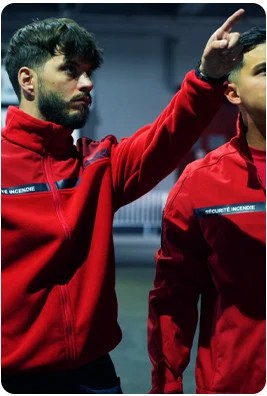

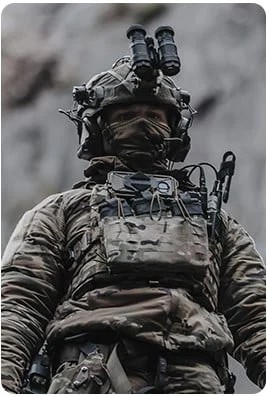






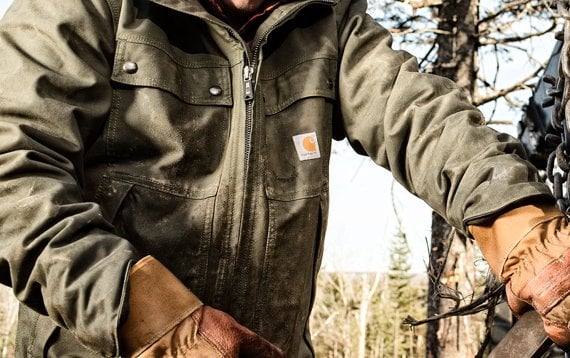
Carhartt has established itself over the years as an essential in workwear with its ranges of overalls "overall", jeans, work suits, jackets "Chore coat" and many other iconic garments. The brand has acquired an unshakeable reputation for resistant clothing, durable, capable of facing fire, cold, water and the worst conditions. The "Carhartt Brown" with its ochre tint and the worker blue are colors synonymous with the manufacturer's spirit. This international recognition owes its origins to an ethic that is matched only by its demanding standards in crafting quality products for workers.
Table of Contents:
Getting on Track
It was at 29 years old that young Hamilton Carhartt founded in 1882 his first furniture store. However, when he met a railroad engineer, he set about the task of creating clothing that would do justice to the labor of those who built railway tracks during the industrial revolution. Wanting to offer workers comfortable and quality attire, he developed overalls and work clothing in "cotton duck", a very resistant fabric woven in tight canvas weave. 1889: The Carhartt we know was born in the city of Detroit.
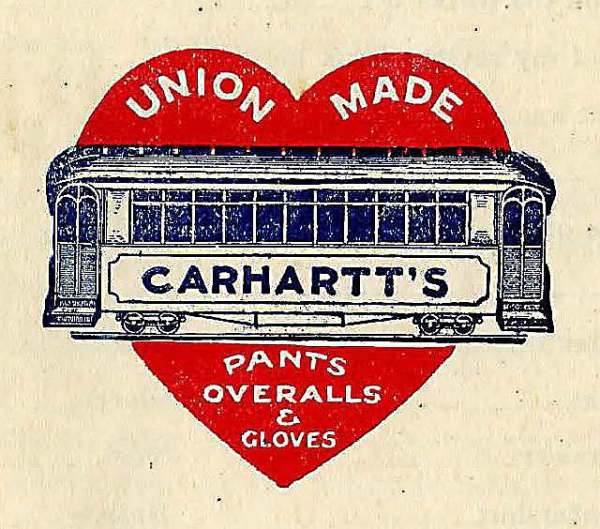
Not only did he seek to properly clothe railroad workers with attire proof against their work, but Hamilton also had at heart to place his interests on the side of workers. "My business would be a failure without my employees." He was one of the pioneers advocating unionized labor and proudly displaying the labels "union label", "Crafted with pride in USA", or "Union-made in USA" on his clothing designed on American territory. Excellent craftsmanship whose one of the first slogans was "Honest value for an honest dollar". The brand's first logos entirely reflected this spirit, with a train car placed in a heart, the "Car in heart" which summarized all the ambition of its founder.
Expansion and Depression
At the beginning of the 20th century, the company expanded across the entire country with the opening of factories in South Carolina, Georgia, Atlanta, Dallas and San Francisco. It reached Canada (Walkerville where it manufactured gloves, Ontario, Vancouver, Montreal). Then, it even crossed the Atlantic to open in Liverpool in England. During World War I, the company did not hesitate to make its factories available to the American army to craft uniforms and clothe workers sent to the front. The expansion continued after the war with a factory for the first time in Paris. The brand would also once again show its heart with Carhartt Junior which was dedicated to clothing young orphans of the conflict.
The 1920s with the "cotton depression" (a drastic increase in cotton costs), the Great Depression of the 1930s, as well as the failure of a first launch in sportswear forced the company to retract. It closed many locations, and refocused on the brand's home territory. Following Hamilton's death in 1937 in a car accident, son Wylie took over the reins of the company which would never leave the Carhartt family.
An Unshakeable Image
Despite the economic challenges, the reputation of the Carhartt name and the quality of its 100% cotton duck products helped it bounce back after World War II. The brand created its first lined clothing with the contribution of Troy Mills company (historic seller of horse blankets in the mid-19th century).
In the 1950s and 60s, Carhartt's position was reaffirmed with the buyback of territories lost in the 30s and the acquisition of reputable workwear companies (Crown Headlight in Ohio, Fink & Co. in Michigan). The lined coveralls of 1968 became an essential work tool. The expansion continued in the following years. In 1982, the company launched its first national marketing campaign, as well as its Arctic Wear range. Carhartt in addition to its traditional clothing, offered a whole range of cold weather clothing.
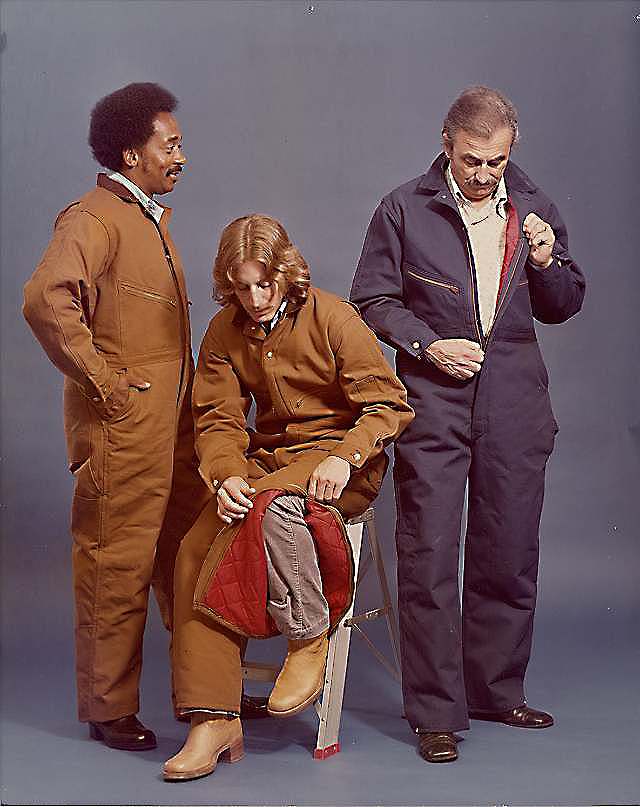
A Style Beyond Workwear Boundaries
Workwear gradually infiltrated trends in the late 80s and early 90s. Carhartt WIP (Work In Progress) was created. This label drew inspiration from work clothing and readapted it for more casual wear. Streetwear would embrace it to be worn by taggers, rappers, Hip-Hop singers and street extreme sports enthusiasts. A division emerged within the brand that would reserve its workwear for the American market and the everyday clothing for the rest of the world. On one side, the Extreme line would allow facing the harshest conditions. On the other, a collaboration with Vans would invade the skateboarding world.
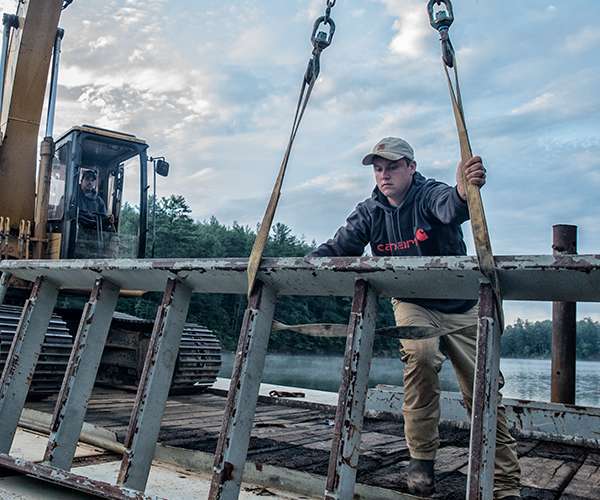
Today, Carhartt maintains this brand image of resistant and foolproof work clothing. Since 2006, Carhart EMEA (Europe, Middle East, Africa) reopened workwear internationally. It still offers a wide range of clothing (tops and bottoms) and shoes of exceptional quality. The brand also remains proud of its heritage and its ethics by participating for example in the reconstruction project of its hometown of Detroit. In 2015, it reopened one of its historic stores there. For outfits combining comfort, extreme durability and an inimitable style, Carhartt remains definitively an essential for the modern worker.
Photo Credits: www.carhartt.com


-
![Over 200 brands At the best price]() Over 200 brands At the best price
Over 200 brands At the best price -
![Secure payment In 3 or 4 interest-free installments]() Secure payment In 3 or 4 interest-free installments
Secure payment In 3 or 4 interest-free installments -
![Delivery across Europe From €79 of purchase]() Delivery across Europe From €79 of purchase
Delivery across Europe From €79 of purchase -
![Customer service Monday to Friday]() Customer service Monday to Friday
Customer service Monday to Friday


