The best equipment for pros and enthusiasts alike








 Professions
Throughout history, armies worldwide have sought the most effective way to feed their soldiers. Napoleon is even said to have stated "An army marches on its stomach"; this shows how much the supply of food to troops can determine the outcome of a battle! Let's discover the history of military rations and their evolution to their current form as individual heatable combat rations (RCIR), also called 24-hour rations.
Summary:
As early as 1810, Pierre Durand filed the patent for the metal can. In the 1830s, it was decorated tin cans that developed for preserving biscuits and cakes. Regarding the first individual military rations, it was the Americans who were at the forefront. As early as 1907, the "Iron Ration" was created and consisted of cakes, sweet chocolate, salt and pepper. This ration was mainly used in emergency situations. It wasn't until 1917, during World War I, that the first true individual military ration appeared. Called the "Reserve ration", it generally consisted of canned meat, the famous corned beef, hard bread or biscuits, coffee, sugar, salt and tobacco.
During World War II, the Americans began introducing more variety. The most common rations were the "C ration" composed of canned goods and the "K ration", reduced to the bare minimum like a survival ration. The "D ration" was composed of chocolate and other high-calorie foods. These last two were abandoned after World War II. The "C ration", on the other hand, evolved to become the "ready-to-eat meal" that we know today as "MRE" or "Meals Ready-to-Eat".
On the French side, it was in 1946 that the first individual ration intended for soldiers appeared. It was moreover inspired by the "K rations".
French military rations are packaged near Angers, in Les Ponts-de-Cé, in Maine-et-Loire. The automated chain is located in a logistics establishment of the Army Commissariat (EloCA), which itself depends on the joint support equipment commissariat center (Ciec) located in Rambouillet in the Yvelines. The factory of approximately 17,000 square meters produces up to 1,200 individual heatable combat rations per day, or about 2.5 million each year. While the establishment handles the packaging, traceability and storage of rations, it is more than 50 French suppliers who handle the actual manufacturing of dishes and complementary products. Among these suppliers, we find well-known major names: Connétable, Hénaff, Andros, Maître Prunille, Voyager, Raynal et Roquelaure...
French military rations are highly prized by armies worldwide. Indeed, soldiers from other countries have even used them as currency for bartering. In Afghanistan, for example, a French combat ration could be exchanged for three to five American MRE rations... This shows how French combat rations have forged a solid reputation in all theaters of operation!
There are several types of food rations currently served by the French army. Among them, we find:
Survival ration (RSA),
Survival food module (MAS),
Individual freeze-dried commando ration (RILC),
Supplementary or emergency food unit (UACS),
Individual exercise meal (RIE),
Individual heatable combat ration (RCIR).
The most widespread military ration model is the RCIR.
The individual heatable combat ration covers the daily nutritional needs of a combatant, for a total caloric value of approximately 3200 kcal for a weight of 1500 g. This 24-hour ration can be stored for a maximum of 2 years and includes a heating kit with 6 water purification tablets and 1 waste bag. There are 14 different menus, frequently renewed, which helps avoid monotony. Among these menus, 7 contain no pork and 4 can be consumed cold.
An RCIR is generally composed of:
A canned appetizer,
Two cooked dishes in 300g trays.
Complementary products help reach the daily caloric objective and vary depending on the menus:
Field biscuits,
Soup,
Processed cheese,
Dessert cream,
Caramels,
Chocolate bar,
Nougat bar,
Fruit paste,
Wrapped sugar,
Pack of chewing gum,
Jam,
Isotonic drink,
Candy.
Military rations also include a pack of tissues and a breakfast set including coffee, milk, a cocoa drink and powdered sugar.
Among the appetizers served, we find for example:
Rabbit terrine,
Hare terrine,
Ham pâté,
Forest terrine,
Deer terrine,
Traditional rillettes,
Duck mousse,
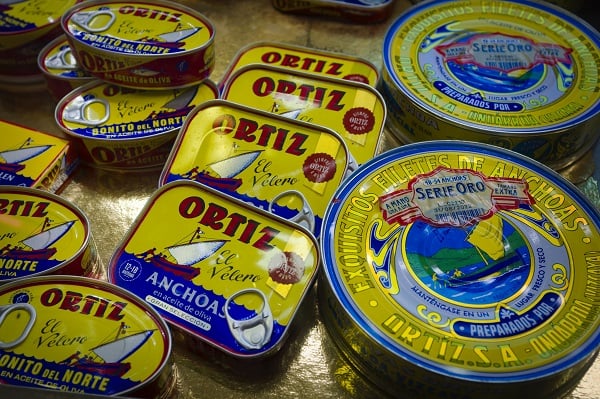
Mackerel,
Sardines,
Poultry liver pâté,
Fish rillettes (salmon or tuna),
...
The cooked dishes in trays are varied: lamb or chicken tajine, tuna and potatoes, salmon with rice and vegetables, duck with olives, Parisian poultry, rabbit sauté, Basque chicken, squid à l'armoricaine, lamb flageolet beans, lamb navarin, tuna salad, pork with lentils, superior cassoulet, Creole pork rice pineapple, garbure, sausage and cabbage stew, paella, veal marengo, sweet and sour pork, sausage lentils, etc.
On vetsecurite.com, find a wide selection of military equipment, combat rations, survival rations and freeze-dried meals. We also offer military clothing, military shoes and boots and military equipment. Find the biggest brands at the best prices in our online store.