 The best equipment for pros and enthusiasts alike
-
 Professions
-
-
-
-
-
-
-
-
All Tops
![All Tops]()
-
-
-
All Bottoms
![All Bottoms]()
-
-
-
All Footwear
![All Footwear]()
-
-
-
All Bags
![All Bags]()
-
-
-
All Accessories
![All Accessories]()
-
-










Craftsmanship: What Are the 4 Key Sectors?
The Chambers of Trades and Crafts distinguish 4 major activity sectors grouping the trades that fall under craftsmanship. These sectors are: food, construction, manufacturing and services. In France, there are more than 250 trades attached to them for nearly 510 different activities. A dynamic sector, craftsmanship represents no less than 25% of the country's economy. The most important sector is construction which constitutes 40% of all registered craft activities. Next comes the services category (32%), manufacturing (17%) and food (11%). Whether equipped with kitchen clothing, work overalls or safety shoes, all are craftsmanship professionals.
Table of Contents:
- The food sector
- Who are construction craftspeople?
- Manufacturing and production in craftsmanship
- Craftspeople: service trades

From the most traditional to the most modern, craft trades are constantly evolving as new technologies, materials and means of communication appear. They also reflect the concerns of our society, with recent growth in trades related to ecology, waste reprocessing and clean technologies. This is where the most hiring opportunities for young people are found, even though many other craft sectors are recruiting, particularly in construction and food trades.
Craft enterprises are generally modest in size and rarely exceed twenty employees. This means that a craftsperson must add several strings to their bow to be a good entrepreneur. They must be able not only to manage their team, but also to handle accounting and prepare estimates, not forgetting to build a clientele. All this requires a real entrepreneurial sense, but also appropriate training. Beyond the CAP (Certificate of Professional Aptitude), it is recommended to pursue a BTS (Higher Technician Certificate) or a BUT (University Bachelor of Technology, formerly DUT: University Diploma of Technology) to obtain the qualifications suited to the desired profession.
The food sector
True holders of French know-how, craftspeople and merchants in the food sector are closest to consumers. Among the most representative professions in food are the trades of baker/pastry chef, butcher/delicatessen owner, chocolatier, confectioner, ice cream maker, caterer or fishmonger. Food sellers and pizza makers are also attached to this key craft sector which must know how to establish a true relationship of trust with consumers. The know-how of these professionals ranges from manufacturing products (dairy products, ice cream, confectionery) to their transformation (meat) through preservation techniques (fruits and vegetables, seafood).

Who are construction craftspeople?
Job creator, the construction trades distinguish 3 families of professions:
- Structural work trades: mason/cement worker, carpenter, earthworker, stone cutter...
- Second work and finishing trades: roofer/zinc worker, painter/plasterer, carpenter, glazier, tiler, plasterer, locksmith...
- Technical and electrical equipment trades: plumber/heating engineer, electrician...
Opportunities for creation and takeover are not rare in the construction sector where the number of craft enterprises is constantly increasing. Management and leadership skills are essential to evolve in this sector which has seen the hardship of its trades decrease thanks to process automation through new technologies. It encompasses development, construction and finishing work as well as drilling, electrical installation and insulation work, not forgetting masonry, carpentry and extractive industries (stone, clay, peat).

Manufacturing and production in craftsmanship
Manufacturing trades distinguish 4 main groups:
- Metalworking: ironworker/boilermaker, goldsmith, jeweler...
- Textiles, clothing and leather: fashion designer, leather goods maker, upholsterer...
- Wood and furniture: furniture manufacturer
- Various manufacturing (ceramics, glass, paper, construction materials, printing, reproduction, graphic arts...)
Impossible to evoke exhaustively, the manufacturing sector brings together a very large number of trades that share artistic and technical know-how. These craftspeople are able to shape a wide range of raw materials (wood, metals, glass, textiles...) to create all kinds of objects (clothing, toys, musical instruments, jewelry, etc.).

Craftspeople: service trades
Even more diversified, the Services sector is presented as follows:
- Transportation: taxi driver, mover, paramedic...
- Repair: auto body repairer, agricultural mechanic, electronics or appliance repairer, furniture, cobbler, art object restorer...
- Personal care and property services: hairdresser, beautician, dyer, dry cleaner, mortuary services, pet groomer, farrier...
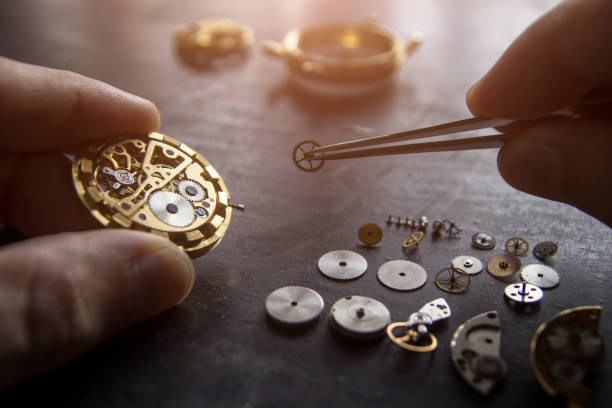
- Heritage object restoration: jeweler/watchmaker, upholsterer, cabinetmaker, fashion designer, bookbinder...
- Various services: florist, photographer, chimney sweep, piano tuner, technical inspector...
In total, more than 250 trades are grouped under the banner of craftsmanship while others continue to emerge under the impetus of cutting-edge technologies and modern means of communication.


-
![Over 200 brands At the best price]() Over 200 brands At the best price
Over 200 brands At the best price -
![Secure payment In 3 or 4 interest-free installments]() Secure payment In 3 or 4 interest-free installments
Secure payment In 3 or 4 interest-free installments -
![Delivery across Europe From €79 of purchase]() Delivery across Europe From €79 of purchase
Delivery across Europe From €79 of purchase -
![Customer service Monday to Friday]() Customer service Monday to Friday
Customer service Monday to Friday


