 The best equipment for pros and enthusiasts alike





-
 Professions
-
-
-
-
-
-
-
-
All Tops
![All Tops]()
-
-
-
All Bottoms
![All Bottoms]()
-
-
-
All Footwear
![All Footwear]()
-
-
-
All Bags
![All Bags]()
-
-
-
All Accessories
![All Accessories]()
-
-
Nijmegen Four Days Marches: the complete guide to "The Walk of the World"
Every year, in the third week of July, a city in the Netherlands becomes the stage for one of the largest walking gatherings in the world. A look back at the history, format and secrets of the Nijmegen Marches.
There are races known for their speed, and events known for their distance. The Nijmegen Four Days Marches (Nijmeegse Vierdaagse) is known for something else: repeated endurance. Walking 30, 40 or 50 kilometers is already no small feat. Doing it again the next day, then the day after, then a fourth time — that is what has built the legendary reputation of this Dutch event nicknamed "The Walk of the World".
In brief: in 2026, the 108th edition will be held from Tuesday 21 to Friday 24 July, with 47,000 places already sold out at a price of 120 euros.
An event born in the army
Contrary to what one might think, the Nijmegen Marches was not created as a general public hiking event. Its origins are military: the idea came from a Dutch officer eager to improve the endurance and fatigue resistance of his soldiers over long distances.
The very first edition took place on 1 September 1909. It brought together 296 military personnel and only 10 civilians, spread across fifteen different routes departing from ten separate barracks — and not, at that time, from Nijmegen alone.
It was in 1925 that the city of Nijmegen definitively established itself as the permanent start and finish point. Its asset: a region of varied landscapes, between plains, polders, forests, the banks of the Waal and the Meuse, hills around Groesbeek and proximity to the German border — enough to offer four days of walking with very different atmospheres.
From military exercise to international event
The event gradually opened up to civilians, women and foreign participants. The 1928 edition, organized in the wake of the Amsterdam Olympic Games, marked a true international turning point, with the arrival of German, British, Norwegian and French walkers.
Today, military personnel and civilians march side by side: families, hiking clubs, companies, associations, foreign military detachments in uniform... The Nijmegen Marches has become a symbol of encounter between cultures and generations, as much as a physical challenge.
What distance to cover: 30, 40 or 50 km per day?
Three formats are offered each day:
- 30 km/day, approximately 120 km over four days
- 40 km/day, approximately 160 km
- 50 km/day, approximately 200 km
The real difficulty does not come from a single stage, but from repeating the effort four days in a row, with limited recovery time between each day.
Can you freely choose your distance? Not entirely. Civilians must comply with a minimum regulatory distance, set each year according to the participant's age and category: it is possible to register above this minimum, but never below it. In a group, all members must cover the same distance.
Military detachments are required to cover 40 km starting from the Heumensoord camp, with some also required to carry a pack of at least 10 kg.
The four days, four atmospheres
Day 1 — The Elst Day (Dag van Elst)
Heading north of Nijmegen, through the Overbetuwe region, between the Waal and the Rhine, via villages such as Lent, Oosterhout, Valburg and Elst. The terrain is generally flat, but the euphoria of the start often pushes participants to walk too fast. The challenge of the day: finding the right pace from the very first kilometers.
Day 2 — The Wijchen Day (Dag van Wijchen)
Heading west, through the polders of the Land van Maas en Waal, to the lively square of Wijchen. The fatigue from the previous day begins to take its toll. It is also the day of Roze Woensdag ("Pink Wednesday"): residents and walkers dress in pink to celebrate diversity and inclusion, a tradition that has become emblematic of the entire week.
Day 3 — The Groesbeek Day (Dag van Groesbeek)
Considered the hardest day, nicknamed "the day of the seven hills". The route crosses forests, valleys, hillsides and vineyards around Groesbeek and Berg en Dal. After 60 to 100 km already covered, every climb weighs heavily: this is often where training and mental strength truly make the difference.
Day 4 — The Cuijk Day (Dag van Cuijk)
The most symbolic day. Heading south towards Cuijk, with the spectacular crossing of a military floating bridge installed on the Meuse, before returning to Nijmegen and the triumphant entry onto the Via Gladiola.
The Via Gladiola: a legendary finish
The Via Gladiola is the nickname given to the Sint Annastraat, the main avenue through which walkers enter Nijmegen. Tens of thousands of spectators line it to cheer, and participants traditionally receive gladioli.
Why this flower? Its name comes from the Latin gladius ("sword"), and in ancient Rome it was associated with victorious gladiators. It thus became the natural symbol of walkers who have conquered four days of effort.
The Four Days Cross (Vierdaagsekruis)
Completing all four stages according to the rules earns the Four Days Cross, an official decoration recognized in the Netherlands, particularly in the military world.
To obtain it, you must:
- depart within the scheduled time slots
- follow the entire route
- pass all checkpoints
- meet the imposed time limits
- use no means of transport
- complete all four days in accordance with the regulations
Military personnel: the beating heart of the event
Each edition brings together several thousand Dutch and foreign military personnel. In 2025, 6,488 military personnel set off from Heumensoord as early as 4:30 in the morning. The Heumensoord camp usually hosts armed forces from more than 25 nations.
Military detachments march in formation, under strict group discipline: the objective is not for the fastest to finish, but for the entire unit to cross the finish line together.
Why is the Nijmegen Marches so feared?
Walking 30 or 40 km just once is within reach of many trained walkers. The real challenge of Nijmegen is doing it again the next day, and the day after that.
- Cumulative distance: between 120 and 200 km over four days, often 6 to 12 hours of walking per day.
- Blisters, the true scourge of the event, made worse by moisture, heat or poorly broken-in shoes.
- Muscle and joint pain: calves, knees, hips, lower back, and arches of the feet.
- July weather, capable of swinging between intense heat and storms. In 2022, the first day was even cancelled due to extreme heat.
How to train for the Nijmegen Marches
Effective preparation is built over several months, progressively developing endurance, foot resilience and the ability to recover from one day to the next.
- 4 to 6 months before: one to two outings per week of 10 to 20 km, muscle strengthening, shoe testing.
- 2 to 4 months before: 20 to 30 km outings, first weekends on two consecutive days, carrying a pack.
- 1 to 2 months before: long walks of 30 to 40 km, two to three-day back-to-back sessions in real conditions.
- 10 to 15 days before: reduce volume, maintain regular sleep, no last-minute experiments.
The classic mistake: training only on a single long weekly outing. Nijmegen above all rewards the ability to recover and then set off again — hence the importance of back-to-back two-day sessions during preparation.
Essential equipment
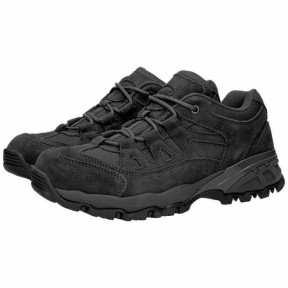
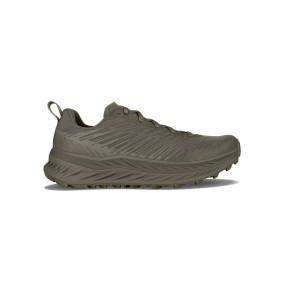
- Shoes: already broken in, never new, suited to the shape of the foot.
- Socks: moisture-wicking, double-layer system to minimize friction.
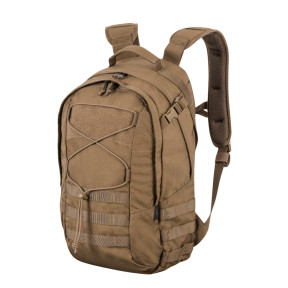
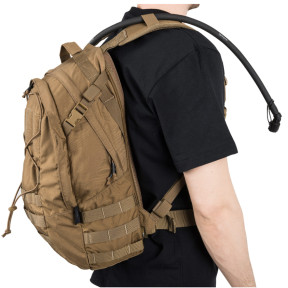
- Pack: as light as possible for civilians; weight stabilized and adjusted for military personnel.
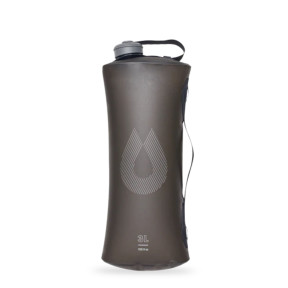
- Hydration: hydration bladder or water bottles according to preference.
- Clothing: breathable fabrics already tested during training.
The Vierdaagsefeesten: Nijmegen in celebration
The march is accompanied by an enormous popular festival, the Vierdaagsefeesten. In 2026, the festivities take place from 18 to 24 July, with more than 1,000 artists and 45 stages spread throughout the city, largely free of charge.
Key dates in the history of the march
- 1909: first edition, 296 military personnel and 10 civilians.
- 1925: Nijmegen permanently becomes the start and finish point.
- 1928: internationalization of the event.
- 2004: the award no longer distinguishes between men and women.
- 2016: 100th edition, special distance of 55 km.
- 2020-2021: cancellations due to Covid-19.
- 2022: edition reduced to three days due to extreme heat.
- 2024: 41,552 finishers for the 106th edition.
- 2025: record number of starters, 45,539 participants.
- 2026: 108th edition, 47,000 places, all sold out.
In summary
The Nijmegen Marches is not just a sporting performance: it is a century-old tradition in which military personnel and civilians, Dutch and foreigners alike, share the same endurance challenge — and the same emotion as they cross the finish line of the Via Gladiola, gladioli in hand.
Related products
Related articles


-
![Over 200 brands At the best price]() Over 200 brands At the best price
Over 200 brands At the best price -
![Secure payment In 3 or 4 interest-free installments]() Secure payment In 3 or 4 interest-free installments
Secure payment In 3 or 4 interest-free installments -
![Delivery across Europe From €79 of purchase]() Delivery across Europe From €79 of purchase
Delivery across Europe From €79 of purchase -
![Customer service Monday to Friday]() Customer service Monday to Friday
Customer service Monday to Friday


