 The best equipment for pros and enthusiasts alike







-
 Professions
-
-
-
-
-
-
-
-
All Tops
![All Tops]()
-
-
-
All Bottoms
![All Bottoms]()
-
-
-
All Footwear
![All Footwear]()
-
-
-
All Bags
![All Bags]()
-
-
-
All Accessories
![All Accessories]()
-
-

In a previous article, we had discussed wine making, more specifically during harvest periods. We had seen the roles of viticulturists, winemakers and harvesters who make it possible to obtain harvests of grape clusters destined for vinification. Once this work has reached maturity, it only remains to be properly stored before then arriving at our tables. Let's discover the different facets that lead to serving this beverage inseparable from French gastronomy.
Summary:
Oenology
It is the science of studying and understanding wine, from vine cultivation to packaging. The oenologist is often confused with the sommelier. The latter fulfills the function of restaurant cellar manager and must possess knowledge in oenology, but is not necessarily an oenologist. Conversely, the oenologist is not a sommelier. These are two related but distinct professions. The title of oenologist is obtained with the National Diploma in Oenology.
The oenologist is thus perfectly aware of grape varieties, favorable conditions for cultivation and harvesting, the vinification of different types of wines (red, white, rosé, sparkling or others) or even tasting processes (Appearance, Nose, Mouth). This wine professional is then the main quality guarantor throughout the life of a wine.
Wine Cellar and Preservation
The wine cellar is the major place for storing wine bottles. Storage conditions and atmosphere are crucial for preserving flavors and quality of products. The cellar is most often an underground or semi-underground building, refrigerated or not, which therefore meets precise conditioning criteria.
Wine preservation indeed relies on several factors:
- Temperature: It should stabilize around 13°C. Too high a temperature should be avoided at all costs, as it accelerates wine aging while degrading its quality.
- Hygrometry: This concerns air humidity. The ideal level for wine aging is around 70%. The cork stopper of the bottle is the main watertight barrier for wine while being breathable for gas balance between the outside and the contents. Cork risks degrading with hygrometry below 40%. Beyond 80%, mold development will damage stocks.
- Light: Wine bottles, especially those containing light wines, must be protected from direct light at the risk of altering the taste. It is the ultraviolet rays penetrating through the bottle glass that have a negative influence on wine preservation quality. Cellars are then either equipped with a glass door treated anti-UV, or with an opaque door to keep the interior in darkness.
- Vibrations and tremors: Wine must avoid vibrations as much as possible to preserve its integrity. Wine cellars are thus installed away from sources of vibration (roads, railways and other highly noisy places).
- Bottle position: horizontally, the cork stoppers are constantly moistened for optimal sealing. The vertical position should only be used for transport and short-term storage.
Some wine cellars make their stocks available for online sales. For direct commerce on site, establishments dedicated to this wine activity (or other spirits) are called wine merchants. They are subject to specific legislation different from restaurants or wine bars. The manager of such an establishment is its namesake: the wine merchant. They are a person either independent or dependent on a commercial chain. They are the merchant who carries out the sale of wines and spirits there.
This requires knowledge of sommelier work and oenology. The wine merchant must be able to advise a customer with their wine knowledge. In short, a profession quite close to the sommelier.

The Sommelier
The sommelier or female sommelier is the person responsible for wines and alcoholic beverages in restaurants. The function originates from the 14th century, where they were responsible for restocking food supplies or linen for the court. It was in 1812 that the term came to designate the person who takes care of wine and cellars. Today, they are the one who provides their expert advice to customers in restaurants, wine bars, at wine merchants, online sales sites or even in specialized press.
Their skills and knowledge concern wine tasting, oenology, distillation, viticulture and arboriculture, as well as hospitality and restaurant service for reception, welcoming, organization and management. Their main expertise is knowing how to pair food and wine to best satisfy the tastes of customers and professionals. Their role is essential in gastronomic establishments to inform customers or to manage the wine cellar of which they know every corner.
The sommelier position requires specialized training to meet the requirements of these taste mediators. Due to their prestigious status, it is generally high-end restaurants that can afford such services that establishments will not fail to highlight. Outside of restaurant tasks, they help build a wine cellar, participate in purchases, inventories and sales. In the largest establishments, the sommelier works under a head sommelier who is in charge of the restaurant's cellar and a sommelier brigade. The sommelier assistant assists the head sommelier.
Wine service is another of the essential skills of sommeliers, from the presentation of the bottle to serving in glasses. The entire protocol of capsule cutting, bottle opening and wine pouring must be as precise as it is rigorous.
Training for this craft art is done through two state diplomas: the complementary mention in sommelier work and the professional certificate in sommelier work. It is also possible to follow technical training, university courses or professional titles of "sommelier consultant" granted by training organizations.
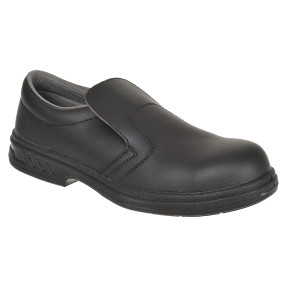
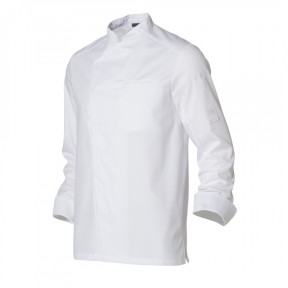
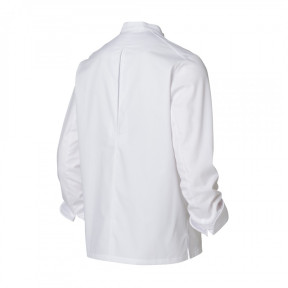
The sommelier's attire is elegant in appearance since they serve in high-end restaurants. They will necessarily wear the essential apron which, equipped with practical pockets, will be the main tool to avoid stains and take notes of customer orders. They will also wear a well-dressed chef's jacket , as well as a sober pants . For shoes, they can choose safety shoes with a protective toe cap for movements in the cellar, and non-slip for the smooth floors of kitchens and restaurants. They can also wear the symbol of a grape cluster on their outfit to show their status.

Wine in Cooking
Beyond the drink itself, wine is also an ingredient with high added value for gastronomy. French restaurateurs and chefs know how to combine flavors in their dishes with a wine and cuisine pairing that dates back to Antiquity. We can distinguish wine cuisine and cooking with wine which are two different approaches to the taste contribution of wine in gastronomy.
Wine cuisine is mainly expressed through preserves, jellies and cooked wines. We also find aperitifs and cocktails like sangria for example. Wine can also complement sauces such as bolognese, burgundy, madeira or many others.
Cooking with wine concerns the use of wine in cooking for food preparation. This includes all kinds of soups, appetizers, fish, seafood, meats, offal, and even cheeses or desserts. We can also mention wine vinegar resulting from the acid fermentation (or acetic) of wine.
The attractions of wine do not stop at its bottle and will therefore be a choice asset for the best chefs in the gastronomic sector.
The prestigious image of great wines is not limited to the restaurant and hospitality sectors alone. It leads to tasting events and competitions where different AOC labels are at stake. The tasting protocol is as meticulous as that of service and will be able to detect all the great qualities of wines being tested.

The creation, preservation, service and wine tasting are, as we have just seen, domains as rich as the flavors of the product itself. The actors in this gastronomic sector must master a vast range of knowledge to offer the general public and professionals the best of what this noble beverage can offer.
Related products
-55%
Related articles

Institutional kitchens: catering from school to business
Read the article


-
![Over 200 brands At the best price]() Over 200 brands At the best price
Over 200 brands At the best price -
![Secure payment In 3 or 4 interest-free installments]() Secure payment In 3 or 4 interest-free installments
Secure payment In 3 or 4 interest-free installments -
![Delivery across Europe From €79 of purchase]() Delivery across Europe From €79 of purchase
Delivery across Europe From €79 of purchase -
![Customer service Monday to Friday]() Customer service Monday to Friday
Customer service Monday to Friday


