The best equipment for pros and enthusiasts alike

Bulk discounts
-5%
 Professions
With French people's trips by car having decreased by almost 5% between 2010 and 2018, those by public transport have progressed by 14%. In 2014, 63% of French people took bus, metro, tramway or train for daily trips. They were 73% in 2019.
In France, the most used public transport mode is the bus at 71% which far surpasses the metro at 49%, followed by the tramway at 44%, then the RER and the TER.
We must not confuse security and safety. Breach of security in public transport is defined by malicious acts, motivated by a voluntary intention to harm others or material goods. Safety concerns involuntary, accidental and natural events.
Summary:
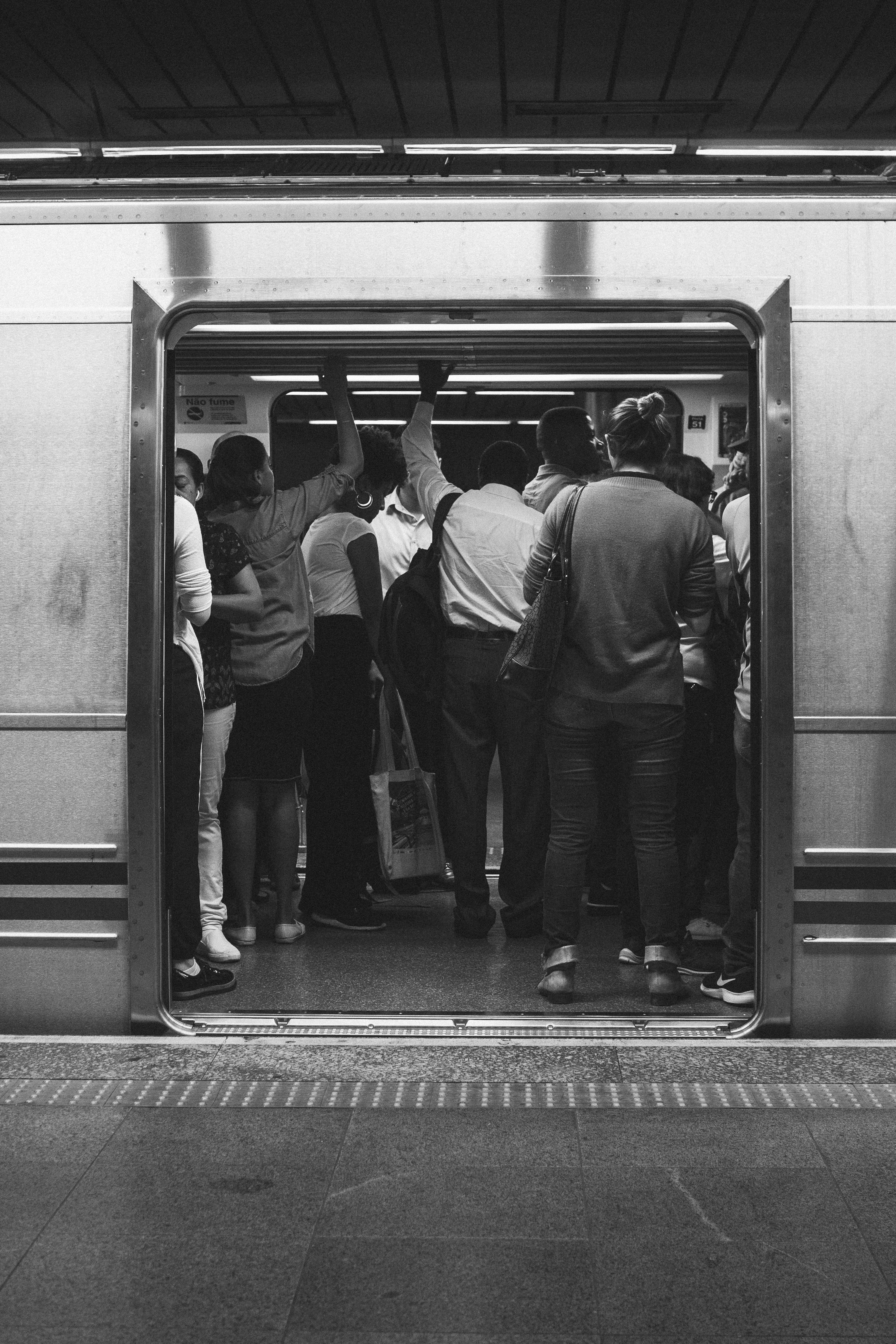
Numerous threats, of different forms and contexts depending on the means of transport, are present in public transport. But what brings them all together is the imposed otherness. Indeed, the first tensions and dissonances form involuntarily through a social diversity creating misunderstandings and potential conflicts.
The most frequent insecurities felt by users taking public transport are: physical incivilities (waste, graffiti…) and social ones (alcohol, drugs, begging, theft...), overcrowded or empty transport and especially at night with all the dangers it entails and attacks more or less violent towards women. More recently, the development of automatic metro lines, whose operation is ensured without a driver, contributes to reinforcing isolation, the risk of danger and travelers' anxiety. All the more so since the lockdown which caused a significant drop in the use of public transport.
According to studies conducted by the National Observatory of Crime and Criminal Responses, 45% of users and more particularly 51% of women have already felt or regularly feel a lack of security in public transport.

Since the signing of the Territorial Strategy for Security and Crime Prevention plan (SYSTRAL) for the TCL network (Lyon Public Transport) in 2014, the Rhône metropolis has been actively fighting against insecurity in public transport. Technical means have been implemented including 7700 video protection cameras, security PCs for distress calls, GPS locating public transport vehicles and many others. Concerning human resources, TCL has numerous agents responsible for security and safety of traffic.
In 2019, the Ile-de-France region also invested heavily in the security of its public transport operated by SNCF and RATP in order to alleviate the fears of users and staff and guarantee better transport and working conditions.
The human presence has been reinforced at all hours throughout the entire network with, notably, 40 canine detection teams trained to respond to a potential threat (explosives, suspicious object…).
Traffic improvement has also been taken into account with an increase in staff numbers including 5300 agents who can call the GSPR (Security Group of the Presidency of the Republic) in case of suspicious situations and others, in plain clothes, assigned to fight violence against women.
Now, video protection is generalized in all transport and any RATP or SNCF traveler can contact the single emergency number 31 17 by telephone or by SMS at 31 17 7 if needed.
Aviation security is defined as all the measures developed for the prevention of malicious acts (terrorism) targeting aircraft, their passengers and crew members. For example, the Filtering Inspection Posts (PIF) at airports promote security. Similarly, since 2017, an emergency telephone number for aeronautical rescue has entered service (the 191).
The French aeronautical system is robust and based notably on: surveillance actions (rounds, patrols, video surveillance…) of airport areas or the ability to prevent risks of external attacks (surface-to-air missile fire, direct fire on aircraft, etc.) and mitigate their effects or the in-flight security measures (prohibition from the cockpit, cabin surveillance…).

With a large quantity of unarmed civilians on board, ships and particularly cruise ships are a tempting target (piracy, terrorist risk…).
Their security is then a daily challenge. For example, an International Ship and Port Facility Security Code (ISPS code) was implemented after the 9/11/2001 attacks. Cruise ships have video surveillance with facial recognition and ports are also heavily controlled. Ships can also call for military intervention in case of attack.
In summary, at the security level, the airplane is the safest means of public transport, where the fewest accidents and deaths are recorded, thanks to its numerous technological developments. The bus follows in third position after the train.
Concerning security, each city with a public transport network tries daily and as best as possible to improve its threat anticipation systems in order to reduce crimes and alleviate the anxiety-inducing feeling that users or staff working there may experience.

At our small level, we can all contribute to anticipating these tensions between users. Let's be patient, understanding, open and smiling in order to make these chance encounters daily, enriching and positive experiences!