The best equipment for pros and enthusiasts alike









 Professions
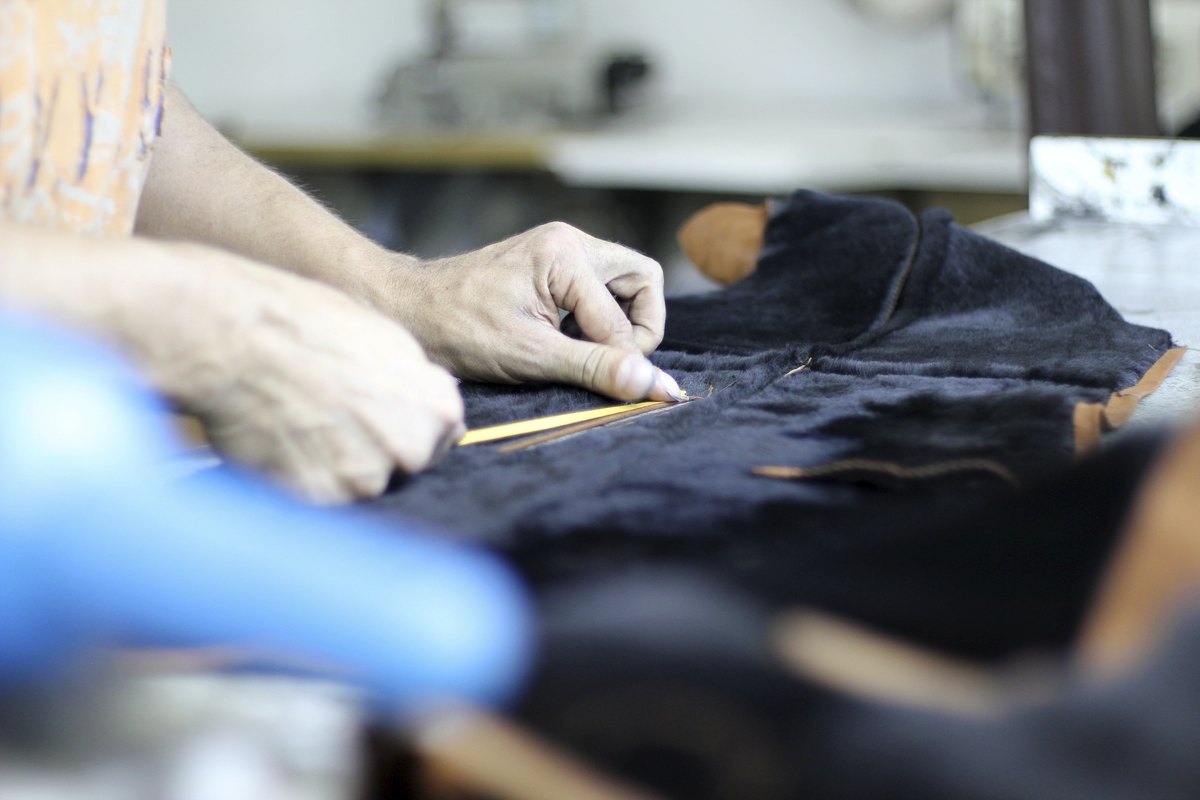
The textile industry encompasses all activities related to fabrics, from design to marketing through manufacturing. This sector includes a wide variety of professions covering the entire manufacturing and processing chain of fibrous raw materials. Let's discover a range of fabric types, their applications and the techniques and professions that shape them.
Table of Contents:
Textile materials can be classified into three categories.
First, we distinguish natural materials of plant or animal origin. Among this class, we find wool obtained by fleece and which comes in several high-quality materials such as merino. Silk comes from the product of silkworms. Cotton of plant origin is a fiber that combines softness and comfort. We can also mention linen extracted from the fibers of the plant of the same name.
In the second category, artificial materials are designed with fibers derived from cellulose extracted from plants. Among others, we can distinguish viscose, from wood cellulose, modal, cupro or cellulose acetate.
In the last category, we find synthetic materials produced by synthesis of chemical compounds derived mainly from hydrocarbons or starch. Among the widespread materials are polyester, polyamide, elastane or acrylic.
The creation and harvesting of these raw materials represent the first step before being transformed by the different weaving techniques.
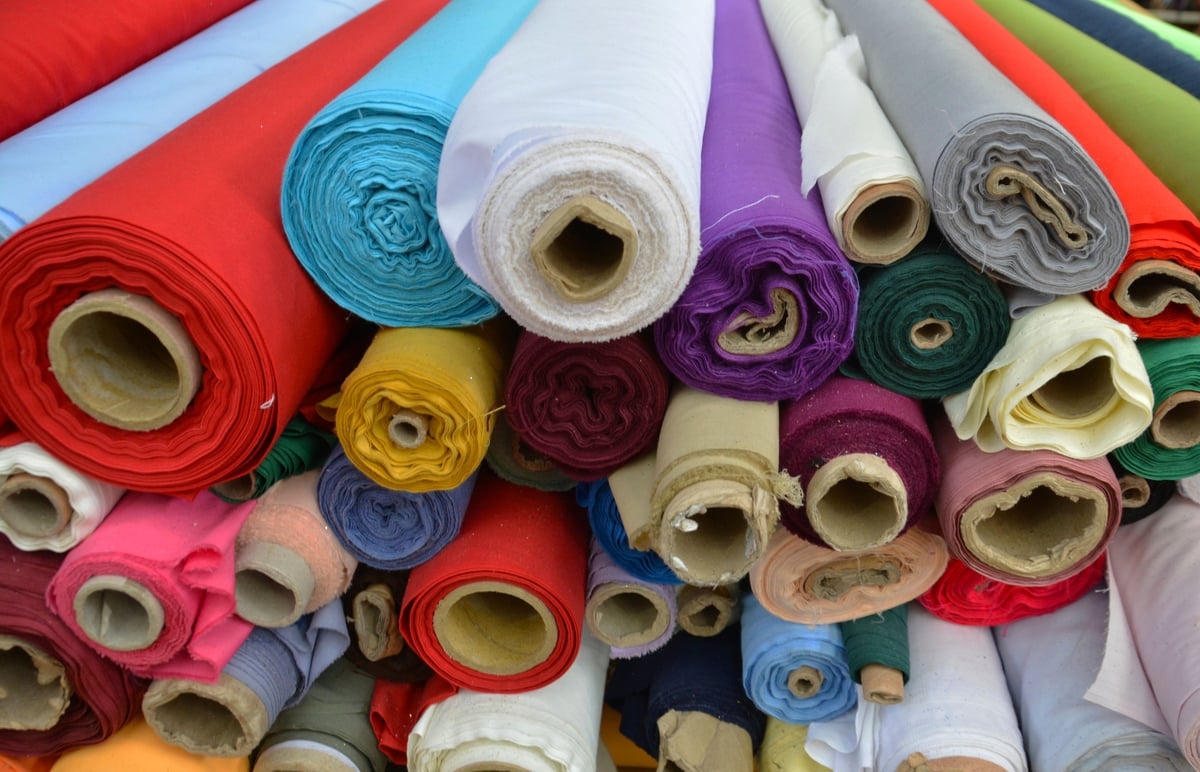
At the start of the manufacturing process, the previously mentioned raw materials are transformed into yarns. The various methods are spinning, covering, twisting or texturing. The one-dimensional yarns are then woven or knitted to obtain two-dimensional or three-dimensional textile surfaces.
The textile surfaces obtained are then finished, most of the time to give a color or special properties (such as coating for example).
An alternative technique treats fibers by carding them and bonding their web thermally or with an adhesive binder. This type of textile is called nonwoven.
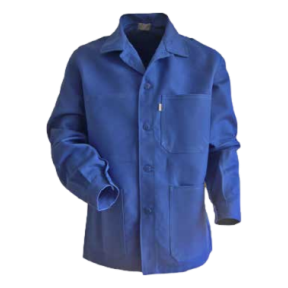
Besides use for clothing, furniture or household linens, textiles also serve for roads, railways (geotextiles), to drain land or to grow plants (agrotextiles), and other technical applications. Certain fabrics also help meet PPE standards for work clothing such as those intended for high visibility in order to comply with EN ISO 20471 standard.
Upstream of manufacturing, the professions in research and development departments allow for conceptualizing the increasingly advanced innovations in textile materials, fashion, professional clothing and various alternative applications. Before mass production, prototypists, production coordinators or creative directors are dedicated to bringing clothing line projects to fruition.
At the production level, weaving machines are handled by maintenance technicians. The end of the process brings products to the hands of colorists and other treatments that follow weaving. All finished products and manufacturing stages are also guided by quality controls in the hands of dedicated personnel.

The life cycle of everyday clothing or professional attire thus encompasses numerous techniques and as many professions. All these facets of textile creation help cover the essential needs of the modern world both professionally and in everyday life.