The best equipment for pros and enthusiasts alike


 Professions
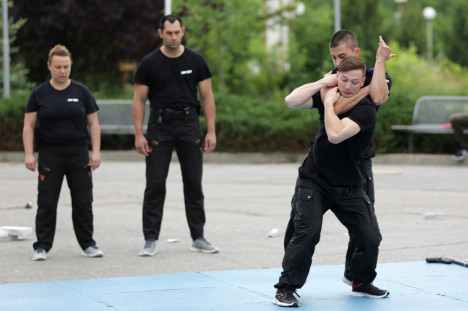
Krav Maga means "close combat". However, it is neither a sport nor a martial art. It is a self-defense method based on natural reflexes and adapted to be able to respond to a threat or aggression whether you are a civilian or a security professional.
Summary:
Its history is the result of the work of one person IMI LICHTENFELD. Born in Bratislava (in former Czechoslovakia) this wrestler, boxer and gymnast put his knowledge to benefit the Jewish community during the period when it had to protect itself from growing fascism in Europe. After multiple fights, he realized that the street and competition had nothing in common. It was at that moment that he decided to adapt his practice. Krav Maga was born.
Forced into exile, he went to Israel where he joined the army. It was during this period that he would perfect his techniques for the police, special forces and of course the army. For many years, he would analyze his approach and practice to create an efficient, fast and simple system that would respond to the various problems encountered in the field.
For Mr LICHTENFELD, Krav Maga is, above all, based on moral and human values, which emphasize the importance of integrity, humility and respect for others.
The most interesting thing about this self-defense system is that the principles taught do not make the practitioner, it is the practitioner who will take their Krav Maga where they want it. Indeed, even if Krav Maga does not have rules in the strict sense of the term, there are certain principles to understand and implement:
- not to come out injured from combat (risk/danger factor analysis to avoid injuries)
- techniques are based on natural reflexes of the human body (they must be refined, directed to effectively respond to problems)
- defense must be proportional to the attack (depending on the situation and need, one must act by controlling the reaction and force to avoid excessive injury to the opponent)
- defend and attack by the shortest path (by a given path and taking into account comfort and safety)
- the use of sensitive points of the human body (in order to be able to hit and defeat the opponent)
- the use of all weapons of the human body (including the use of common objects to defend and counterattack)
- no rules, no limits (except legislation in force in the country)
Each practitioner will develop their Krav Maga with their own skills and qualities.
Thanks to these principles, Krav Maga adapts, evolves, updates itself according to the different threats that reach us. Its strong point, if we had to retain only one, is that the practitioner does not rely on a closed way of putting techniques into practice but on the way to apprehend them.
Krav Maga must be able to be learned quickly from simple procedures.
Indeed, like close combat, Krav Maga is characterized by different incapacitating or lethal techniques. These methods are very easy to learn and very effective. They aim to neutralize an enemy:
The unarmed combat techniques employed are typically the most dangerous, most powerful, and simplest that the human body can generate. They are chosen and adapted to function under maximum stress conditions and on someone who will not let themselves be dominated. In a fight to ensure survival (therefore non-sporting type), the only goal is to eliminate the threat before it eliminates you.
Strikes are therefore focused on anatomical targets:
The fighter systematically seeks to take the initiative of the assault, then to crush the enemy without mercy (within the framework of the law in force). Defense is therefore always a last resort (recovery of initiative) aimed at reestablishing offensive action. Movement is always forward (forward drive).
In a given situation, the response must be:
This results in 3 sets of techniques depending on whether the teaching is intended for the army, police or civilians, the objectives not being the same for these categories (attack, neutralize, or defend).
Krav Maga does not presuppose that fighters respect a set of rules. In particular, training emphasizes atypical situations such as:
The qualities developed during training are: improvement of reflexes, fluidity, speed, precision, correct use of the body's natural weapons, determination, self-control, and appropriate responses to assault situations.
KIDA*
* Krav Maga salute
Article written by Krav Maga Aurillac 15 club by Sébastien Carlat
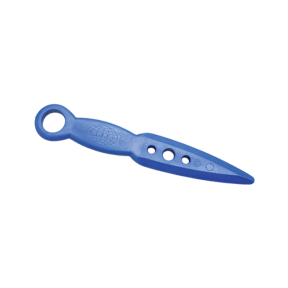
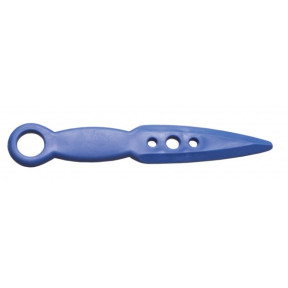
He also tested for you the training dagger: View his review