The best equipment for pros and enthusiasts alike







 Professions
Military knives are not simple cutting tools. They are designed to meet specific and extreme needs, used for survival, combat, and other crucial tasks. Here are four key elements to know about these knives, which are essential military equipment.
Summary:
Military knives are primarily designed for survival, making them indispensable tools for military personnel on mission. They are manufactured to withstand the most extreme conditions, whether in desert, humid, or frozen environments. These knives are versatile: they can cut resistant materials like ropes or wood, serve to prepare food, or help build makeshift shelters. Their robust and multifunctional design allows soldiers to face a multitude of survival situations in hostile terrain, where a simple cutting tool would not suffice. Every detail, from the blade to the handle, is designed to offer maximum functionality and reliability in critical moments.
.jpeg)
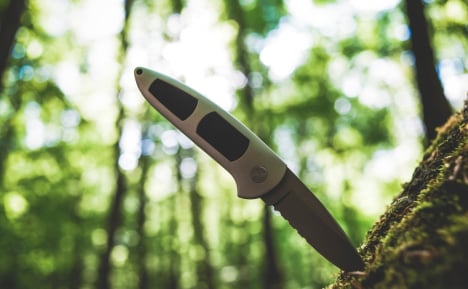
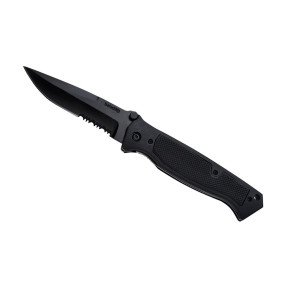
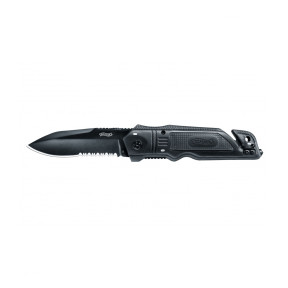
The blade shape of a military knife is crucial as it determines the effectiveness and use of the knife in different situations. Blades can be straight, serrated, curved, or double-edged, each having specific advantages.
For example, a serrated blade is ideal for cutting ropes, belts or resistant materials, while a straight blade offers precise cutting for more delicate tasks. Curved blades are often used for close combat, offering better penetration capability. The blade shape is not just a matter of style; it responds to precise tactical needs, allowing soldiers to react effectively to the challenges they encounter in the field.
Military knives are manufactured from high-quality materials to ensure durability, performance and reliability. Blades are often made of carbon steel, stainless steel or titanium, each offering distinct advantages: carbon steel is ultra-resistant and easy to sharpen, stainless steel offers excellent corrosion resistance, and titanium is lightweight while being extremely robust.
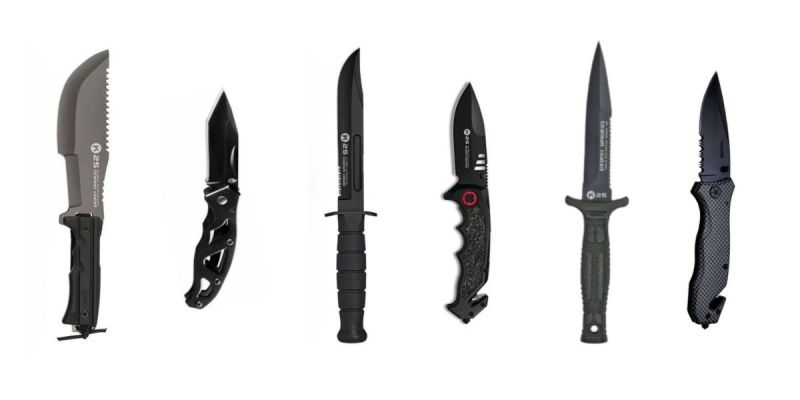
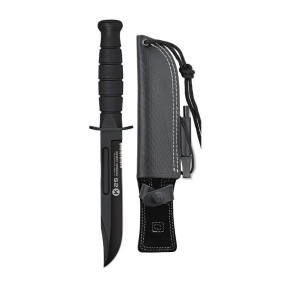
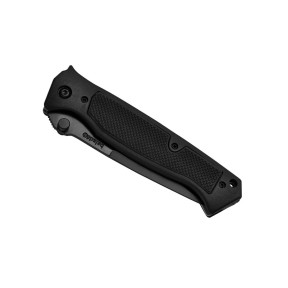
The handle of a military knife must be ergonomic to ensure a safe and comfortable grip, even in difficult conditions. A well-designed handle reduces hand fatigue and allows precise control of the knife, essential during complex or prolonged tasks.
The materials used for handles vary, including reinforced plastics, non-slip rubbers and advanced composites, which offer excellent resistance to wear and weather. Some handles are also textured or equipped with hand guards to prevent the hand from slipping, especially when wet. An ergonomic handle ensures not only optimal comfort, but also increased safety, allowing efficient use of the knife in all circumstances.
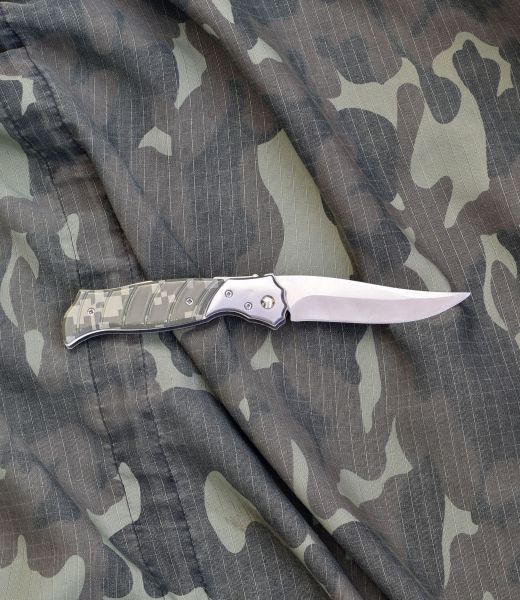
Military knives are designed for versatile use, making them indispensable in the field. They can be used for a multitude of tasks, ranging from survival in hostile environments to combat missions. These knives serve to cut resistant materials, open crates, prepare food, or even perform makeshift repairs. They are also used for tactical actions such as threat neutralization or personal defense. This versatility allows soldiers to quickly adapt to various situations, making these knives true instruments of survival and mission.
Military knives are extremely robust and versatile tools, designed to meet the requirements of military missions. Their design, materials and functionality make them indispensable companions for military personnel in operation, distinguished by their ability to withstand extreme conditions and adapt to a variety of critical tasks.