The best equipment for pros and enthusiasts alike




 Professions
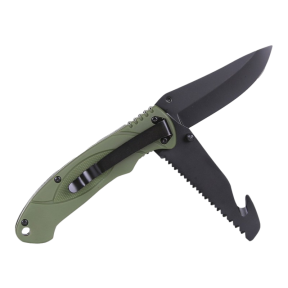
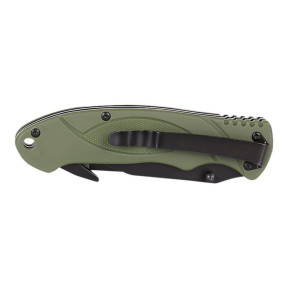
In a hostile environment or for simple wild camping, several tools will be mandatory. Among them, your survival knife will be your best friend. It will be essential to build your survival camp, feed yourself, or for any other uses. It is then very important to take care of it so that it doesn't deteriorate and you don't lose it.
Table of contents:
Nothing complex for transporting your survival knife. For more practicality and so it's always within reach, we recommend getting a sheath adapted to your knife that will attach to your belt. With this type of sheath, no risk of losing your survival knife and you don't need to dig to the bottom of your bag to find it.
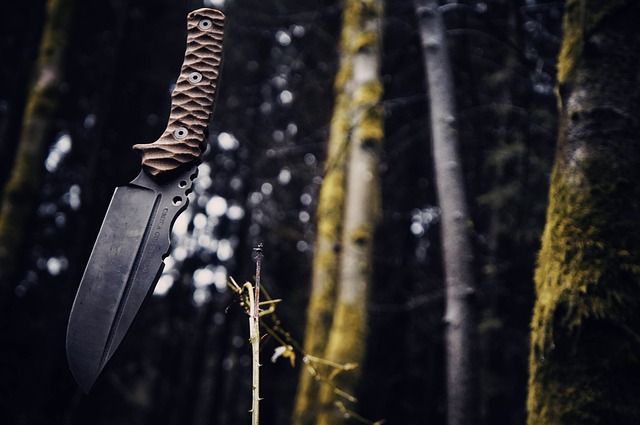
To ensure maximum lifespan, it is also important to properly clean it and know how to maintain it. This step is very important before moving on to sharpening, as you should absolutely not sharpen a dirty knife. Deposits embedded on the blade could damage it through friction.
Cleaning is simple and very quick. This involves soaking only the blade in warm water and rubbing the blade with a cloth and dish soap. We recommend soaking only the blade, as in the case of a folding or retractable knife, it can be risky to moisten the mechanism. You can then rinse it in warm and clean water.
Despite treated materials against corrosion, rust is not impossible so it is important to properly dry the blade with a dry cloth once cleaning is done. Avoid chemical products as much as possible as they can accelerate knife corrosion. You can also use coconut oil which will create a light protective film on the blade.
To continue with maintenance, if you have a folding knife or retractable one, it is important to oil the closing mechanism and the sheath in which the blade is stored to ensure a simple and durable opening. For this, apply coconut oil to these two areas with a clean cloth and activate the mechanism several times to make it penetrate.

Sharpening is the most complex part of maintaining your survival knife. It must be performed when the blade edge is damaged. For this we recommend the sharpening stone or a diamond sharpener, because it adapts to all situations. It is very easy to transport thanks to its small size and it is very effective.
To achieve optimal sharpening, a few rules must be followed :
Position the blade flat on the stone
Respect the blade angle
Pull the knife towards you up to the tip
Don't force the blade, stay flexible
Repeat the movement several times
Perform the same operation on the second side
All these steps should be performed regularly to keep your precious knife for as long as possible. This requires a minimum of time and accessories. You can get them from Vetsécurité.com.