 The best equipment for pros and enthusiasts alike







-35%
 Professions
European standard defining obligations relating to individual protection (PPE) for knees, the EN 14404 standard was put in place to meet the needs of many trades in construction or crafts. Since its creation, brands have been competing in creativity to offer professionals a wide choice of knee pads and work clothing compliant with the requirements of this standard.
Summary:
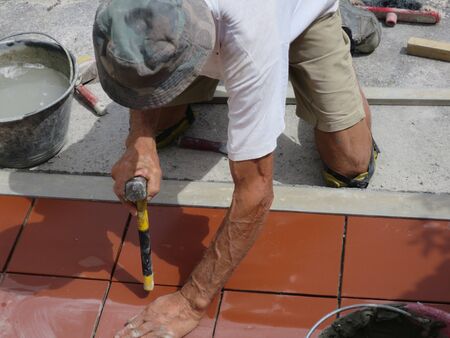
All trades involving a kneeling work position are concerned by this EN 14404 standardized equipment: masons, tilers, plumbers, etc. Pants and knee pads must be perfectly adjusted, that is to say without risks of friction or slipping. In terms of sizes, it should be noted that certain types of knee pads can be shortened if necessary to best adapt to different models of work pants. In all cases, the entire knee must be protected over an area of at least 24 x 15 cm. Depending on the nature of the floors and the type of pressure exerted on the knees, the protections may or may not offer penetration resistance. The tests take into account shock absorption, puncture resistance by sharp or cutting objects, as well as the ability to distribute pressure over the entire surface of the knee. This gives the following classification:
The different levels (or classes) of protection
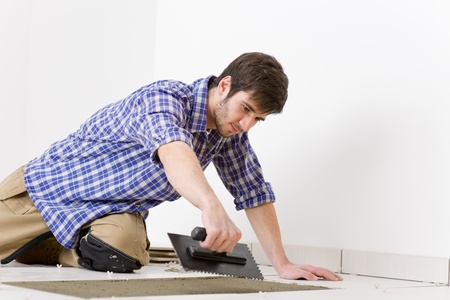
Every employer has the duty to comply with standards regarding workplace safety, so it is incumbent upon them to have the obligation to equip their employees with knee protectors certified by the EN 14404 standard. When a professional working on their knees is not sufficiently protected, they run the risk of exposing themselves to severe injuries such as knee hygroma, an inflammation of the kneecap considered as an occupational disease, sometimes irreversible.

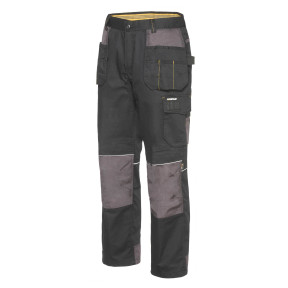
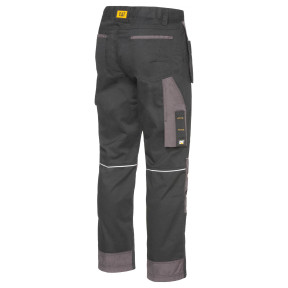
The EN 14404 standard only makes sense if we consider the assembly formed by work pants and suitable knee pads (preferably from the same manufacturer). The performance of a garment is not valid otherwise, unless the knee pads are directly and permanently attached to the garment, as on this model of Caterpillar pants. More and more multi-pocket pants but also overalls and work coveralls have knee pad pockets certified EN 14404. These are most often type 2 protections, according to the categories distinguished below.
The different types of protection

The case of type 1 protections concerns independent knee pads, with straps or elastic cord, which attach directly around the leg, over pants for example. Type 2 protections are protection plates made of plastic foam requiring the wearing of work pants. The latter must be equipped with pockets allowing the knee pads to be slipped directly inside. Type 3 protections are specific equipment that is not attached to the body, but which is put in place when the user moves. They can be indicated for the knees taken as a whole or separately. Finally, type 4 protections benefit from very specific additional characteristics, for example a frame designed to facilitate kneeling or getting up.
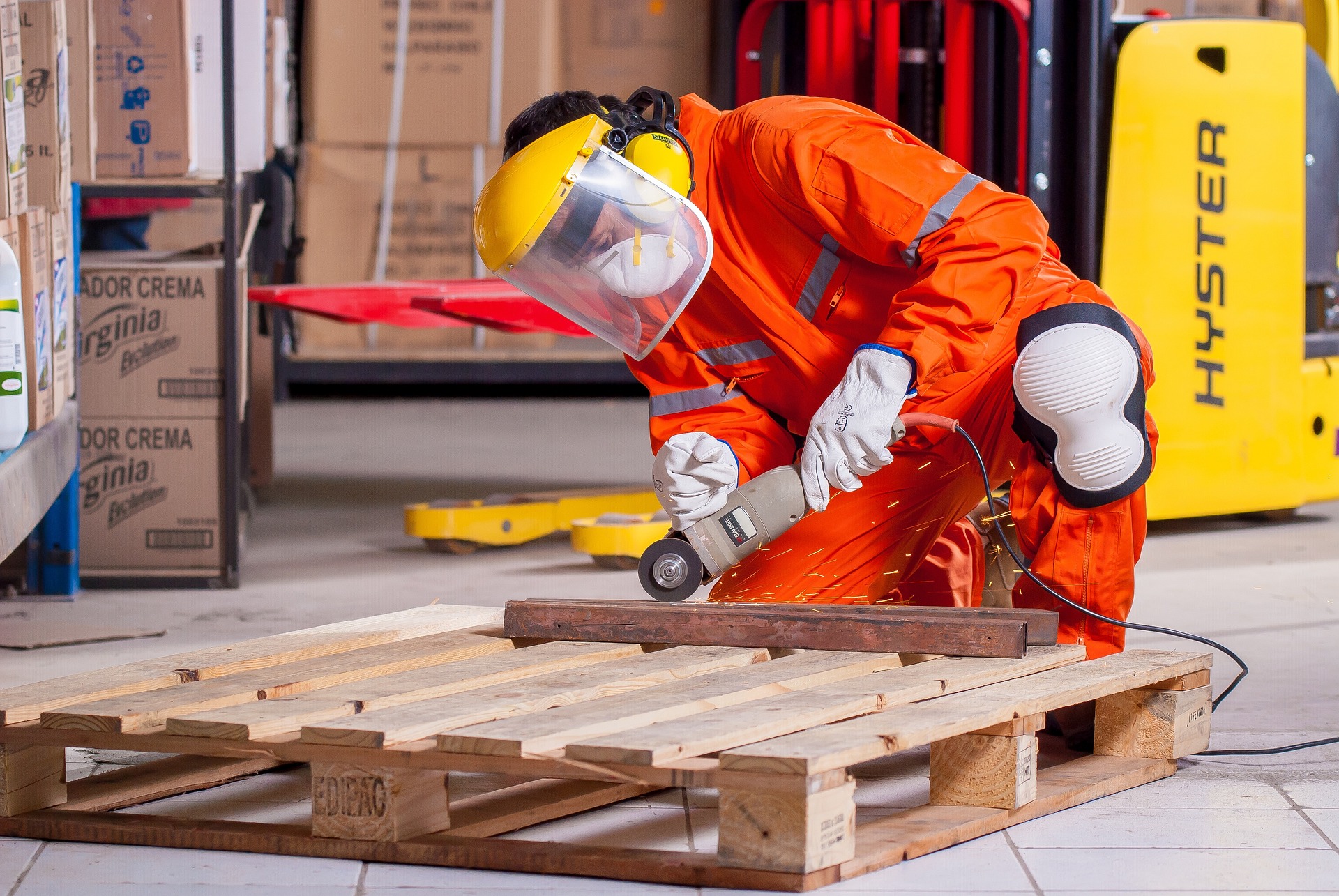
Generally speaking, the EN 14404 standard involves very specific marking obligations that allow knowing the mechanical requirements in terms of consistency and pressure distribution, the degree of comfort or even the dimensions of protected areas. If you need to wear knee pads regularly as part of your work, we recommend opting for type 2 models that slip inside suitable work pants. If, on the other hand, the use of EN 14404 standardized PPE is only occasional for you, prefer type 1 knee pads that can be added over any garment.


