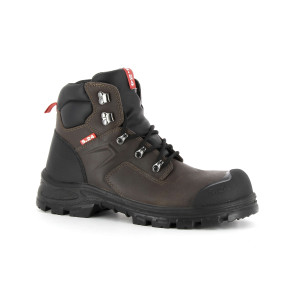
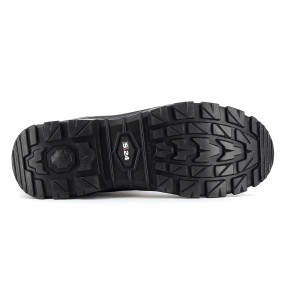
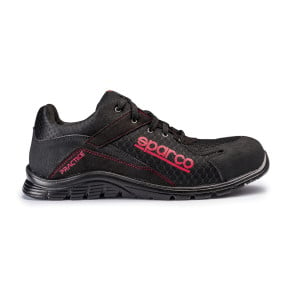
The best equipment for pros and enthusiasts alike
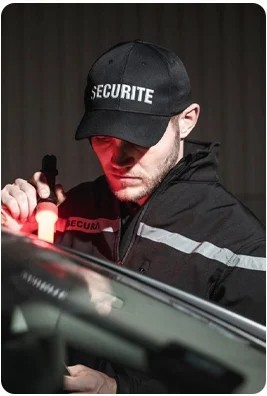




 Professions
According to your professional activity, you will be required to use work shoes, protective shoes or safety shoes. The first ones, cataloged under standard EN ISO 20347, are not protected by a safety toe cap and are suitable for catering, medical or service professions. Protective and safety shoes are equipped with a toe cap resistant to impacts of 100 and 200 joules respectively. That is, they can withstand the fall of a 10 kg object dropped from 1 m for the protective shoe, and the fall of a 20 kg object dropped from 1 m for the safety shoe.
Summary:
Regarding the EN ISO 20345 nomenclature, it encompasses all safety shoes and allows them to be distinguished according to their advantages, so that they can best correspond to the requirements of your professional environment. We will therefore help you today choose the ideal shoe model to meet the requirements of your profession.
The main protective characteristics of a safety shoe are codified as follows:

B : Designates the shoe toe cap resistant to impacts of 200 joules. This is the fundamental property for a shoe to claim the term safety shoe. The toe cap can be made of steel or aluminum, or composite materials (polycarbonate, glass fibers, carbon fibers) if the workplace requires a metal-free alternative.

A : Defines the antistatic character. Such a shoe prevents the accumulation of static electricity and evacuates it to the ground. This is an essential property in the presence of equipment with electronic components.

FO : Attests to the shoe's resistance to hydrocarbons. A sole certified FO, in contact with such materials, undergoes much less deformation and volume increase than a conventional sole.

E : Indicates the performance of energy absorption at heel level. A standardized heel must be able to withstand a pressure of 20 joules.

WRU and WR : Concern the capacities of water penetration resistance. A WRU shoe provides protection on the shoe upper, while a WR shoe acts to slow water intrusion on the entire shoe. The latter is therefore particularly recommended for highly humid environments.

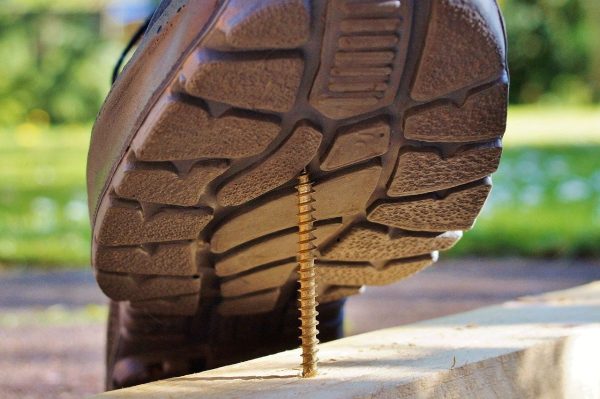
P : Distinguishes a shoe's ability to measure up to risks of penetration by objects metallic or not. On construction sites or in industrial professions, this characteristic is one of the most important for the wearer's safety.

After the protective toe cap, this is the second essential property for a shoe to be classified as a safety shoe. It determines the adhesion capacity on certain types of smooth floors. We distinguish two categories :
- SRA : The shoe is adherent on ceramic floors. It supports an inclination up to 7° under the pressure of a force of 500 N (the equivalent of human walking pressure). It also resists slipping on contact with cleaning products or detergents of soapy type.
- SRB : Under the same test conditions, the shoe is this time designed to adhere to steel floors that may be covered with oily substances.
When a shoe meets the criteria of both categories, it is assigned to the class named SRC. For a shoe to be categorized as a safety shoe, it must comply with the requirements of standard SRA, SRB, or both (SRC).
Thanks to the aforementioned standards, it is now possible to catalog safety shoes under different classes that each provide a certain level of protection. Low shoes are arranged as follows:
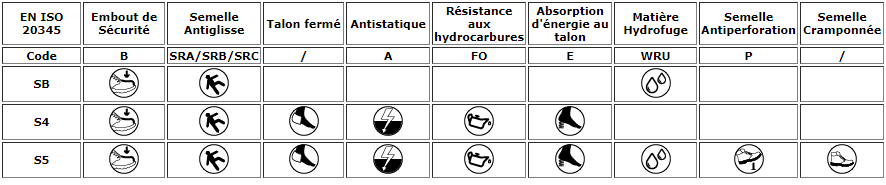
- SB : The basic safety shoe that has the fundamental protections. That is, a toe cap meeting standard B resistant to a force of 200 joules, as well as a slip resistance capacity meeting standard SRA, SRB or SRC. (In addition, high SB shoes have the same protections and are also water resistant)
- S1 : The same requirements as the SB shoe, to which we add a closed heel, antistatic resistance A, heel absorption performance E and contact resistance to hydrocarbons. (Regarding high S4 shoes, they present identical characteristics)
- S1P : Similar to S1, but which additionally has puncture resistance P. S1P shoes are suitable for dry or indoor environments. They thus adapt to crafts, light industry or logistics professions.
- S2 : The shoe has the same characteristics as S1, with additionally water penetration resistance WRU. It can therefore satisfy the needs of food service or agri-food professions.
- S3 : Meets all the requirements of S2 and is complemented by puncture resistance P and has tread studs on the sole. The most complete class which is highly suitable for construction work, heavy industry or green spaces. (High S5 shoes have the same properties)
Besides these classes, a safety shoe can benefit from additional standards providing specific advantages and protections recommended for certain types of professions.
- AN : The malleoli are a fragile part of the ankle. A shoe under this standard provides additional protection at this level of the foot.
- M : The metatarsals, foot bones located between the heel and toe phalanges, benefit from additional protection under this standard.
- CI : This standard offers thermal insulation against cold. Public works and green space professions are most likely to find this advantage essential in winter conditions.
- HI : Designates thermal insulation against continuous heat, such as summer road work or railway ballast.
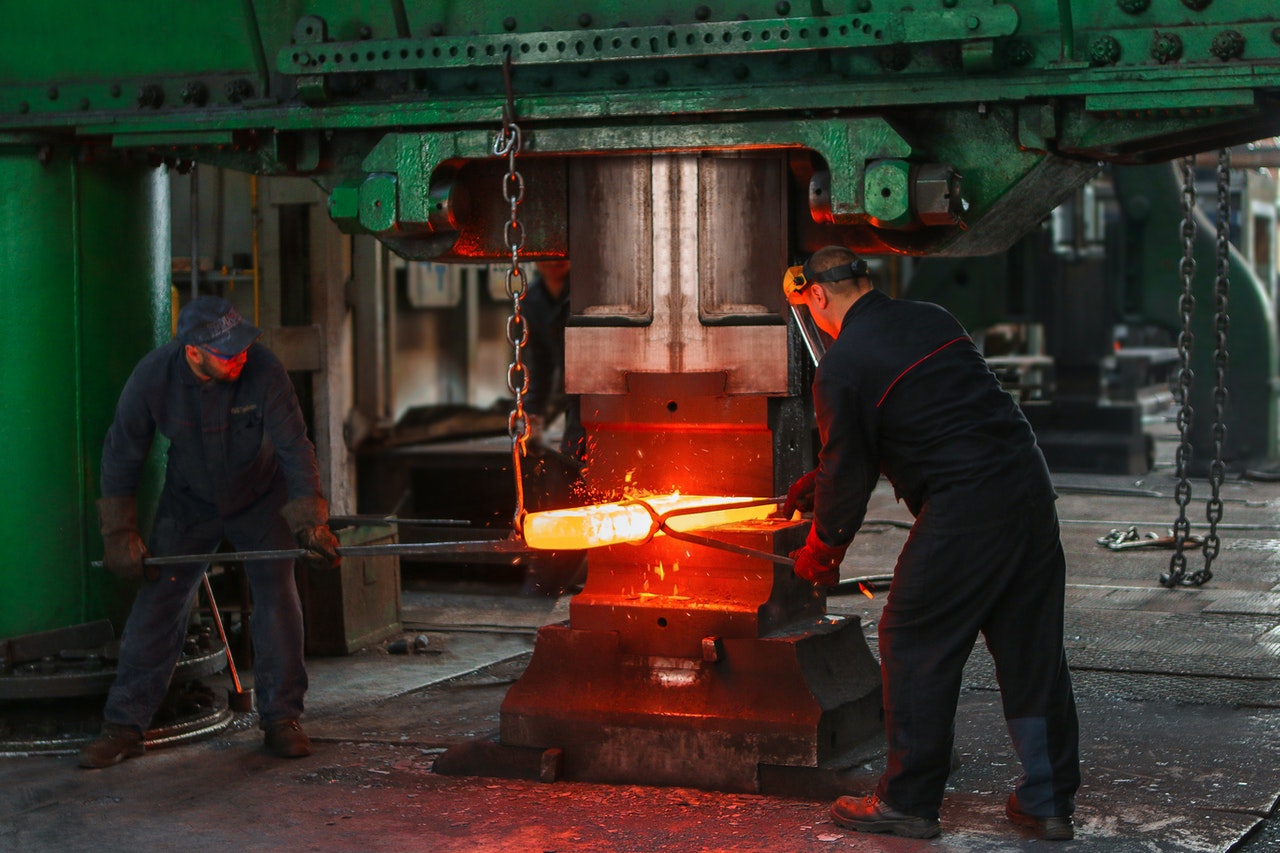
- HRO : An HRO shoe is resistant to heat contact on the outsole up to 300°. It is therefore a vital ally when in contact with hot or molten metals.
- CR : This requirement meets the needs for cut resistance.

Safety shoes can, as we have just seen, cover the needs of many professional fields, ranging from catering to heavy industry. It is important to clearly differentiate the advantages of each class and the attributes of additional standards, in order to best choose the pair of shoes that will suit your professional requirements. If work or protective shoes are not sufficient to ensure a safe work environment, the different types of safety shoes will certainly be able to fulfill the functions you need.
Class 1: Safety shoes with the following characteristics are only low shoes. 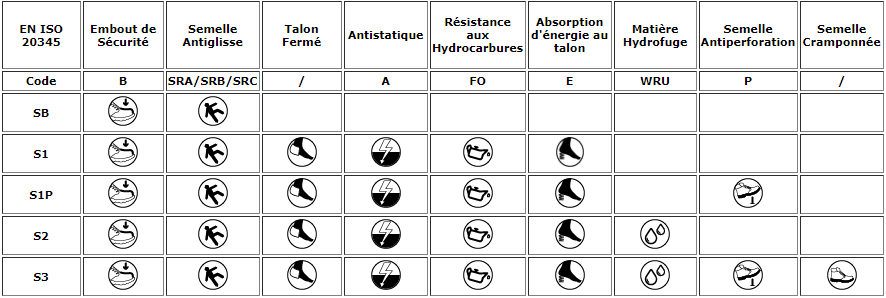
Class 2: Safety shoes with the following characteristics are only high shoes.
It is important to know that the standards concerning safety shoes evolved in 2022. Find on this page our article dedicated to these new changes.