The best equipment for pros and enthusiasts alike








 Professions
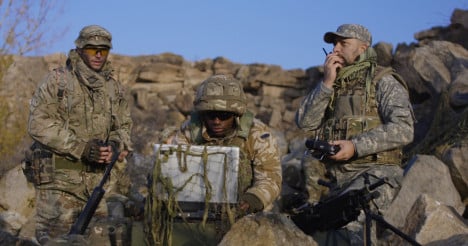
It all began on July 9, 2016 in Warsaw, the day when the heads of state and government of the Allied Nations decided to strengthen the alliance's deterrence and defense posture. It was a year later that four tactical battle groups were positioned across the Baltic countries and Poland. A "framework nation" is present in each of these four countries: the United Kingdom in Estonia, Canada in Latvia, Germany in Lithuania and the United States in Poland.
Since April 2017, France has been engaged in the Lynx mission in Estonia. In addition to the presence of the French, many NATO member countries participate in the mission, such as Belgium, Denmark, and Iceland.
Stationed in a base camp in Tapa, located east of the capital and about a hundred kilometers from the Russian border, the French soldiers act in protection and prevention. This NATO "battle group" is led by the British and composed of about thirty different units, supported by armored vehicles from the 501st tank combat regiment. France has deployed 4 Leclerc tanks during this external mission, a first since 2006. During missions, the French position is focused on communication warfare unlike their British and Estonian counterparts who position themselves more aggressively.
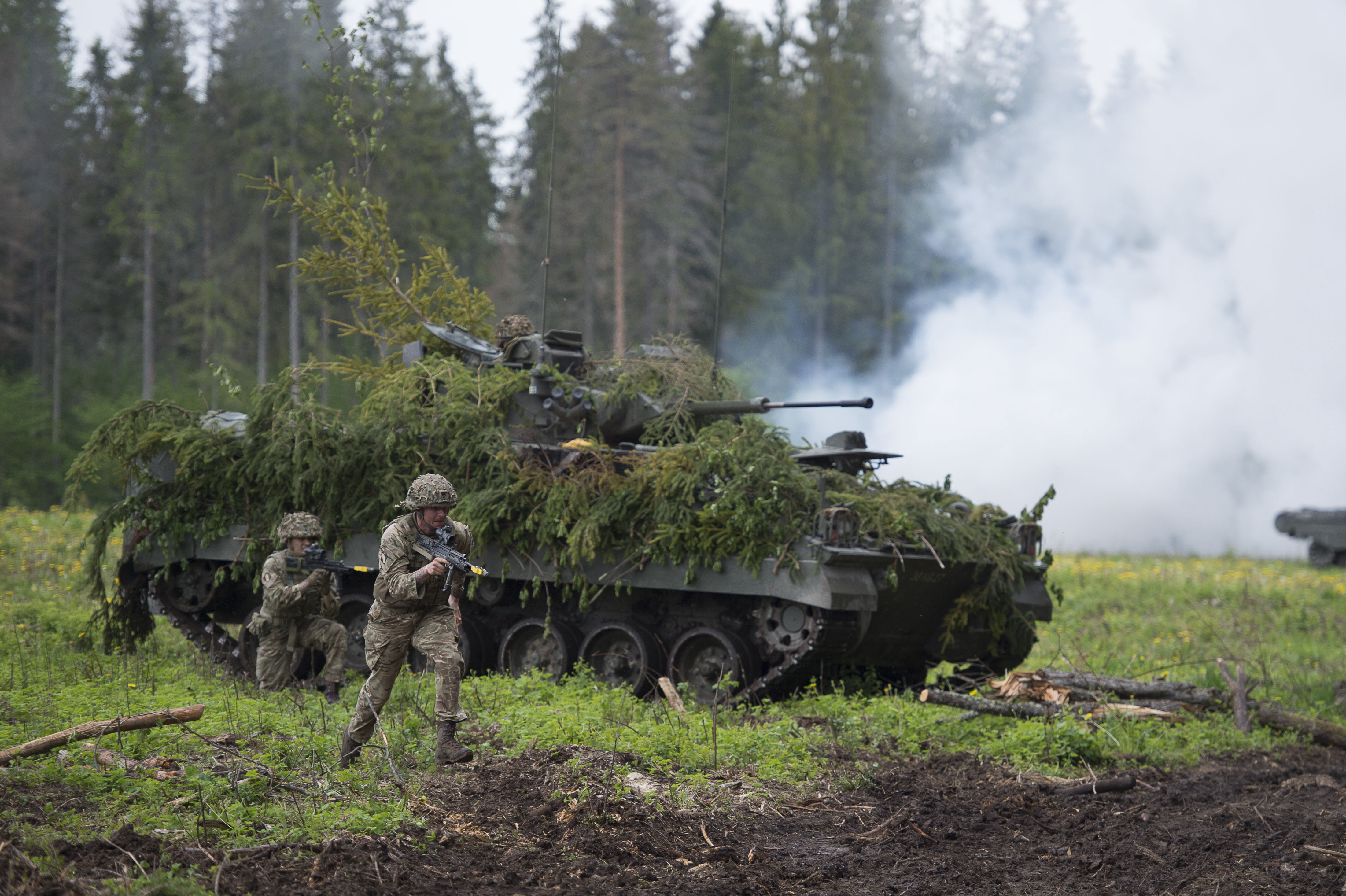
The Lynx mission is not classified as an Opex (External Operation) like Operation "Barkhane" conducted in the Sahel and Sahara or like Operation "Chammal" in Iraq and Syria. Furthermore, the deployment put in place remains significant, since we count more than 300 military personnel and numerous vehicles including 13 VBCI (Armored Infantry Fighting Vehicle). "It's a tremendous opportunity for our forces to train, particularly with the armies of our allies," emphasizes a General Staff officer.
The objective of the Lynx mission is to support allied members in order to deal with a Russia in NATO's crosshairs. This stance is taken to prevent Estonia from suffering the same fate as the Crimean peninsula in March 2014.
The Lynx 6 mandate ended at the end of December 2019. The disengagement and return of military personnel as well as equipment and vehicles was completed at the end of February. The repatriation to France mobilized about a hundred vehicles and approximately 120 containers, distributed across five different military trains. The end of the Lynx 6 mandate does not mark the end of the French presence in the Baltic countries. Indeed, a detachment of 4 Mirage 2000-5 aircraft was deployed in May as part of the "Enhanced Air Policing" mission. Furthermore, a Lynx contingent is to be deployed in Lithuania starting in June, under German command.
On vetsecurite.com, find a wide selection of products from the biggest brands at the best prices for military personnel: military uniforms, combat boots, equipment, materials and military bags.