The best equipment for pros and enthusiasts alike
 Professions
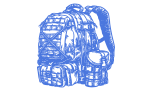
Are you going to be deployed on a mission? Are you a hiking enthusiast? Do you want to organize a trek with friends? None of these adventures will be possible without this essential equipment: the backpack. You must often hear the terms volume, capacity, and capacity, it is important to know that these terms have the same meaning, they correspond to the available space in your bag.
If you don't really know what type of bag might suit you, this article is for you. Whether you're going out for an afternoon or even for long weeks, you will find different information that will allow you to choose your bag at best.
Summary:
First of all, you need to ask yourself the right questions: For what duration? In what weather conditions? On what type of terrain? The sleeping location, bivouac or hostel?
To choose the right bag, you need to determine how you will use it. Even though the backpack remains the main element, the one that will allow you to carry everything you need, it is important to choose it last when you are preparing. The choice should be made based on your equipment and not the other way around so as not to be surprised by a lack of space.
To determine the capacity you will need, there are some tricks. Try to borrow a bag and if that's not possible, use a garbage bag of 30, 50, 100 liters. The volume most capable of receiving your equipment will allow you to determine the capacity of the bag you need.
Be careful not to choose luggage with too large a volume, synonymous with unused space, therefore unnecessary additional weight. This could also lead you to fill your bag with equipment you didn't need.
Most classic backpacks have a capacity of less than 45 liters. They allow you to store your personal effects as well as some subsidiary items. If you are a fan of mountain sports, such as trail running, ski touring, alpine skiing and hikes of a few hours, a backpack of less than 30 liters may suit you.
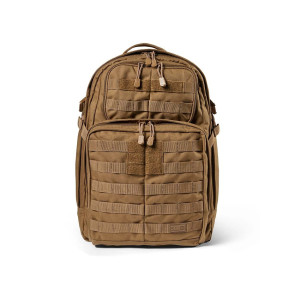
Furthermore, if you decide to leave for one to several days, you will necessarily need equipment. A bag with a capacity of 45 liters will allow you to carry a water reserve, food, spare clothes to face bad weather as well as specific equipment such as a camera for example.
If you need to sleep in a bivouac, it is preferable to go for a larger volume, as it is difficult to transport sleeping equipment in such a small volume.
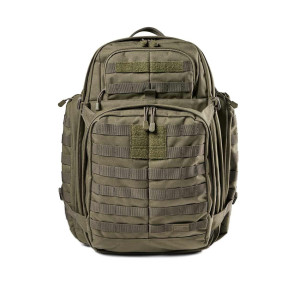
If you are leaning towards a 46 to 90 liter bag, it's because your mission is going to be a bit longer. Bags of this volume will allow you to practice bivouac treks, multi-day alpine outings, excursions in complete autonomy with complete peace of mind.
For luggage of this capacity, you will have to carry a heavier load, which is why it is essential that your luggage is adapted to your body type. The length of the shoulder straps represents the surface that will be in contact with your back. A bag that is too wide or too small will cause you problems for heavy loads, since the weight will be poorly distributed. This is why, on luggage of this type, having a waist belt will be an important asset in weight distribution.
These bags will allow you to carry more supplies, such as food and water, but also additional clothing to face weather conditions, whether sunny or rainy. You can also take with you various specific equipment such as hiking poles, navigation tools or even climbing equipment. If you need to spend the night outdoors, carrying a tent, a sleeping bag or a mattress will be easier with a bag with a volume between 46 and 90 liters.
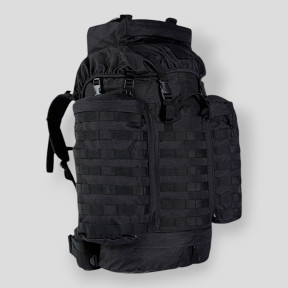
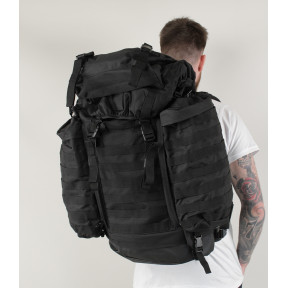
If your choice leads you to a bag of more than 90 liters, it's because you're leaving for a long time. Whether in the mountains or in any other area, carrying this luggage will require specific physical condition. For bags of this volume, you must not neglect the equipment that can allow you better performance. The waist belt is essential, as is the chest strap, this equipment will ensure you good weight distribution of your container to relieve your back and provide you with better balance.
The quality of the bag, as well as its finishes will also be a major asset. A 3D Mesh reinforcement at the shoulder straps and back will prevent friction during prolonged wear. This type of backpack which is intended to be very voluminous has a disadvantage, storage. This is why it is wise to opt for a bag that has different openings to facilitate access to your equipment.
It is preferable to arrange your bag perfectly, by installing the sleeping equipment first. This equipment is very bulky and its use will only be done at the last moment. Then, you will need to distribute your clothes around this heavy equipment, which are moldable and adjustable according to the space. Finally, place the equipment to be used quickly on top of the bag like your windbreaker, your sunglasses, etc.
The type of outing will determine the contents of your bag. Whether you are engaged in activities such as skiing or climbing, whether you are in complete autonomy or not, your luggage must have a place for your specific equipment. Indeed, whether they are stored inside or attached outside, this equipment must be arranged as best as possible. If they are outside, the equipment must be stable, but also able to be protected from bad weather. If you are an enthusiast, having two bags will allow you to choose which one is most suitable depending on your outing. Furthermore, if you only have one, using compression straps will allow you to reduce the volume of your bag during shorter expeditions.