The best equipment for pros and enthusiasts alike








 Professions
It is mandatory to install a Fire Safety System (SSI) in Public Access Establishments (ERP). Different types of fire alarms are used depending on the ERP category. Let's discover them together!
Summary:
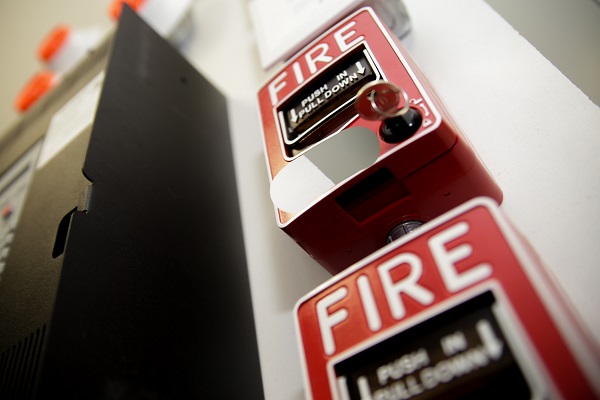
Consisting of equipment for detection, information collection or order transmission, a Fire Safety System (SSI) can include equipment for:
Public Access Establishments (ERP) are classified into five categories:
A Fire Safety System involves implementing specific fire safety installations. These vary not only according to the public accommodated (and therefore the ERP category) but also according to the type of activity and size of the establishment.
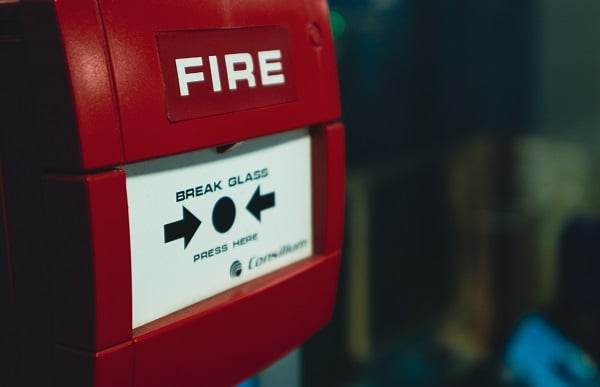
The different SSI categories are classified according to risk. The highest risk public access establishment is assigned grade A while the lowest risk is assigned grade E. SSIs are therefore classified according to five risk categories: A, B, C, D, E.
For a Category A SSI, the ERP must install a type 1 alarm which constitutes the most complete Automatic Fire Detection System (SDI). It includes automatic fire detectors, manual call points, a signaling panel, a backup power supply to maintain lighting even in case of power outage, and sound and/or visual diffusers.
Good to know: since the law of February 11, 2005 for disability accessibility, ERPs are required to install light alarms for deaf or hard-of-hearing people in addition to sound alarms in places where they might find themselves alone.
For a risk category B, the ERP must install a type 2a alarm which includes a Fire Safety Centralization Unit (CMSI) connected to loops of manual call points, actuated safety devices (DAS) as well as sound diffusers.
For the Type C SSI category, it will be necessary to install a type 2B alarm composed of an Autonomous Sound Alarm Block (BAAS) with a control panel to manage up to eight loops of manual call points.
For a Type D SSI, the public access establishment must install a type 3 alarm system that includes one or more BAAS each managing a loop of manual call points and including a sound diffuser as well as a backup power supply.
Finally, for a Type E SSI corresponding to the lowest risk, the ERP is required to install a manual call point connected to a control panel as well as a sound alarm diffuser.
Are you a fire safety officer? On vetsecurite.com, find a wide selection of products and the biggest brands in the fire safety sector at the best price: clothing, shoes and intervention boots, equipment, materials, luggage as well as a women's range and children's.