The best equipment for pros and enthusiasts alike







 Professions
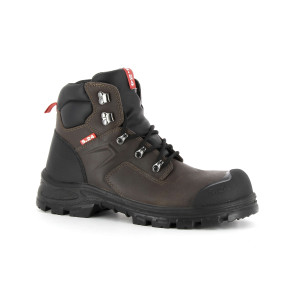
We will focus here on the different types of protective toe caps that safety shoes can be equipped with. This will allow you to better identify the pair that will ideally meet your professional needs.
Table of contents:
The shoe toe cap is placed on the front, it is inserted during assembly between the material constituting the upper and the inner lining. Its impact resistance capacity is the first factor that distinguishes protective shoes from safety shoes. The manufacturing material of the toe cap is also a determining choice to take into account, whether for a question of weight, dimension, or according to the necessity of opting for a solution with or without metal.
.jpg)
To differentiate the protective shoe (EN ISO 20346 standard) from the safety shoe (EN ISO 20345 standard), toe cap regulations specify two distinct levels of foot protection:
- Impact resistance of 100 joules energy. That is to say, the toe cap can withstand an impact equivalent to the fall of a 10 kg object dropped from a height of 1 meter. Shoes equipped with this type of toe cap are catalogued under the name of protective shoes.
- Impact resistance of 200 joules energy. In this case, the toe cap resists the impact of a 20 kg object dropped from 1 meter high. Safety shoes, to be considered as such, must imperatively have a toe cap with these characteristics.
The very first safety shoes equipped with a protective toe cap were designed with a steel shell. Today, this material is still used and sits alongside its aluminum alternative.
Steel is a material highly resistant to impacts, which allows the toe cap to be quite thin without compromising its protective capabilities. It also has certain advantages in terms of cost compared to other more advanced materials. Where it is less advantageous is in terms of weight which can exceed 90g depending on the size.
Aluminum is lighter than steel, with a difference of about 15 to 20 grams. However, it is also less resistant. The toe cap must therefore be thicker than the steel one to provide the same protection performance.
Although commonly used, metal toe caps are not accepted in certain sectors of activity (for example airports that have metal detector gates). To meet the need for non-magnetic toe caps, you can choose a shoe with a composite toe cap.

Of more recent design, these shells have several advantages over metal toe caps. They are 20% lighter than steel toe caps, conduct heat and cold less, resist multiple impacts and are more comfortable. To present the same robustness capabilities, the composite toe cap must nevertheless be thicker and wider than the metal shell, which implies a shoe with a more massive and less refined appearance than a traditional safety shoe.
The first category of composite toe cap is that of polycarbonate shells, a widespread material that is very light and low cost, but requires a large volume to comply with the required protection standards.
The fiberglass toe cap offers good resistance while having better thermal insulation.
Finally, the most advanced version of the composite toe cap is made of carbon fiber. It is the lightest solution with a weight that can drop below 40g. Its high resistance allows it to compete with steel and therefore allows a thinner size relative to other shoes with a composite shell. This material is, however, more expensive than its counterparts, and can therefore drive up the price of a pair of shoes.
While your shoes guarantee you great protection, in accordance with the standards that govern them, it is important to realize that the integrity of a toe cap will be compromised following an impact.
Steel toe caps can bend under the weight of a fallen object. The same is true for aluminum. But they risk breaking from a fall exceeding 200 joules. Composite toe caps absorb impacts better and return to their original shape. However, they also present the risk of breaking under an impact that is too significant.
For better safety, it is then advisable to change shoes if they have been subjected to a heavy object falling on them.
As we have just detailed, you can opt for different types of materials when you need to choose a pair of protective or safety shoes. The thinner metal toe caps, or the lighter but thicker composite shells. If your work environment requires non-magnetic equipment, non-metallic shells will be required. Cost can be a determining factor, and although carbon fiber has undeniable advantages, it remains less affordable than other materials.
An even more economical option consists of wearing shoe covers with the same protective characteristics as safety shoes. Directly adjustable over regular shoes, they can be a less expensive alternative to safety shoes.
Visit our online store to find thousands of workwear and PPE items at the best price!