 The best equipment for pros and enthusiasts alike







-
 Professions
-
-
-
-
-
-
-
-
All Tops
![All Tops]()
-
-
-
All Bottoms
![All Bottoms]()
-
-
-
All Footwear
![All Footwear]()
-
-
-
All Bags
![All Bags]()
-
-
-
All Accessories
![All Accessories]()
-
-
Le 13 March 2020
5 tips for properly lacing your combat boots
Do you wear boots daily? Are these shoes the flagship equipment of your outfit? Whether you are military personnel, security agents, gendarmes, police officers, firefighters or even airsofters, it's an element that will be indispensable to you. Moreover, boots are increasingly worn among the population. They are both comfortable boots, trendy and above all sturdy. These high-top shoes must be laced correctly to ensure good ankle support and optimal comfort throughout wear.
The stakes are clear. First, it is necessary to consolidate the ankle joint to avoid any injury. Then, the lacing must allow the shoes to become the extension of the leg in order to transmit the energy of each ground contact. For long-term comfort and to avoid feeling pain, it is important that the ankle is released when going uphill and tightened when going downhill. This is why we are going to present you with different forms of lacing to adopt for your boots, which will allow you to save time or be more comfortable in your shoes.
Summary:
The effective advice: Commando lacing
The first lacing technique, of commando type, was developed by the military for faster and especially more comfortable lacing for the foot. This lacing eliminates any crossing that would hold the sides of the shoe, allowing the leather to wrinkle more freely.
As taught by the Dutch army, the crossings that are made underneath are less likely to catch a stick or branch when soldiers are crawling. Commando lacing was mainly used by British, Dutch, French and Brazilian armies.
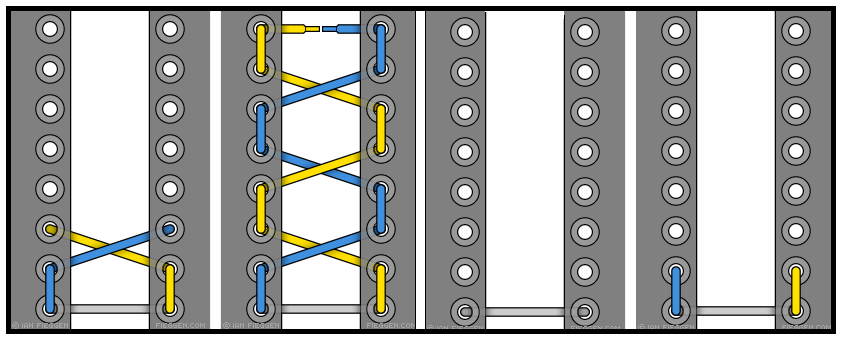
Lacing technique:
Start the lacing horizontally inside the lower eyelets (gray section). Once this step is completed, immediately move to the upper eyelet. Then alternate between an interior and exterior crossing with the upper eyelets. Repeat until the lacing is finished.
The advantages: Allows enhanced flexibility and increased lace length.
The disadvantages: Looser lacing and more difficult to tighten.
The classic advice: Straight bar lacing
Straight bar lacing is the simplest and most traditional lacing method while allowing quick tightening of the shoe. This technique is recommended to prevent heel slippage that can occur when running downhill. All shoes are designed to adapt to this type of lacing.
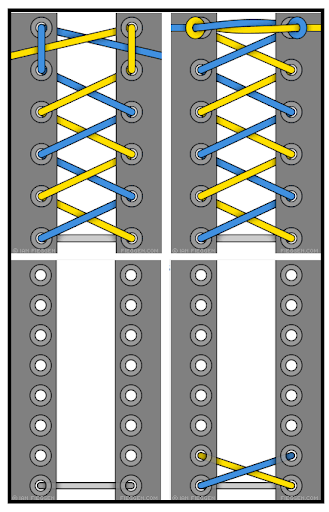
Lacing technique:
Start horizontally inside the lower eyelets (gray section). Alternate between an interior and exterior crossing with the upper eyelets. Repeat until the lacing is finished.
For better support, it is possible to finish the lacing in different ways to lock your shoe more or less.
The advantages: Firmly tight, reduces slipping, reduces wear and friction.
The disadvantages: Difficult to loosen, may cause certain pressure points.
The personalized advice: Adapted lacing
This lacing variation consists of skipping a crossing to create a space in the middle of the lacing, either to bypass a sensitive area, increase ankle flexibility, or even adapt the shoe according to the shape of the foot.
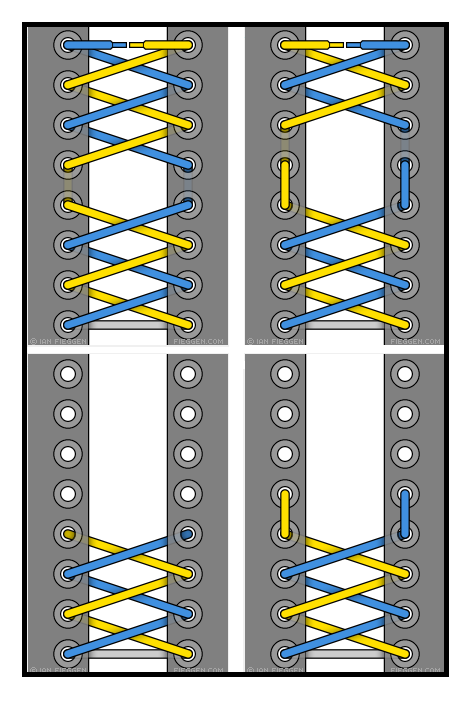
Lacing technique:
Begin your lacing horizontally inside the lower eyelets. Alternate between an interior and exterior crossing with the upper eyelets until the ends are below the sensitive area (or the ankle). The ends are then placed above without making a crossing to free the concerned area. You can then start crossing the lacing again until it is finished.
The variations: To achieve greater support, prioritize the interior verticals. Furthermore, for a larger sensitivity area or for a looser adjustment, don't hesitate to skip two crossings.
The advantages: Relieves pressure and allows more flexibility.
The disadvantages: Looser lacing and more complicated to tighten.
The expert advice: Ladder lacing
Ladder lacing ensures good support and remains solid in all circumstances. As its name suggests, this type of lacing is presented in ladder form, the laces cross horizontally and not diagonally. It will notably allow you to prevent injuries when crossing rough or slippery terrain. Its execution, however, requires some patience since it is relatively long.
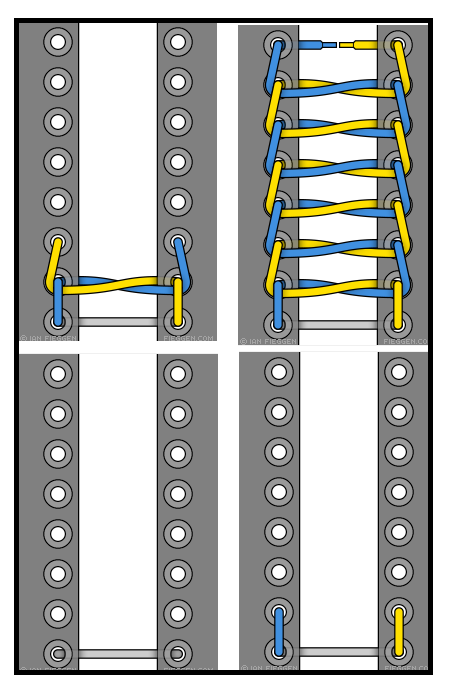
Lacing technique:
To perform it, start by placing horizontally inside the lower eyelets (gray section). Then skip a crossing before making a horizontal crossing of both parts. Repeat the operation until the end of the lacing.
The advantages: Stays very tight, ideal for high boots
The disadvantages: Lacing difficult to loosen and time-consuming to set up
The quick advice: The quick zip
If these different lacing techniques seem long and complicated to you, Vetsecurite offers you a substitution technique to ensure the support of your boots. The Quick Zip will allow you to close your shoe in seconds. Indeed, you will simply need to connect the zip eyelets to those of the shoe to permanently forget about lacing.

The additional advice
The lacing of your boots is not the only important aspect of your shoe, even though it proves essential. A comfortable shoe is a well-maintained shoe. This is why vetsecurite.com offers you a selection of products aimed at keeping your pair of boots operational.
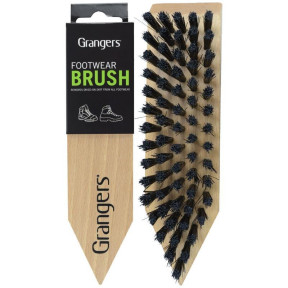
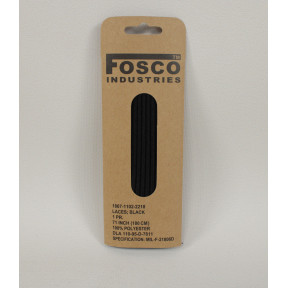
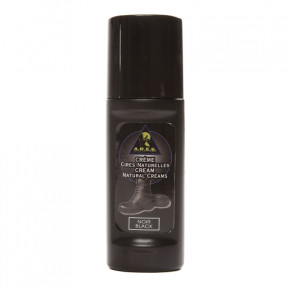
Get yourself the complete maintenance kit from the Grangers brand right now. It includes a cleaner, wax, waterproofing agent and maintenance brush. As a complement to this, don't hesitate to opt for a pair of Magnum laces or, for the more adventurous among you, the Patrol survival laces which will be a real asset.
Related products
Related articles

How to choose your combat boots
Read the article

How to maintain your combat boots?
Read the article

Focus on the 5.11 Tactical brand
Read the article

Salomon Forces range
Read the article
-
![Over 200 brands At the best price]() Over 200 brands At the best price
Over 200 brands At the best price -
![Secure payment In 3 or 4 interest-free installments]() Secure payment In 3 or 4 interest-free installments
Secure payment In 3 or 4 interest-free installments -
![Delivery across Europe From €79 of purchase]() Delivery across Europe From €79 of purchase
Delivery across Europe From €79 of purchase -
![Customer service Monday to Friday]() Customer service Monday to Friday
Customer service Monday to Friday


