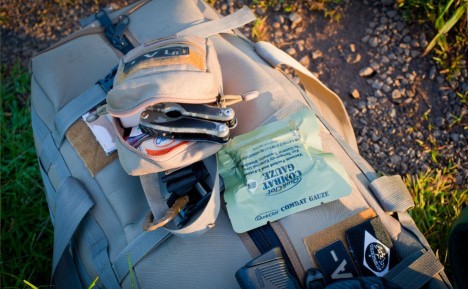
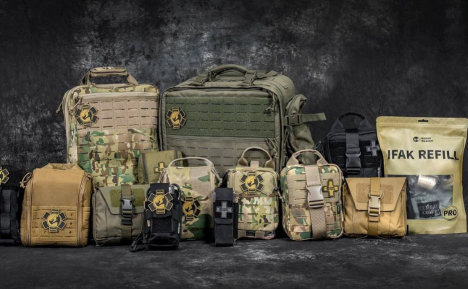
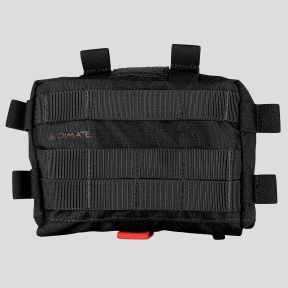
The START Individual Fighter Kit represents a major evolution in the medical equipment of French armed forces. Designed to save lives in the field, this tactical first aid kit combines compactness, ergonomics and operational efficiency.
Developed by Corporal Benny of the 4th Specialized Medical Unit in Bayonne, in collaboration with the Defense Innovation Agency (DIA) and the Lyon-based company DIMATEX, the START IFK optimizes the traditional kit to meet the requirements of modern overseas operations (OPEX).
Table of Contents
- History and development context
- How to equip the START kit: The essentials for saving lives
- Technical specifications of the START kit
- Usage principles: The MARCH doctrine
- Compact versions: START Micro and START Mini
- Strategic importance and operational benefits
- Conclusion: Life-saving equipment
History and development context
The evolution of the IFK
Since 2008, following lessons learned from engagements in Afghanistan, French soldiers deployed on OPEX have been systematically equipped with an Individual Fighter Kit (IFK). This first generation already marked a significant advance: each fighter had their own medical kit, independent of the regimental medic's bag.
The genesis of the START project
In 2017, facing these operational constraints, Corporal Benny imagined a revolutionary solution. Supported by the DIA's Participatory Innovation Cell, he designed a kit:
- Less bulky without compromising contents
- More discreet to avoid hindering the fighter
- More ergonomic for intuitive use under stress
- More adaptable to different tactical equipment
Collaboration with industry
The company DIMATEX, specialist in technical fabrics, brought its expertise to develop a product resistant to extreme field conditions. The result: a kit in Ripstop 500 Denier, ultra-resistant material to abrasion and tears.
How to equip the START kit: The essentials for saving lives
Basic elements (absolute priority)
- Tactical tourniquet: Vital element to stop massive hemorrhage, the tourniquet can be attached to the outside of the kit thanks to attachment elastics for immediate access.
- Emergency compression bandages: Designed to control major bleeding and stabilize wounds while awaiting medical evacuation.
- Sterile compresses and bandages: To dress and protect various wounds, available in different sizes.
- Medical adhesive tapes: Essential for securing bandages and holding compresses in place.
- Elastic bandages: To support or temporarily immobilize an injured joint or limb.
Additional elements (advanced care)
- Morphine syrettes (x2): For severe pain management, allowing the wounded fighter to remain operational until evacuation.
- IV kit: Saline solution to treat hemorrhagic shock and stabilize the casualty's condition.
- Emergency blanket: Crucial thermal protection to fight hypothermia, particularly dangerous after an injury.
Protective equipment
- Disposable gloves: protection against infections
- Jesco-type scissors: quick cutting of clothing and equipment
- Marker: notation of medical information (tourniquet time, etc.)
Technical specifications of the START kit
Design and materials
- Folded dimensions: 21 x 18 x 6 cm (ultra-compact)
- Unfolded dimensions: 59 x 47 cm (total access to contents)
- Main material: Ripstop 500 Denier
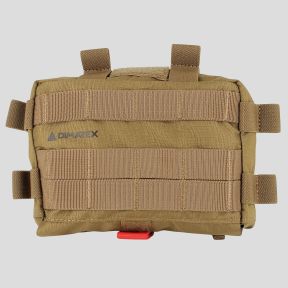
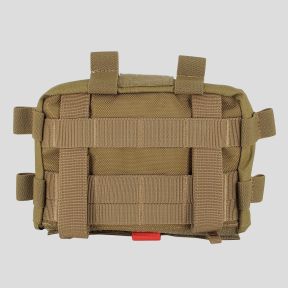
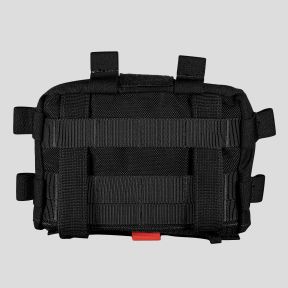
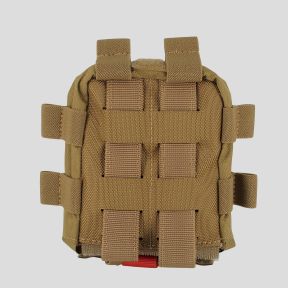
- Mounting: M.O.L.L.E system (Modular Lightweight Load-carrying Equipment)
- Closure: Velcro with red quick-release strap
Ergonomic innovation
One of the major innovations of the START is its full flat opening, allowing:
- Total visibility of contents
- Quick access to all elements
- One-handed use possible thanks to the pull tab
- No zipper that could jam or slow down intervention
Maximum adaptability
The kit can be mounted using the MOLLE system on:
- Plate carriers
- Tactical belts
- Bulletproof vests
- Backpacks
- Abdominal carry thanks to additional velcro
6 attachment elastics allow securing external accessories such as a tourniquet or light stick.
Internal organization
- 2 mesh pockets for small items
- Retention elastics to secure contents
- Logical organization following care priority
Usage principles: The MARCH doctrine
Prioritization of actions according to TCCC protocol
The START IFK follows the logic of MARCH (Tactical Combat Casualty Care):
- M - Massive hemorrhage: Immediate tourniquet application
- A - Airway: Clear the airways
- R - Respiration: Ensure effective ventilation
- C - Circulation: IV and shock management
- H - Hypothermia: Thermal protection with emergency blanket
Compact versions: START Micro and START Mini
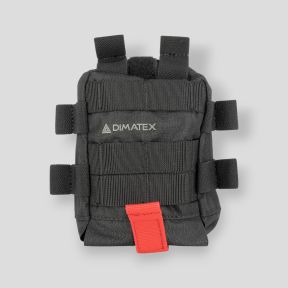
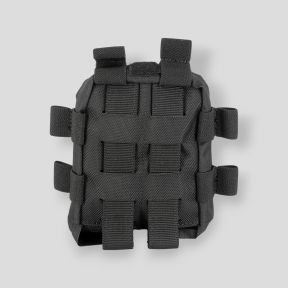
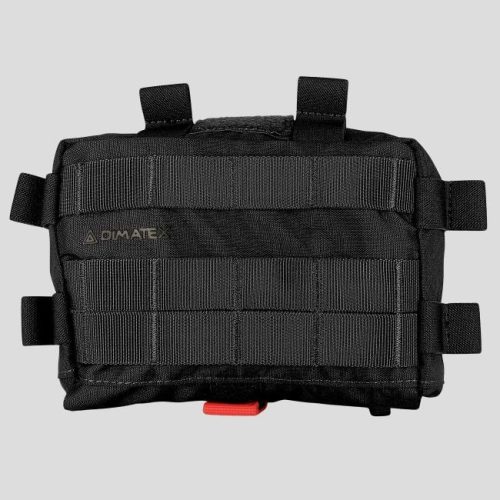
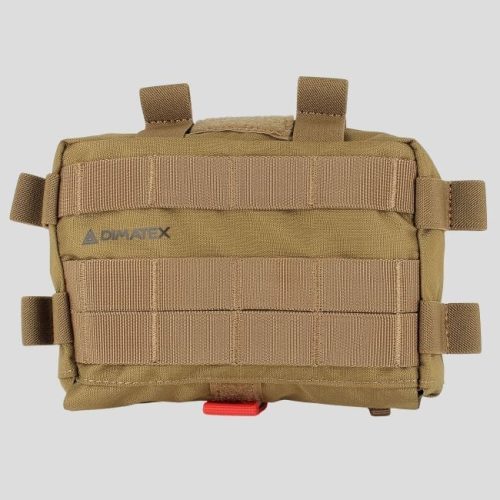
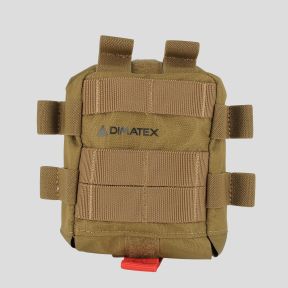
The "START Micro" and "START Mini" pouches from Dimatex are compact, durable versions perfectly adapted to demanding environments. Designed for quick access and efficient organization of first aid equipment, they integrate easily with any tactical gear thanks to their M.O.L.L.E mounting. Their Ripstop 500D fabric structure ensures robustness and lightness for intensive field use. The pouches are scaled-down models of the new individual fighter kit used by the French army.
The START Mini range is available in black and coyote, and will soon be offered in multicam.
Technical specifications
- Material: Ripstop 500D fabric
- Opening: Full opening with Velcro retention
- Quick access: Red quick-release strap
- Internal organization: Retention elastics for medical equipment
- Mounting: M.O.L.L.E compatible system
- Use: First aid kit, tactical IFAK, field
Strategic importance and operational benefits
Reduction of preventable mortality
According to Tactical Combat Casualty Care (TCCC) studies, approximately 90% of combat deaths occur before arrival at the forward medical post. The main preventable causes are:
- Massive hemorrhages (60%)
- Airway obstruction (6%)
- Tension pneumothorax (5%)
Immediate application of a tourniquet can reduce mortality by 85% from limb hemorrhage.
Conclusion: Life-saving equipment
The START Individual Fighter Kit represents much more than a simple equipment improvement. It's a revolution in the French tactical first aid approach, the result of successful collaboration between the field (fighters), innovation (DIA) and industry (DIMATEX).
The 5 major advantages of the START
- Compactness: -30% volume vs traditional IFK
- Ergonomics: one-handed flat opening
- Robustness: Ripstop 500D, extreme durability
- Adaptability: multiple mounting options
- Efficiency: optimized organization to save lives
A model for the future
The success of the START proves that participatory innovation works: listening to end users allows creating equipment truly adapted to operational needs.
 The best equipment for pros and enthusiasts alike




 Professions