The best equipment for pros and enthusiasts alike





 Professions
Whether you are a security professional, member of law enforcement, or outdoor activities enthusiast, choosing a quality knife is crucial. A good outdoor knife must be reliable, robust, and suited to your specific needs.
But how do you distinguish a quality tool from a mediocre product?
Discover the essential tests to evaluate the real quality of your outdoor knife.
The choice of steel determines three fundamental characteristics of your knife: edge retention, corrosion resistance, and ease of maintenance. A carbon steel will offer excellent edge holding but will require rigorous maintenance to prevent rust, particularly in humid environments. Conversely, a stainless steel will be more tolerant of difficult conditions, ideal for extended outdoor operations.
The blade thickness also plays a determining role: too thin, it risks bending under stress; too thick, it loses maneuverability and cutting precision. The type of grind and sharpening angle directly influence cutting efficiency and edge durability.
For professional or intensive outdoor use, favor a full-tang construction, where the blade runs completely through the handle. This design guarantees maximum strength, essential for demanding tasks like batoning or emergency situations.
Carefully examine the fit between the blade, handle, and guard: no play should be perceptible. The rivets or fixing screws must be perfectly aligned and tight. The surface treatment, whether it's a black tactical coating or a satin finish, protects the steel against wear and the elements.
The handle material directly influences your control of the tool. G10 offers excellent grip even when wet, micarta combines durability and aesthetics, while textured aluminum is suitable for tactical applications. The ergonomics must match your primary use: a firm grip for heavy-duty tasks, or a more refined profile for precision work.
The weight and center of gravity determine the knife's handling. Good balance reduces fatigue during prolonged use and improves gesture precision.
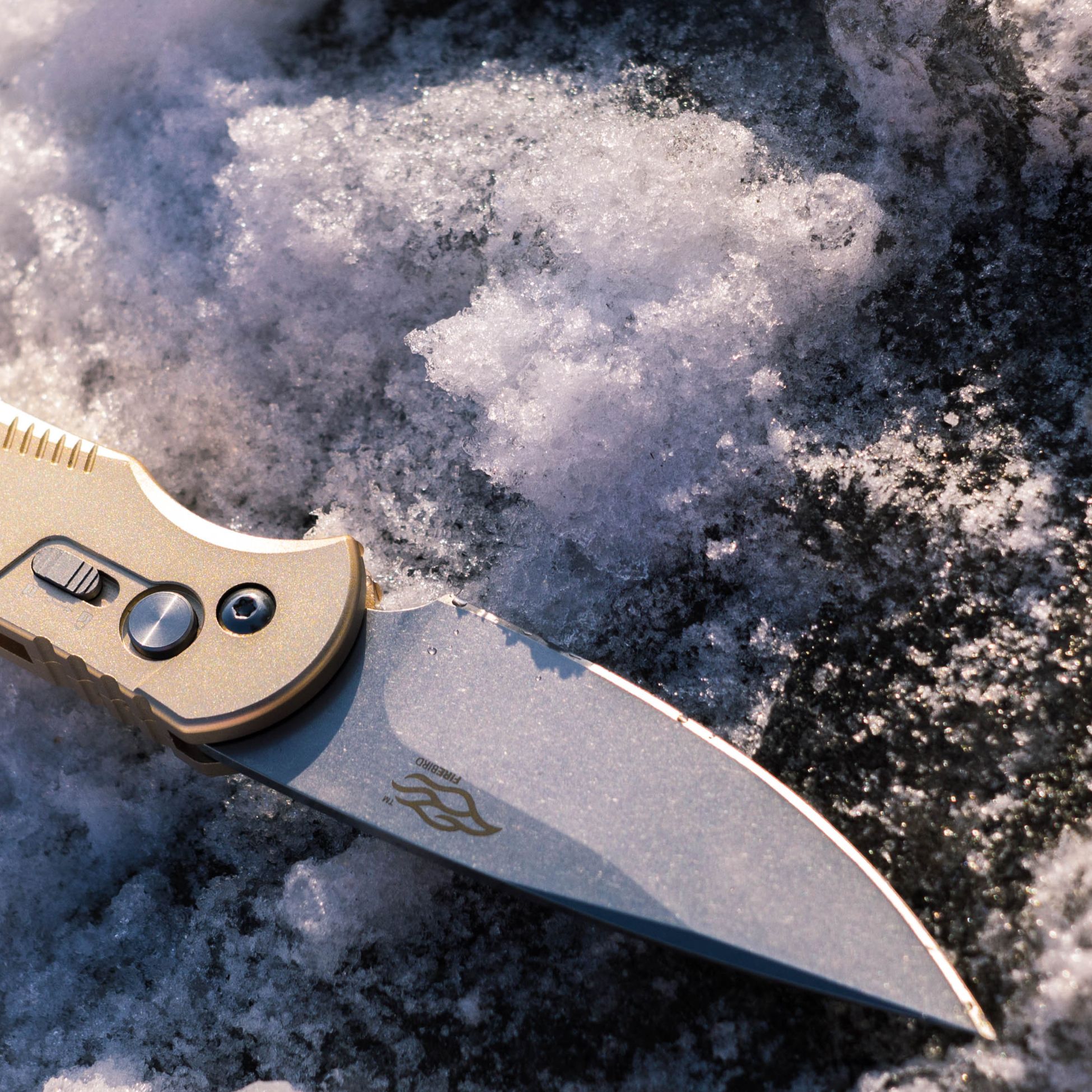
Paper test: Take a standard sheet of paper and try to slice it vertically without holding it. A well-sharpened knife must cut cleanly, without catching or tearing the paper. This simple test immediately reveals the quality of the factory sharpening.
Tomato test: Cut a ripe tomato into thin slices. If the knife crushes the fruit instead of slicing it cleanly, the edge is insufficient or the sharpening angle is inappropriate. This test is particularly revealing for blades intended for multipurpose use.
The sharpening angle directly influences cutting performance. An angle that's too obtuse (thick) cuts less effectively but resists impacts better; an angle that's too acute (thin) slices perfectly but wears quickly on hard materials.
Examine the thickness of the metal just behind the cutting edge. This area, often overlooked, determines the longevity of the edge and the ease of re-sharpening. Excessive thickness creates resistance during cutting, while too little thickness weakens the blade.
Checking mechanical play: Firmly grasp the handle and try to move the blade laterally. No movement should be perceptible. For folding knives, the pivot must be smooth without excessive play.
Controlled flexion test: Apply moderate pressure to the flat of the blade. Slight flexion is normal and reveals the steel's elasticity, but the blade must return perfectly to its initial position. Permanent deformation is an elimination factor.
Field test: Perform cuts on softwood, test light batoning (splitting small wood by striking the spine of the blade). These manipulations, performed within safety limits, reveal the actual strength of your tool under use conditions.
After use, clean your knife and let it dry naturally for 24 hours. Inspect the blade for traces of oxidation, particularly at the blade-handle junction and on the edge. For non-stainless steels, a light patina is normal, but red rust spots indicate insufficient protection.
For professionals working in humid or maritime environments, this test is decisive. Expose the blade to ambient humidity for several days: a quality steel with good surface treatment will resist without damage.
Dry grip: The knife must fit naturally in your hand, with fingers positioned comfortably on the handle. The guard (if present) must protect your fingers without hindering movements.
Wet grip or with gloves: Crucial for law enforcement and private security, this test simulates real intervention conditions. Wet the handle or wear tactical gloves: grip must remain optimal, without risk of slipping.
Dynamic balance: Hold the knife by the handle and perform cutting movements in the air. The center of gravity should be neither too close to the blade (wrist fatigue) nor too far toward the pommel (loss of control).
Examine every detail carefully:
The fit between the different parts must be perfect, without rough machining marks
No burr should remain on the handle edges or at the rivets
The blade coating (if present) must be uniform, without bubbles or flaking
The engraved markings must be clean and precise
A careful finish reflects the manufacturer's seriousness and predicts your equipment's longevity. Conversely, visible defects from purchase generally indicate premature wear.
.jpg)
Equipment compatibility: The sheath must integrate easily with your belt or MOLLE system. Drawing must be quick and silent, retention sufficient to prevent accidental loss.
Discretion and compliance: Check the regulations applicable to your profession and region. Certain black coatings reduce reflections, an advantage for nighttime operations.
Operational versatility: Your knife can be used to cut straps, open packages, provide a first aid function (seatbelt cutter). Test it on different materials: rope, thick plastic, fabric, leather.
Durability in hostile environments: The knife will be exposed to moisture, temperature variations, soil, and sap. The materials must withstand these repeated stresses.
Batoning capability: For splitting firewood, the spine of the blade must be thick enough and the construction solid enough. A full-tang is essential for this use.
Ease of field maintenance: Favor a steel that sharpens easily with a portable stone. A knife that's too complex to maintain becomes a handicap on extended expeditions.
Safety and regulations: Even for recreational use, respect transport and carry standards. Favor models with secure sheaths.
Realism and functionality: The knife must match your tactical equipment while remaining usable for camp tasks (meal preparation, minor repairs).
A quality knife must pass all these tests without revealing any major defect. Here's how to prioritize your criteria:
Elimination criteria: Play in the assembly, permanent deformation after flexion, rapid corrosion on stainless steel, mediocre edge impossible to correct.
Important criteria: Ergonomics unsuited to your morphology, unbalanced balance, approximate finish, low-durability handle materials.
Comfort criteria: Aesthetics, weight slightly above or below ideal, sheath improvable but functional.
No knife is perfect, but a quality tool will excel in the critical areas for your specific use. An outdoor knife intended for bushcraft tolerates higher weight to gain robustness, while a tactical knife favors lightness and speed of deployment.
The best tests to verify the quality of an outdoor knife combine rigorous visual evaluation, reproducible practical tests, and real-world application. Don't rely solely on price or brand reputation: a methodical examination reveals the true value of your equipment.
Whether you are a security professional, member of law enforcement, or outdoor adventure enthusiast, take the time to evaluate your knife according to these criteria. A reliable tool can make the difference in a critical situation, while faulty equipment becomes a dangerous handicap.
At VetSecurite.com, we select each knife according to demanding standards, to guarantee you tools worthy of your missions and your passions.