Why do units use different types of ballistic plates?

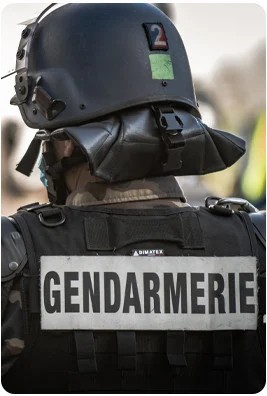
At first glance, all ballistic plates look alike. Yet, a patrolling officer, a soldier on external operations, and a GIGN member never wear exactly the same protection. Why these differences? The answer comes down to one word: adaptation.

Each unit faces specific threats, unique operational constraints, and different budgets. Understanding these choices means grasping all the complexity of modern ballistic protection.

Table of Contents

  1. Soft armor vs hard plates: two complementary protections
  2. Protection levels: the starting point of any choice
  3. Steel, ceramic, polyethylene: three protection philosophies
  4. Stand Alone vs ICW: two tactical approaches
  5. The real factors that determine the choice
  6. Three concrete scenarios
  7. Conclusion: there is no "best" plate


Soft armor vs hard plates: two complementary protections

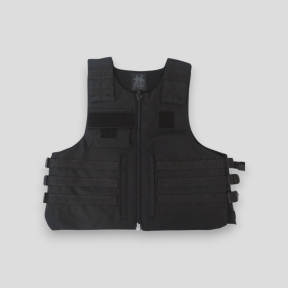
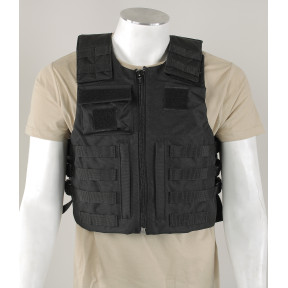
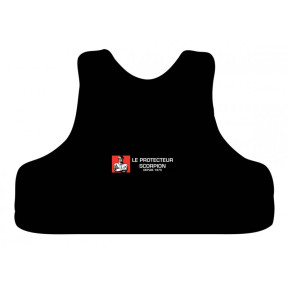
Before discussing plates, let's clarify the basics. A soft body armor (Kevlar, aramids) primarily protects against handguns and some fragments. Lightweight and comfortable, it's suitable for prolonged patrol wear.

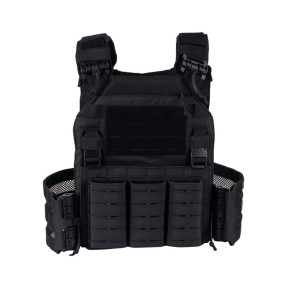
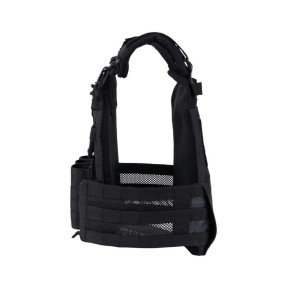
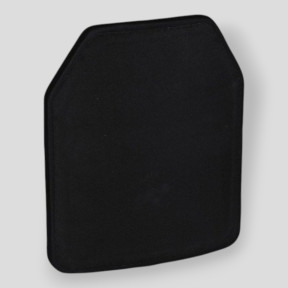
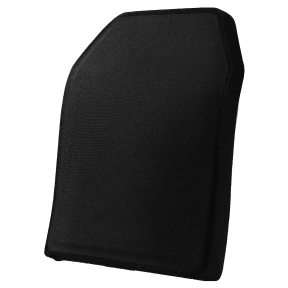
Hard ballistic plates are rigid inserts (steel, ceramic, polyethylene) designed to stop rifle ammunition and armor-piercing projectiles. They're inserted into a plate carrier or over soft armor.

The most common strategy? Wear soft armor daily, then add hard plates only for high-risk interventions.


Protection levels: the starting point of any choice

The NIJ (National Institute of Justice) defines standards that guide unit choices. The new 0101.07 standard classifies protections into two families:

Protection against handguns

  • HG1 / HG2: 9mm, .40 S&W, .357 Magnum, .44 Magnum calibers
  •  

Protection against rifles

  • RF1: hunting rifles, standard 7.62×51mm NATO
  • RF2: common military calibers including 5.56 "green tip"
  • RF3: armor-piercing ammunition like .30-06 AP


The principle is simple: an urban patrol primarily exposed to handguns has no interest in wearing RF3 plates. Conversely, a unit in a conflict zone cannot settle for anti-pistol protection.


Steel, ceramic, polyethylene: three protection philosophies

Steel plates: robustness and accessibility

Advantages:

  • Exceptional mechanical resistance
  • Affordable price
  • Reliable multi-hit capability

Disadvantages:

  • Heavy weight (7-8 lbs for an RF1 plate)
  • Risk of secondary fragments if anti-spall coating is insufficient

Who chooses them? Units with limited budget, training use, static positions where mobility is not a priority.


Ceramic plates: the performance-weight compromise

Advantages:

  • 30 to 50% lighter than steel with equivalent protection
  • Excellent performance against rifle ammunition and armor-piercing projectiles
  • Optimal energy dissipation through controlled fragmentation

Disadvantages:

  • Fragility to violent impacts and poor storage
  • Significantly higher cost

Who chooses them? Armed forces, special forces, intervention units for whom mobility and maximum protection are essential.


UHMWPE polyethylene plates: extreme lightness

Ultra-high molecular weight polyethylene is revolutionizing ballistic protection.

Advantages:

  • Among the lightest plates on the market
  • Exceptional energy absorption through fiber deformation
  • No secondary fragmentation
  • Buoyancy (advantage for naval units)

Disadvantages:

  • Generally limited to RF1 level (except hybrid versions)
  • Sensitivity to extreme temperatures

Who chooses them? Units covering long distances on foot, mountain operations, special forces, naval operators.


Hybrid plates: the best of both worlds

The ceramic + polyethylene combination offers an optimized solution:

  • Ceramic face to fragment the projectile
  • UHMWPE backing to absorb energy and retain fragments

These plates achieve RF2/RF3 levels without the excessive weight of traditional solutions.


Stand Alone vs ICW: two tactical approaches

Stand Alone (STA) plates

Designed to function alone, without soft armor behind. Thicker and heavier, they offer maximum flexibility: they can be worn solely in a plate carrier, even over a combat shirt.

Ideal for: military units, modular configurations, missions where soft armor weight would be excessive.


ICW (In Conjunction With) plates

Only work with soft armor (generally HG2 level). Thinner and lighter than an equivalent Stand Alone.

Ideal for: police forces already wearing soft armor daily and wishing to increase protection without changing the entire configuration.


The real factors that determine the choice

1. The threat profile

Urban police:

  • Main threat = handguns
  • Solution: permanent HG2 soft armor + RF1 plates on alert
  • Objective: daily comfort with rapid escalation capability

Intervention units (RAID, GIGN, SWAT):

  • Threat = assault rifles, armor-piercing calibers, close-range fire
  • Solution: RF2/RF3 ceramic or hybrid plates + side protection
  • Objective: maximum protection against all probable threats

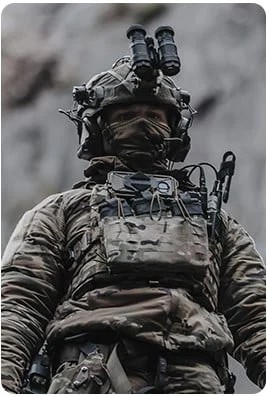
Deployed military units:

  • Mixed threat = rifles, fragments, IEDs, long-range fire
  • Solution: RF1/RF2 depending on theater, with robustness and MOLLE compatibility
  • Objective: protection-mobility balance on long missions


2. The mobility vs protection dilemma

Each additional level adds weight, thickness, and fatigue. On a 10-hour mission with weapon, radio, water, and ammunition, the difference between a steel plate (7-8 lbs) and a ceramic one (4.5-5.5 lbs) becomes exhausting.

Some units therefore accept a slightly lower level to preserve execution speed and endurance.


3. Wearing duration and mission type

Crowd control / long-duration patrol: Multi-hour wear → comfort, breathability, heat management become priorities.

Short and violent assault: Brief mission with high probability of contact → highly protective plates acceptable even if heavy.
 

4. Environment and logistics

  • Hot climates: heat-resistant materials, optimized weight
  • Maritime environments: buoyancy of PE plates
  • Budget: economical steel vs high-performance but expensive ceramic


Three concrete scenarios

Urban patrol

  • HG2 soft armor in permanent wear
  • ICW RF1 plates added only on terrorism alert
  • Objective: daily comfort + responsiveness

Infantry section on external operations

  • Plate carrier with Stand Alone RF2 ceramic + PE plates
  • Side plates according to threat level
  • Climate-adapted configuration
  • Objective: withstand rifle threat without sacrificing mobility

Specialized intervention unit

  • Assault: lightweight RF2 plates for speed in CQB
  • Support: heavier RF3 plates for exposed positions
  • Objective: adapt protection to each operator's tactical role


Conclusion: there is no "best" plate

Choosing a ballistic plate never comes down to "the most protective possible". It's always a calculated compromise between threat level, tactical mobility, mission duration, environment, and budget.

A unit that favors lightweight RF1 ceramic plates over heavy RF3 steel ones is not less professional. It has simply analyzed its risk profile and optimized its operational capability.

Related articles
Ballistic protections
Read the article
The difference between soft and rigid ballistic equipment
Read the article
Choosing your bag for a police intervention or military operation!
Read the article
  • Over 200 brands At the best price
    Over 200 brands At the best price
  • Secure payment In 3 or 4 interest-free installments
    Secure payment In 3 or 4 interest-free installments
  • Delivery across Europe As soon as possible
    Delivery across Europe As soon as possible
  • Customer service Monday to Friday
    Customer service Monday to Friday