The best equipment for pros and enthusiasts alike






 Professions
The choice of a tactical bag or secure case is not simply about selecting a container. It's a strategic element that actively protects your equipment against shocks, weather, theft and wear. A poor selection can compromise the security of your equipment, slow your reaction time and cost you dearly in repairs.
In this comprehensive guide, we analyze all the essential criteria for choosing the bag or case suited to your needs, according to your usage and operational constraints.
A quality tactical bag is not just a simple container: it's active protection against multiple threats. It preserves your equipment from shocks during transport, from weather conditions that could damage it, from dust that infiltrates mechanisms, and from opportunistic theft attempts. An unsuitable case makes your equipment vulnerable and can waste precious time searching for the item you need immediately.
In tactical or security situations, every second counts. Ergonomics, quick access, modularity and discretion are not comfort options, but operational assets. Being able to quickly extract the necessary equipment without searching can make the difference between a successful intervention and a deteriorating situation.
The bag becomes an integral part of your EDC system or operational kit. You must think "bag + content + use + constraints" holistically, integrating the possible evolution of your needs, varied usage conditions, and transport constraints you will face.
Appropriate sizing: Choose a volume (in liters) according to your main mission: daily EDC requires less space than a multi-day deployment kit. A bag too small leaves critical equipment unprotected, an oversized bag adds unnecessary weight and bulk. Ensure all your critical equipment fits with room to maneuver.
Rigidity and protection: The external structure must maintain its shape even under stress. Look for semi-rigid shells, reinforced panels on main faces, or an internal frame that maintains shape even when empty. Rigidity must be balanced according to use: too rigid becomes heavy, too flexible doesn't protect enough.
Robust materials: Favor Cordura or ballistic nylon (1000D minimum for intensive use), reinforced polyamide for abrasion resistance, with water-repellent or waterproof treatments. Robust zippers (YKK type) with solid sliders and reinforced seams are essential. Check fabric density (expressed in "deniers" - D): the higher the number, the more resistant the fabric.
Effective padding: Without adequate protection, shocks and impacts between equipment can damage expensive components. Look for high-density foam with modular cutting capability, rigid compartments to isolate sensitive parts, removable inserts allowing space reconfiguration, and soft internal walls (fleece, velvet) for delicate surfaces.
Logical organization: Smart organization facilitates quick access and prevents equipment entanglement. Favor multiple pockets for small accessories, separate compartments (main section, accessories, medical), internal attachment systems (elastic straps, velcro), and removable divider bars. "Trapdoor" panels allow intermediate access without unpacking everything.
Weather protection: Moisture and dust are the silent enemies of all technical equipment. Look for water-resistant flaps on main closures, protective gaskets at critical junctions, a quickly deployable rain cover, and sealed zones for the most exposed closures. Waterproofing also protects against condensation and fine dust.
Attachment systems: The ability to add pouches or attach external equipment multiplies the bag's versatility. MOLLE/PALS webbing ensures compatibility with the tactical ecosystem, complemented by anchor points (D-rings, reinforced metal eyelets), external compression straps to stabilize the load, and loops and rails for quick accessorization. Check the strength of anchor points: they must support the stated weight without deformation.
Carrying comfort: An uncomfortable bag won't be worn for long, limiting its operational usefulness. Look for wide, anatomical padded shoulder straps, a lumbar belt to transfer weight to the hips, a sternum strap to stabilize the load, a ventilated or padded back, and well-positioned reinforced handles (top, side). Optimized weight distribution and adjustability according to load are essential.
Quick access: In situations where every second counts, quick access to equipment can be decisive. Favor U-shaped openings or "clamshell" zippers giving total access to contents, back panels for quick access, external pockets for items requiring immediate access, and double zippers allowing opening from multiple points. Systems you can operate with one hand are preferable.
Anti-theft protection: Tactical equipment often represents a considerable investment. Look for lockable zippers with padlock points, concealed closures less obvious to opportunists, hidden compartments for valuables, and possibly anti-theft wires or cables incorporated into the straps.
Transport compatibility: Your bag must adapt to different modes of transport. Check cabin format (plane, train) if you travel frequently, suitcase attachments or multiple carrying systems, and resistance to rigorous handling. Empty weight must be optimized: compare it to the protection offered and favor lightweight but resistant technical materials.
Repairability: A quality bag must be repairable in the field. Check seam accessibility, spare parts availability, the ability to easily replace zippers and straps. A good manufacturer offers spare parts and responsive after-sales service.
Recommended for: Transporting firearms, precision optics, sensitive electronic equipment, vehicle travel.
Features: Case with internal drawers, rigid or semi-rigid shell with excellent protection against violent shocks, structure maintained in all circumstances, clear and organized content separation.
Advantages: Maximum protection for expensive equipment, optimal organization, total reliability.
Limitations: Heavy empty weight, bulk in transport, high acquisition cost, less flexible for daily use.
Recommended for: Operational movements, missions of several hours/days, extended EDC, contexts requiring mobility.
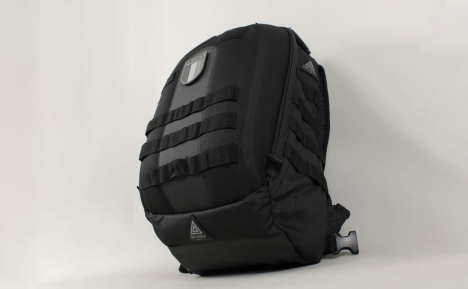
Features: Reinforced backpack with modular internal panels, MOLLE compatibility, multiple compartments, ergonomic carrying system.
Advantages: Great carrying flexibility (hands-free), exceptional modularity, good distributed load capacity, suitable for long movements.
Limitations: Requires good comfort and ergonomics for prolonged wear, access sometimes less quick than a briefcase, may attract attention depending on design.
Recommended for: Transporting a long weapon, a precision instrument, discreet movements in urban areas.
Features: Rigid padded case, compartmentalized, with targeted reinforcements, discreet design.
Advantages: Targeted and optimized protection, maximum discretion, relative lightness, ease of transport.
Limitations: Not suitable for transporting many accessories, capacity limited by design, requires other containers for accessories.
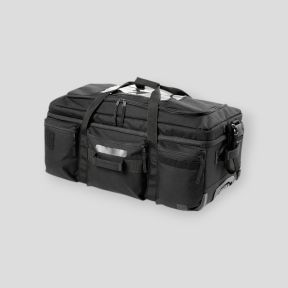
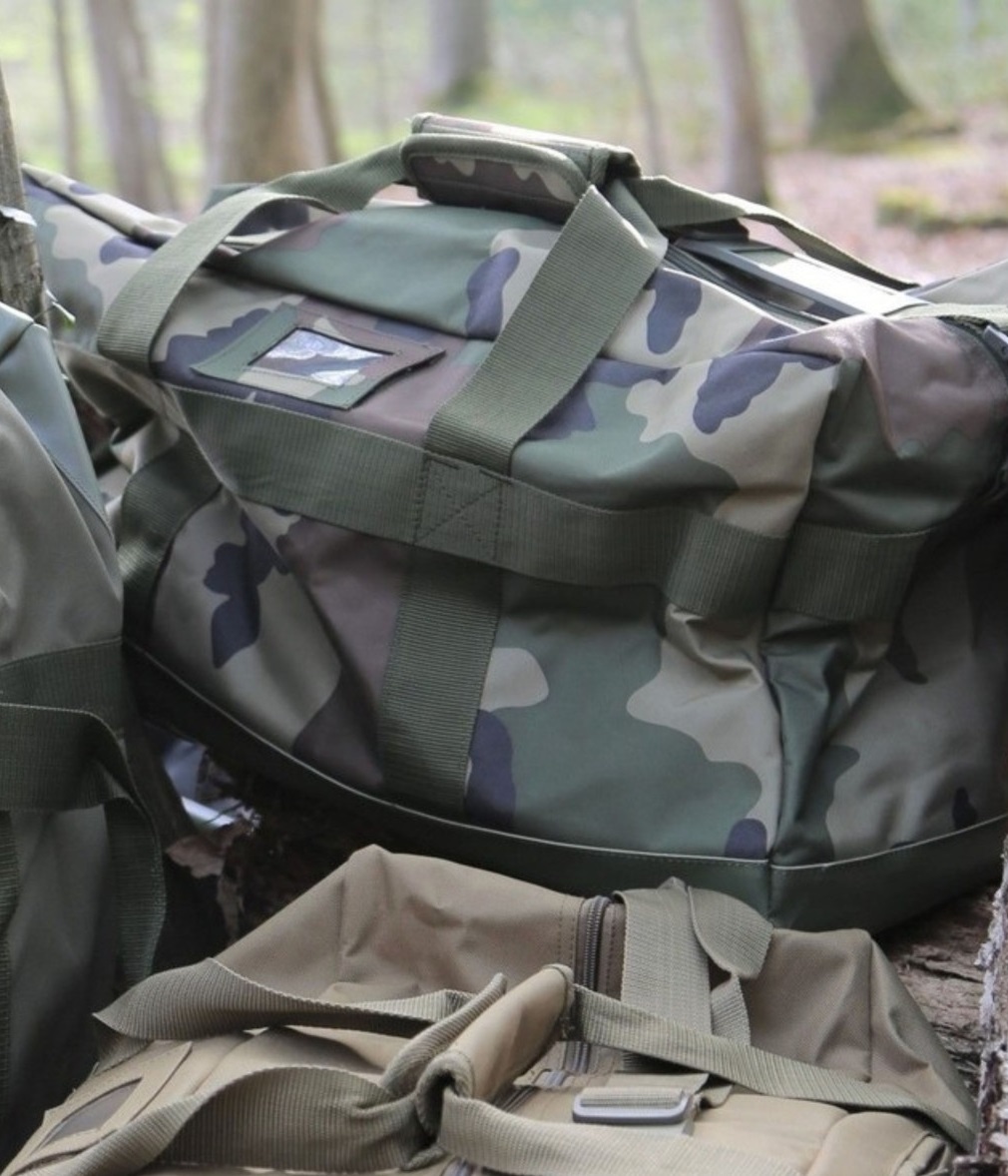
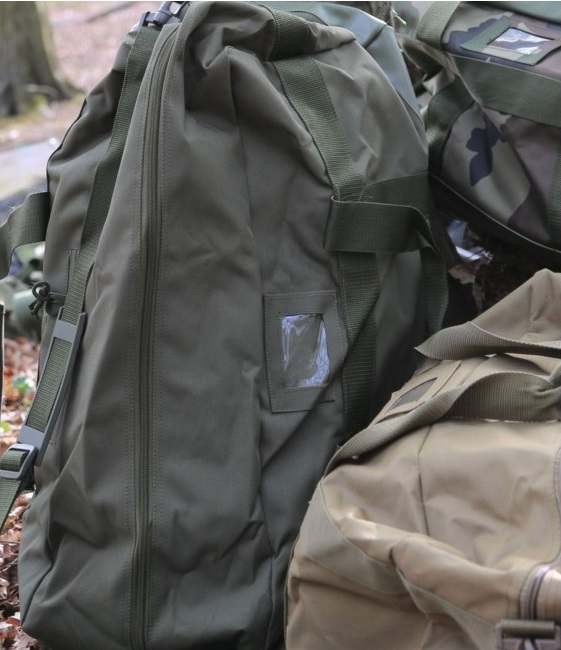
Recommended for: Extended deployments, transporting large quantities of equipment, travel with support vehicle.
Features: Robust duffel or reinforced wheeled bags, large capacity, ultra-resistant construction.
Advantages: Large volume for long deployments, exceptional robustness, facilitated transport (wheels, multiple handles), usage versatility.
Limitations: Less agile when quick accessibility needed, heavy weight when loaded, bulk in confined spaces.
Recommended for: Complement to an existing system, organization optimization, thematic content specialization (medical, tools, electronics).
Features: Modular pouches, structuring inserts, panel carry, velcro or MOLLE attachment systems.
Advantages: Effectively compartmentalizes a large bag, adds modularity to existing bags, facilitates quick reorganization, allows thematic separation.
Limitations: Do not replace the main bag, can add weight if too numerous, require compatibility with host bag.
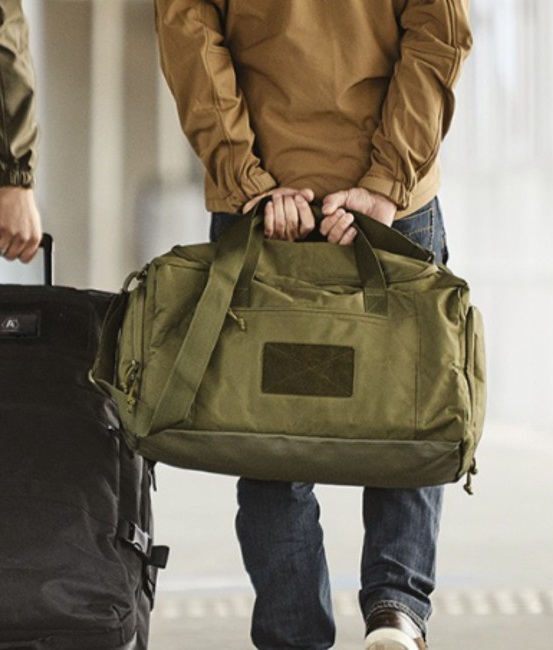
Start by objectively analyzing your primary use: daily transport, occasional deployments, frequent travel, vehicle storage? List the equipment you need to transport regularly and its specific constraints (fragility, dimensions, weight). This analysis determines the type of bag and priority criteria.
Not all criteria are equal depending on your context. Prioritize them: maximum protection, quick accessibility, carrying comfort, discretion, budget? This prioritization will guide your inevitable compromises. If possible, physically handle the bag with a representative load before purchase. Check actual accessibility, carrying comfort, finish quality. User feedback in contexts similar to yours is valuable.
A quality tactical bag represents an investment, but it protects equipment often much more expensive. A low-end bag that fails at the wrong time can compromise your equipment and your safety. Favor recognized brands with solid warranties.
Choose an evolving system that can adapt to your changing needs. Modularity (MOLLE, removable inserts, additional pouches) allows the bag to evolve without replacing it entirely. This flexibility significantly extends the useful life of your investment.
The choice of a tactical bag or secure case should never be taken lightly. It's a strategic element that conditions the security, durability and accessibility of your equipment. A thoughtful choice according to the presented criteria guarantees you a lasting investment that will effectively protect your equipment while facilitating your operations.
Take the time to analyze your real needs, compare options according to your priorities, and invest in quality. Your bag then becomes a reliable extension of your operational system, allowing you to focus on your mission rather than protecting your equipment.