The best equipment for pros and enthusiasts alike




 Professions
A tactical flashlight is much more than a simple lighting tool. Designed for security professionals, outdoor activity enthusiasts, and emergency situations, it must combine durability, performance, and reliability. But faced with the abundance of models on the market, how do you make the right choice? Discover the essential criteria for selecting the ideal tactical flashlight.
The term "tactical" refers to a flashlight designed to withstand extreme conditions and offer features suited to professional interventions, security, or outdoor activities. Unlike an ordinary flashlight, it combines shock resistance, reliability, light weight, durable batteries, and high light intensity.
A true tactical flashlight must meet several requirements: be operable with one hand, offer quick activation, provide different lighting modes and remain reliable in critical situations. It can also be mounted on equipment or weapons according to professional needs.
Light output, measured in lumens, is often the first criterion considered. For serious tactical use, experts recommend a minimum of 800 lumens for defense or security applications. Versatile models typically range between 1,600 and 3,000 lumens, offering an excellent compromise between performance and runtime.
Be careful though: lumens only tell part of the story. Beam intensity, measured in candela or lux, determines the flashlight's ability to effectively illuminate at distance. A flashlight can display 2,000 lumens without projecting a concentrated and powerful beam. Always verify the effective beam range and its stability over time.
A quality tactical flashlight offers multiple intensity levels to adapt to each situation:
Low mode (moonlight): for map reading, discreet movements or preserving your night vision without blinding. Ideal for situations where discretion is paramount.
Medium mode: the ideal compromise between battery life and performance for most daily uses. This is generally the most used mode during patrol or security rounds.
High mode: for maximum illumination in critical situations or to illuminate at long distance. Allows quick threat identification or effective illumination of an extended area.
Strobe mode: this rapid flashing can disorient an attacker or signal your position in an emergency. Although controversial (it can also disturb the user), it remains appreciated as a deterrent tool by many professionals.
Access to different modes must be quick and logical. The best tactical flashlights allow activation of strobe mode or full power without cycling through all intermediate levels. Favor models with double-press for strobe or dedicated switches avoiding complex manipulations in stressful situations.
The beam type determines your flashlight's effectiveness depending on the situation:
Flood beam (wide): ideal for illuminating a nearby area, perfect for rounds, indoor searches, campsites, or activities requiring significant peripheral vision.
Spot beam (focused): optimal for seeing far, identifying a threat at a distance, or illuminating a specific point. Essential for security applications requiring significant range.
Adjustable beam/zoom: offers the flexibility to switch from one mode to another as needed. It's the ideal choice for versatile use, allowing instant lighting adaptation.
Choose according to your main use: if you need to illuminate at long distances regularly, favor a focused beam. For versatile use combining patrol and intervention, an adjustable beam represents the best compromise.
An ultra-powerful flashlight becomes useless if it only lasts 20 minutes. Actual runtime must be evaluated across all usage modes, as it's in real conditions that you'll measure your equipment's true performance.
Disposable batteries (CR123A): extremely reliable, they offer long storage life (ideal for emergency kits) and are convenient for backup. You can easily carry spares. However, their cost becomes high in the long term and their ecological impact is significant.
Rechargeable batteries (18650, 21700): economical in use, eco-friendly and generally more efficient in terms of capacity. They are now favored by many professionals for their cost-performance ratio and reduced environmental impact. The new 21700 generation offers even more capacity in a compact format.
In tactical use, your flashlight will undergo significant stress: drops, rain, mud, extreme temperatures, intensive handling. Construction must be flawless to guarantee reliability in all circumstances.
Aerospace-grade aluminum body (or similar alloys) offers the best compromise between lightness and strength. Some high-end models use special alloys for increased impact and corrosion resistance. Quality flashlights are tested for drops of at least 1 to 2 meters, some up to 3 meters.
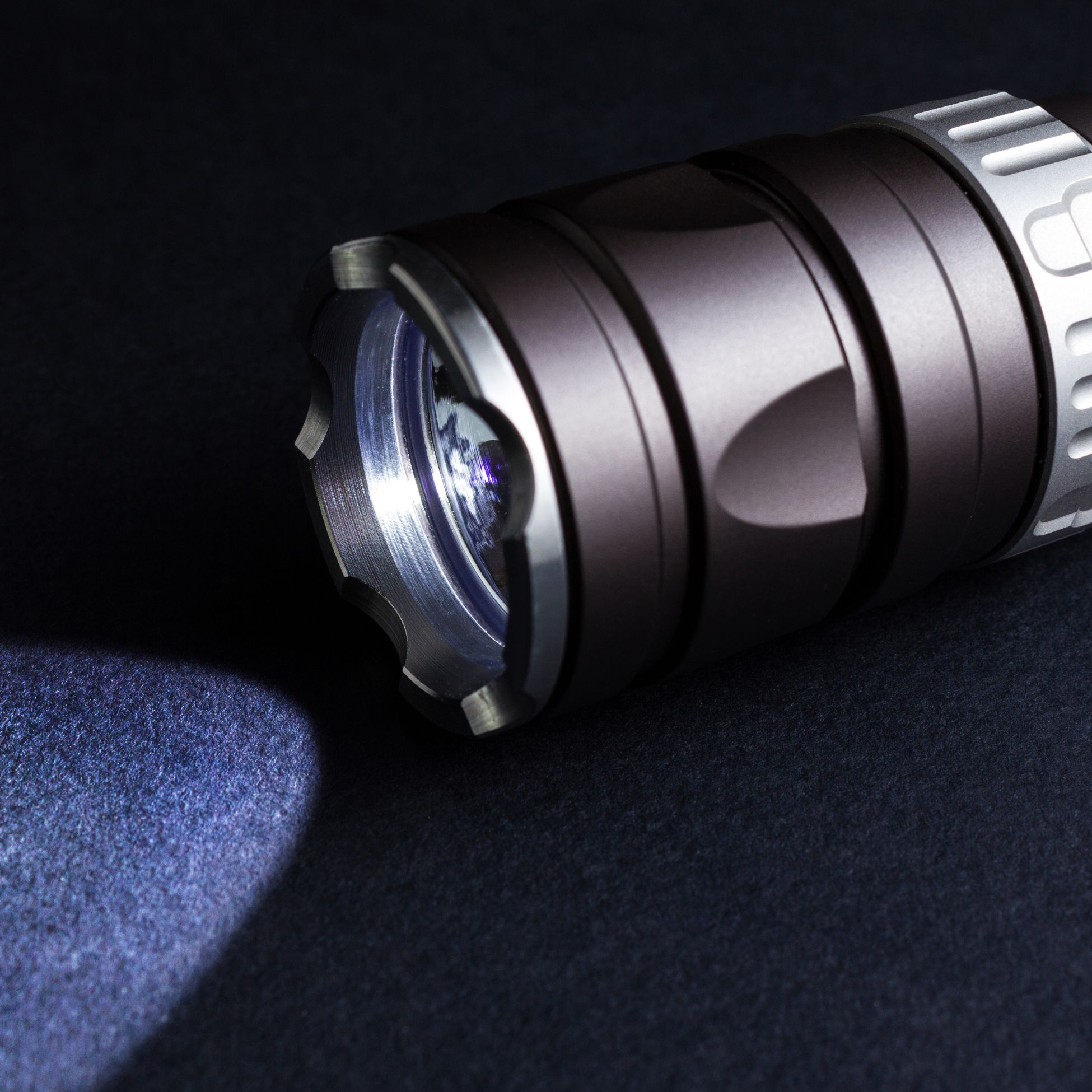
The protective lens must be scratch-resistant and anti-reflective treated to maintain light performance over time. Multi-layer coatings increase light transmission and protect against impacts. The crenelated bezel is not just aesthetic: it protects the lens during falls and can serve as a defensive tool or glass breaker in emergency situations.
IPX ratings: look for at least IPX4 (water projection from all directions), ideally IPX7 (temporary immersion at 1 meter for 30 minutes) or IPX8 (prolonged immersion according to manufacturer specifications). For intensive outdoor use or in maritime environments, IPX8 is essential.
Waterproof seals are crucial: they must be quality and properly positioned at all assembly points (head, body, tail, switches). Quality flashlights use multiple O-rings and waterproof threading systems. Verify that switches have their own waterproof protection.
The switch is your primary interface with the flashlight. It must be fast, intuitive and work even with thick gloves or in extreme conditions. A poorly designed control system can compromise your effectiveness in critical situations.
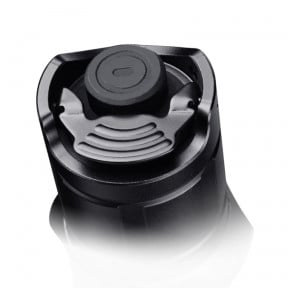
This is the standard for professional tactical flashlights for good reasons. Positioned at the rear, it allows instant activation with the thumb in the "cigar grip" holding position. The "momentary-on" function (momentary press) is absolutely essential: the flashlight turns on as long as you maintain pressure and turns off as soon as you release.
This function allows you to illuminate momentarily without continuously revealing your position, conserve battery power, and maintain tactical discretion. A full click generally locks the flashlight in the on position for extended use.
Some models feature a side button to change modes without affecting the main power switch. This configuration offers great flexibility: you can maintain the tail-cap for momentary illumination while quickly changing modes via the side button.
Dual switch systems or combinations (press & hold, double click, triple click) allow quick access to advanced functions. For example: double click for strobe, prolonged hold for turbo, single click to cycle through modes. These programmable interfaces adapt to each user's preferences.
The switch must be protected against accidental activation in a holster, pocket, or bag. Several incidents of overheating and burns have been reported with flashlights turning on involuntarily, with some brands even having to recall products.
Lockout systems allow you to electronically disable the flashlight during transport. Some models use a slight rotation of the tail cap to physically cut the circuit, a simple and effective solution.
Beyond the strobe mode already mentioned, some flashlights offer additional functions: SOS mode for emergency signaling, flashing beacon mode for location, progressive intensity ramp, memory of the last mode used, battery level indicator (LED indicator), and temporary turbo mode for a power boost for a few seconds.
.jpg)
Choose brands recognized in the professional field (law enforcement, military, emergency services), with solid warranties and responsive after-sales service. A warranty of 5 years or more demonstrates the manufacturer's confidence in their product. The availability of spare parts (seals, batteries, clips) is also an indicator of reliability and longevity.
Budget flashlights often cut corners on finishes, waterproofing, regulation electronics and materials. A medium to high-quality flashlight ($80-200) will last years with minimal maintenance and represent a better investment than a series of cheap models at $20-40 to replace regularly.
Don't confuse advertised maximum output with practical use: manufacturers often announce the maximum output that the flashlight maintains for a few minutes before decreasing to avoid overheating. Analyze actual runtime curves, thermal regulation system and stabilized output after a few minutes of use.
Adapt the choice to actual use: a 3,000-lumen flashlight is not always the best option. For patrols, security rounds, or close-range use, a well-optimized 500 to 1,000-lumen model will be more versatile, offer better battery life, and avoid blinding the user through reflection on nearby surfaces.
The strobe mode debate: although effective for disorientation, strobe mode can also disturb the user themselves, reduce environmental awareness, or prove useless in certain situations. Some professionals prefer a stable and reliable high-power mode rather than a strobe that can become more of a gimmick than a tool.
Insufficient thermal management: a poorly designed flashlight will produce excessive heat during intensive use, potentially damaging internal components, reducing runtime, decreasing brightness, or even becoming dangerous to handle. Good flashlights incorporate heat dissipation systems (fins, electronic regulation) that maintain an acceptable temperature.
Marketing focus vs field reality: impressive specifications on paper do not guarantee actual performance. Consult professional user feedback, independent tests, and specialized forums before investing in a high-end model.
The best flashlight remains ineffective if you don't master its use under stress. Train regularly to:
This familiarization transforms the flashlight into an instinctive tool that you master in all aspects, significantly increasing your operational efficiency.
Simple but regular maintenance significantly extends your flashlight's lifespan:
Checking seals: inspect them every 6 months, replace them annually or as soon as they show signs of wear. Lubricate lightly with appropriate silicone grease.
Cleaning electrical contacts: use a soft cloth or cotton swab lightly dampened with isopropyl alcohol to remove oxidation and ensure good conductivity.
Battery storage: store them at room temperature, partially charged (40-60%) for extended storage. Avoid extreme temperatures that degrade cells.
Regular testing of all modes: check monthly that all modes function correctly and that brightness remains constant.
Cleaning the optics: keep the lens clean with a microfiber cloth. Check for scratches that could affect the beam.
Visual inspection: look for signs of impact, cracks, thread wear, or any sign of damage before each important mission.
In cold environments: lithium-ion batteries lose capacity in the cold. Keep the flashlight close to your body when not in use and plan for spare batteries.
In humid environments: systematically check seals before prolonged exposure to moisture. After immersion, thoroughly dry all threads.
Safe transport: always use an appropriate holster or activate lockout mode to avoid accidental activation that can drain the battery or cause dangerous overheating.
Choosing a tactical flashlight is not just about selecting the most powerful or most expensive model. The key lies in methodical analysis of your actual needs and rigorous verification of essential characteristics.
Essential criteria: power adapted to your use (not necessarily the maximum), practical lighting modes accessible quickly, sufficient battery life in real conditions, robust construction with good waterproofing, optimal ergonomics for your morphology and use, intuitive and reliable power system.
The recommended approach: define your main use (security, outdoor, mixed use), establish your realistic budget, research brands recognized by professionals, consult independent tests and user reviews, verify warranties and after-sales service, and physically test several models if possible before purchase.
Beyond the purchase: invest in spare batteries and a quality charger, familiarize yourself thoroughly with your flashlight, establish a regular maintenance routine, and integrate the flashlight into your training exercises if you have professional use.