 The best equipment for pros and enthusiasts alike










-
 Professions
-
-
-
-
-
-
-
-
All Tops
![All Tops]()
-
-
-
All Bottoms
![All Bottoms]()
-
-
-
All Footwear
![All Footwear]()
-
-
-
All Bags
![All Bags]()
-
-
-
All Accessories
![All Accessories]()
-
-
Le 17 January 2025
Nutritional supplementation: a pillar for performance and recovery
In the context of prolonged outdoor activities, whether short and intense efforts, such as trail running or climbing, or long-duration efforts, such as multi-hour hikes or marathons, nutritional supplementation plays a key role in optimizing physical and mental performance. As a complement to well-planned nutrition, it helps meet specific needs, such as maintaining energy, improving muscle recovery, preventing nutritional deficiencies and providing overall body support against the demands of exercise.
Table of Contents :
- Essential glossary for better understanding nutrition
- Nutritional needs in outdoor activities
- Energy products: a response adapted to your needs
- Energy bars: a practical and effective solution
- Global strategies for optimized outdoor nutrition
- Conclusion
Essential glossary for better understanding nutrition
Before diving into this article, it is useful to understand certain technical terms frequently used in the field of sports nutrition. Whether you are a novice or a regular outdoor adventurer, these definitions will help you better grasp the key concepts related to energy needs, specific products and performance optimization strategies. Take a few moments to familiarize yourself with this glossary, in order to make the most of the information shared in this article.
- Carbohydrates :
Essential nutrients serving as the main source of energy for the body. Carbohydrates are converted into glucose, which fuels muscles and the brain. They are found in foods such as pasta, rice, fruits and energy bars.
- Proteins :
Essential macronutrients for repair and reconstruction of damaged muscle tissue. They play a key role in recovery after intense physical effort.
- Lipids :
Nutrients providing a sustainable energy source, used particularly during prolonged efforts after carbohydrate reserves are depleted. Present in foods such as nuts, avocados or vegetable oils.
- Electrolytes :
Minerals (such as sodium, potassium and magnesium) that maintain the body's water balance, promote muscle contraction and nerve transmission. Their loss through sweat can cause cramps or dehydration.
- Isotonic drink :
Liquid containing electrolytes and carbohydrates in a concentration similar to that of body fluids, allowing for rapid and effective rehydration during or after exercise.
- Electrolyte homeostasis :
Balance of electrolytes in the body, essential for maintaining normal bodily functions, such as muscle contraction and water regulation.
Nutritional needs in outdoor activities
Increased energy needs
Prolonged physical efforts significantly increase energy expenditure, thus placing nutritional needs at the heart of performance and recovery.
In outdoor environments, carbohydrates prove essential as the main fuel, as they provide rapid and immediate energy, essential for sustaining intense efforts. However, proteins play an equally crucial role by participating in the repair and reconstruction of muscle tissue damaged by exercise. Lipids, for their part, constitute a sustainable energy source, ideal for prolonged activities where carbohydrate reserves may be depleted. A balance between these macronutrients is therefore essential to meet the specific metabolic needs of demanding environments and prolonged efforts.
Consequences of poor nutrition
A poorly adapted nutritional intake can cause:
-
Premature fatigue due to insufficient energy intake.
-
Muscle disorders and prolonged recovery, due to lack of essential micronutrients such as magnesium or potassium.
-
A disruption of electrolyte homeostasis, which can manifest as muscle cramps or dehydration.
.jpeg)
Energy products: a response adapted to your needs
Characteristics of energy supplements
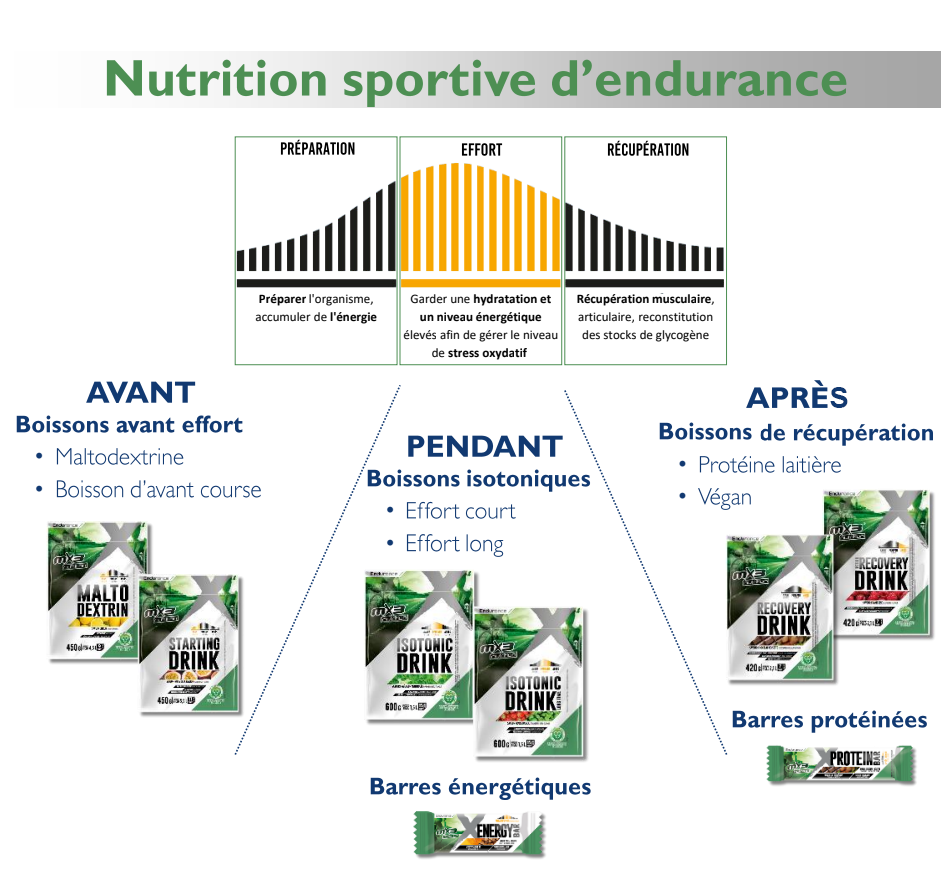
Energy supplements, such as gels, isotonic drinks and electrolyte tablets, are designed to meet specific needs in situations where the body is subjected to intense physical constraints. These products aim to quickly replenish energy and electrolyte losses caused by exercise, while optimizing recovery capacity.
By offering a portable and easy-to-consume solution, they enable athletes and adventurers to maintain their level of performance and reduce the risk of exhaustion related to dehydration or deficiency in essential carbohydrates. Innovations in this field make it possible to adapt these supplements to varied needs, with specialized formulations for different phases of exercise (preparation, endurance, recovery).
Usage protocols for isotonic drinks
-
Before exercise: Consuming 200 to 400 ml of isotonic drink 1 to 2 hours before activity allows optimal initial hydration.
-
During exercise: Drink in small quantities (150-250 ml) every 15-20 minutes to maintain water and carbohydrate balance.
-
After exercise: Consuming 500 to 700 ml of isotonic drink within an hour following activity promotes rehydration and muscle recovery.
www.mx3.fr
Energy bars: a practical and effective solution
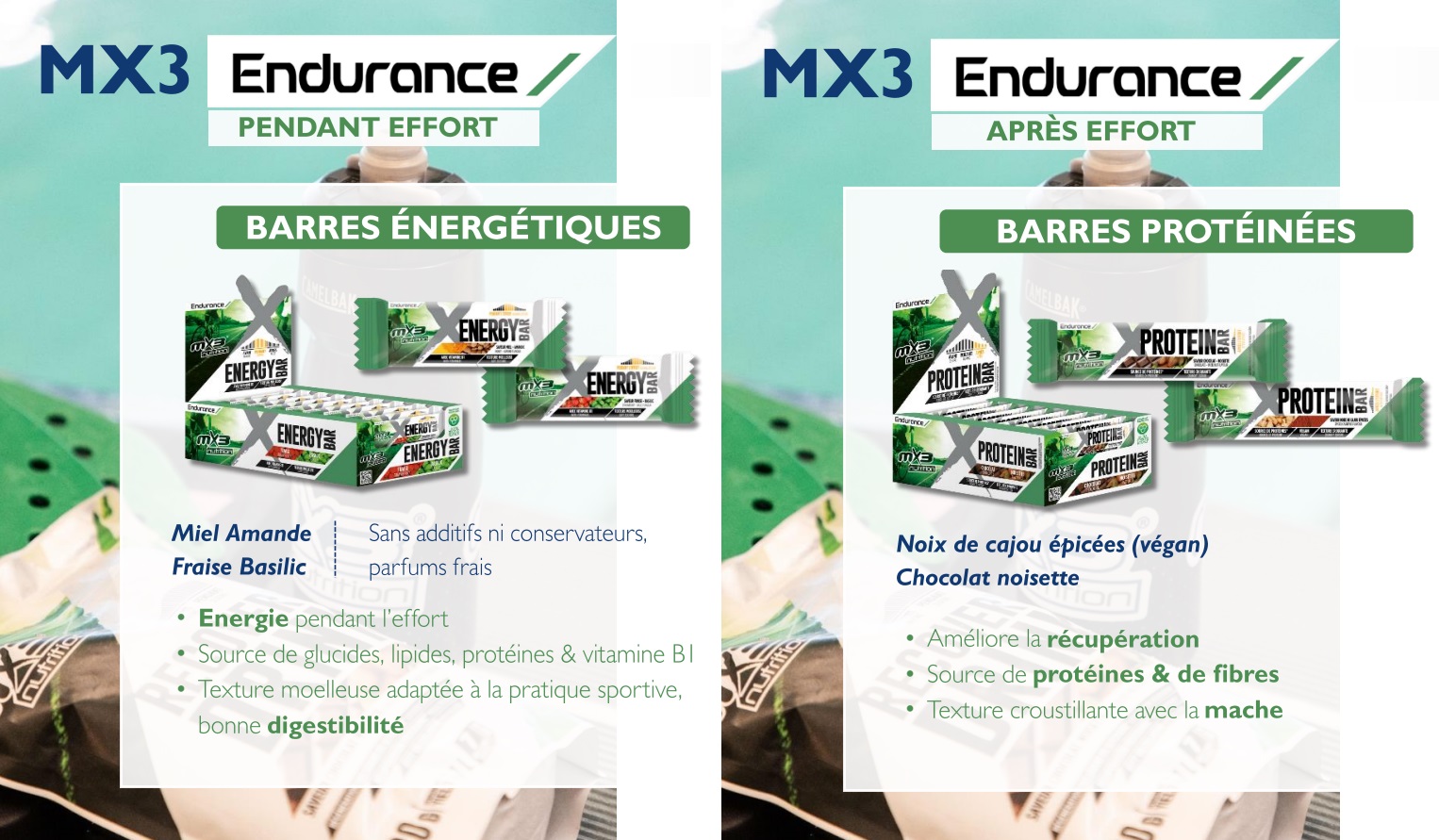
Energy bars stand out for their practicality, nutritional density and ease of use, making them a major asset for adventurers and athletes in outdoor environments. They are particularly suited to activities requiring a rapid energy supply, while being easy to carry and consume. Their diversity allows them to meet varied needs: energy support during exercise, muscle recovery assistance or simply a healthy snack to maintain alertness and comfort. Thanks to their compact format, they take up very little space in the bag while providing a significant amount of energy, often in the form of complex carbohydrates or proteins.
Types of bars and their uses
-
Protein-rich: Ideal for muscle repair after exercise, they help limit soreness and promote fiber reconstruction.
-
Carbohydrate-based: Provide immediate and lasting energy to support prolonged effort.
- Natural: Bars made from figs, nuts or oats offer a healthy alternative and are often free of chemical additives.
Selection criteria
-
Carbohydrate/protein ratio: A balance adapted to the type of activity (short intensity versus prolonged endurance).
-
Moderate glycemic index: Prevent energy spikes and drops.
-
Absence of additives: Favor products free of artificial ingredients to reduce the risk of intolerance.
 www.mx3.fr
Global strategies for optimized outdoor nutrition
Optimized nutrition for outdoor adventures relies on a comprehensive approach that combines preparation, adaptation and sustainability. Caloric planning is a central element to ensure that energy intake covers the needs related to the duration and intensity of effort. This helps maintain physical performance while preventing nutritional deficits. Testing food products and energy supplements beforehand helps avoid unexpected digestive discomfort during activity, thus ensuring optimal comfort.
Intelligent hydration, which alternates between pure water and isotonic drinks, is equally crucial for preventing severe dehydration and electrolyte imbalances. Finally, adopting an eco-responsible approach, by using recyclable packaging and ensuring no waste is left behind, helps preserve natural environments while enhancing personal satisfaction from respectful and sustainable outdoor activities.
Conclusion
An optimized nutritional intake is an essential pillar for successful outdoor adventures. By intelligently combining energy supplements, nutritional bars and freeze-dried meals, you ensure optimal performance and rapid recovery. The key lies in planning adapted to your personal needs, taking into account the intensity of your efforts, the duration of the adventure and logistical constraints.
By adopting these good practices, you maximize your chances of fully enjoying every moment, while preserving your health and the environment.
Related products


-40%
-35%
Related articles

The nutritionist doctor: What is their role in guiding our diet?
Read the article


-
![Over 200 brands At the best price]() Over 200 brands At the best price
Over 200 brands At the best price -
![Secure payment In 3 or 4 interest-free installments]() Secure payment In 3 or 4 interest-free installments
Secure payment In 3 or 4 interest-free installments -
![Delivery across Europe From €79 of purchase]() Delivery across Europe From €79 of purchase
Delivery across Europe From €79 of purchase -
![Customer service Monday to Friday]() Customer service Monday to Friday
Customer service Monday to Friday


