The best equipment for pros and enthusiasts alike









 Professions
The Central Directorate of the Criminal Investigation Department (DCPJ) plays a crucial role in the prevention and suppression of criminal offenses in France. From fighting organized crime to cybercrime and personal protection, discover the multiple facets of this emblematic institution, dedicated to preserving public order and pursuing justice.
Table of Contents:
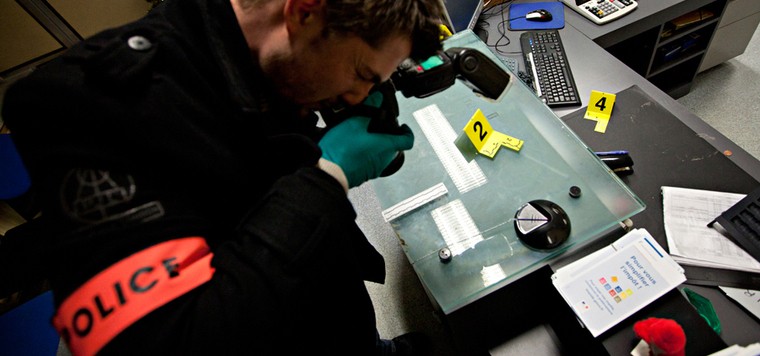
Created in 1907 by Georges Clemenceau, the Central Directorate of the Criminal Investigation Department responded to rising insecurity under the Third Republic during the "Belle Époque" period. The gendarmerie brigades were no longer sufficient to control the emergence, throughout the territory, of organized crime gangs. This is how the "Tiger Brigades" were born, 12 regional mobile police brigades. Very effective in criminal investigation missions, new brigades would gradually emerge.
The DCPJ fights crime in all its forms and works closely with local police services, intelligence services and magistrates to conduct thorough investigations, gather evidence and ensure that perpetrators of offenses are brought to justice. Its action aims to guarantee the safety of citizens, protect their rights and maintain public order while respecting democratic values and the principles of the rule of law.
Its missions are multiple and include notably:
Fight against organized crime,
Terrorism,
Drug, weapons, explosives trafficking…
Procuring,
Fraud,
Money laundering, counterfeit currency, counterfeiting,
Cybercrime,
Violent crimes and missing persons,
Surveillance of racecourses and gaming establishments,
International police cooperation,
etc.
The Central Directorate of the Criminal Investigation Department is composed of central services and interregional or regional territorial services.
Among these interregional territorial services, we find numerous sub-directorates such as:
The sub-directorate for combating organized crime and financial delinquency (SDLCODF);
The anti-terrorist sub-directorate (SDAT);
The sub-directorate for combating cybercrime (SDLC);
The national division of criminal documentation and technical police coordination (DND2CPT);
The sub-directorate of resources, evaluation and strategy (SDRES);
The central service for racing and gaming (SCCJ);
The international relations division (DRI);
Among the regional territorial services, we notably find:
The regional directorate of the criminal investigation department of Paris,
Regional intervention groups (GIR).
The CID organization evolves over the years to adapt to the evolution of threats, technologies and means of prevention and combat.
To join the Central Directorate of the Criminal Investigation Department, more often referred to by the abbreviation CID (Criminal Investigation Department), you will need to register for the peace officer exam or, if you have a Bachelor's degree + 3 years, the criminal investigation officer exam (OPJ).
To be eligible to apply, several prerequisites must be met:
Be of French nationality,
Be between 18 and 35 years old,
Enjoy full civil rights,
Be in good physical and mental condition,
Have a clean criminal record.
The DCPJ recruitment process includes various tests: written examinations, psychotechnical tests, physical tests and interviews.
Once the peace officer or police officer exam is passed, candidates undergo initial training in one of the various National Police Schools (EPN) or in a Police Training Center (CFP).
Once initial training is completed, police officers can join the various services of the Central Directorate of the Criminal Investigation Department based on available positions and their profiles. Depending on the targeted position, specialized technical skills, such as computer science, criminology or foreign languages, may also be required.
Are you a police officer or want to become one? Discover our police universe in our online store vetsecurite.com: police clothing, tactical boots and shoes, equipment, gear, bags and much more!