 The best equipment for pros and enthusiasts alike
-
 Professions
-
-
-
-
-
-
-
-
All Tops
![All Tops]()
-
-
-
All Bottoms
![All Bottoms]()
-
-
-
All Footwear
![All Footwear]()
-
-
-
All Bags
![All Bags]()
-
-
-
All Accessories
![All Accessories]()
-
-

Buying guide: how to choose your extreme cold sleeping bag?
When temperatures drop below 0°C, it's better to equip yourself properly. And when we talk about winter bivouac, we mean extreme cold sleeping bag. In this article, we help you make the right choice to get a restful night's sleep even in cold weather!
Summary:
What is an extreme cold sleeping bag?
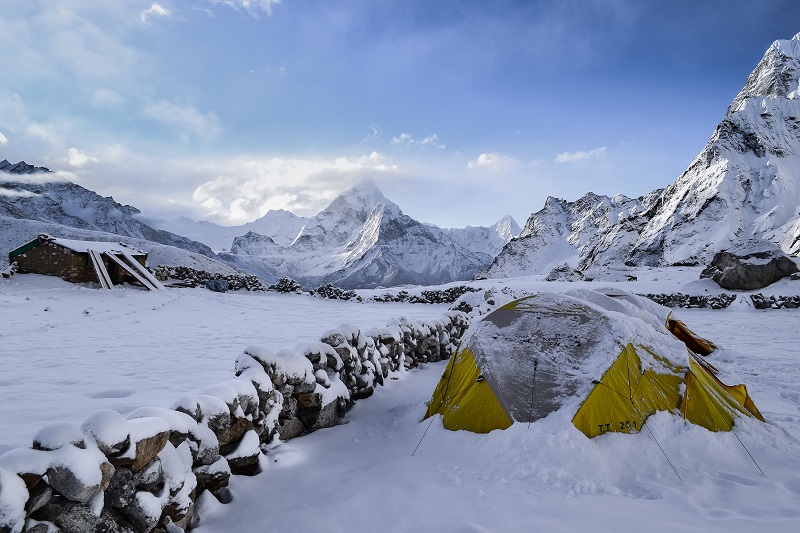
In our online store vetsecurite.com, you can find the designation "extreme cold sleeping bag" from a limit temperature of -5°C. Intended for four-season use, extreme cold sleeping bags are ideal for establishing a winter bivouac when temperatures frequently drop below 0°C.
Extreme cold sleeping bag: what do the different displayed temperatures correspond to?
The 13537 standard: standardized system for evaluating the thermal performance of sleeping bags
The European standard 13537, like the international standard ISO 23537-1:2016, is widely used by manufacturers to determine the temperature rating of a sleeping bag. It offers four temperature indices:
- Comfort temperature: the lowest temperature at which a woman (25 years old, 60 kg, 160 cm) can sleep comfortably in a relaxed position.
- Lower limit temperature: the lowest temperature at which a man (25 years old, 70 kg, 173 cm) can sleep for eight hours in a curled position without being cold.
-
Extreme temperature: temperature at which a woman can remain in the sleeping bag for six hours without risking hypothermia, but not necessarily sleeping comfortably.
-
Upper limit temperature: the highest temperature at which a man can sleep without sweating excessively. This index is less often indicated by manufacturers than the first three.
How are sleeping bag temperatures calculated?
To obtain these ratings, a sleeping bag is tested in laboratory with a thermal mannequin that simulates the human body. The mannequin is placed in the sleeping bag and the temperature inside the bag is gradually lowered until the mannequin gets cold. The temperature at which this occurs is then used to determine the different ratings.
It is important to note that these displayed temperatures remain only an indication. Other factors can influence the sensation of warmth or cold felt by the user, such as individual metabolism, the person's height and weight, fatigue level, hydration level, clothing worn, environmental humidity, etc. It is therefore recommended to choose a sleeping bag adapted to the conditions you will encounter during your trip or hike and to test it in similar conditions before leaving.
How to choose your extreme cold down sleeping bag?
Down or synthetic, what are the advantages and disadvantages?
Down sleeping bags and synthetic sleeping bags are two types of insulation commonly used in sleeping bags. Here are the differences between the two:
-
Insulating properties: Down sleeping bags are often warmer for their weight than synthetic sleeping bags, because the natural down clusters trap more air and provide better insulation. However, down sleeping bags can lose their insulating properties when wet, unlike synthetic sleeping bags which retain some warmth even when damp.
-
Price : Down sleeping bags are generally more expensive than synthetic sleeping bags, as the production process is more costly.
-
Maintenance: Down sleeping bags require more maintenance than synthetic sleeping bags, as they must be kept dry and aired out regularly to maintain their loft and insulating properties. Synthetic sleeping bags are usually easier to clean and maintain.
-
Volume: Down sleeping bags can compress to reach a smaller size than synthetic sleeping bags, making them a good choice for hikes or trips where every gram counts! However, synthetic sleeping bags are traditionally more durable and can withstand rougher handling.
Still hesitating between down and synthetic? Remember that down sleeping bags are ideal for people looking for a lightweight and highly compressible sleeping bag, while synthetic sleeping bags are a good choice for those with a limited budget or who expect to encounter wet conditions.
What shape of sleeping bag should you choose?
There are several shapes of sleeping bags, each with its own advantages depending on the user's needs and preferences. Here are some of the most common shapes and their advantages:
-
Mummy/coffin sleeping bags: These bags are designed to be well-fitted and narrow towards the feet, which minimizes the amount of air that must be heated by the user's body. They are therefore more thermally efficient than other sleeping bag shapes, and they are generally lighter and more compressible. Mummy-shaped bags are often preferred by hikers and mountaineers who need to reduce weight and bulk.
-
Rectangular sleeping bags: These bags have a more spacious rectangular shape, which allows more movement and greater comfort. They are usually appreciated by car campers and those who prioritize comfort over weight and bulk.
-
Semi-rectangular sleeping bags: These bags are a hybrid between mummy-shaped bags and rectangular bags, with a slightly narrower foot space and more space in the upper body. They offer a good balance between thermal efficiency and comfort, and are generally preferred by hikers and campers who want a little more space to sleep.
For extreme cold sleeping bags, it is therefore preferable to opt for a mummy sleeping bag or at minimum semi-rectangular.
If you're still having trouble making your choice, don't hesitate to check out our dedicated article : 5 tips for choosing the right sleeping bag.
5 extreme cold sleeping bags put to the test
Ultimately, the choice of a sleeping bag depends on the individual needs of the user, their preferences, the intended use, as well as the conditions they expect to encounter.
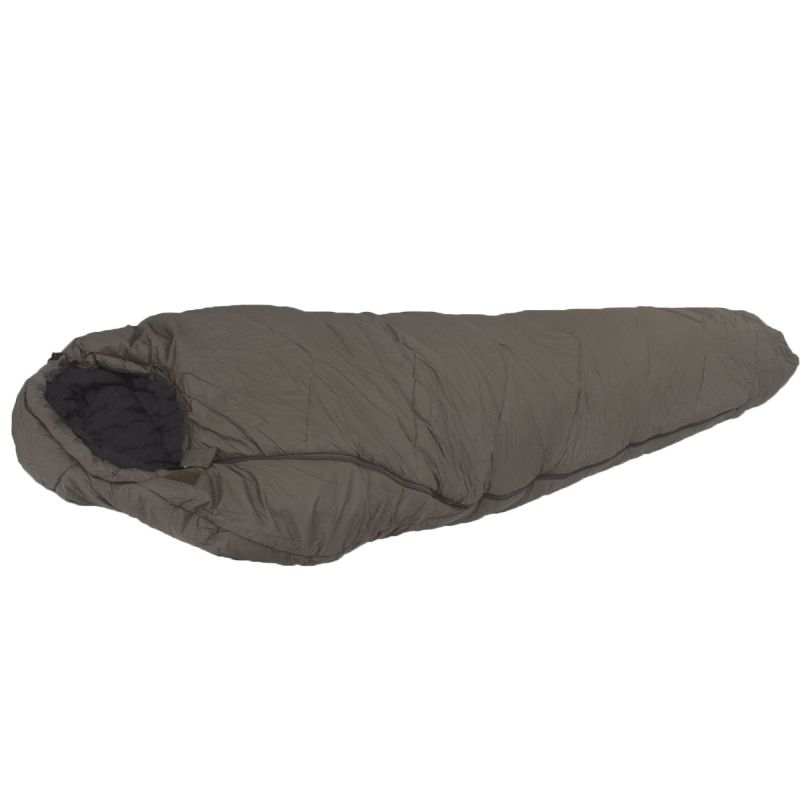
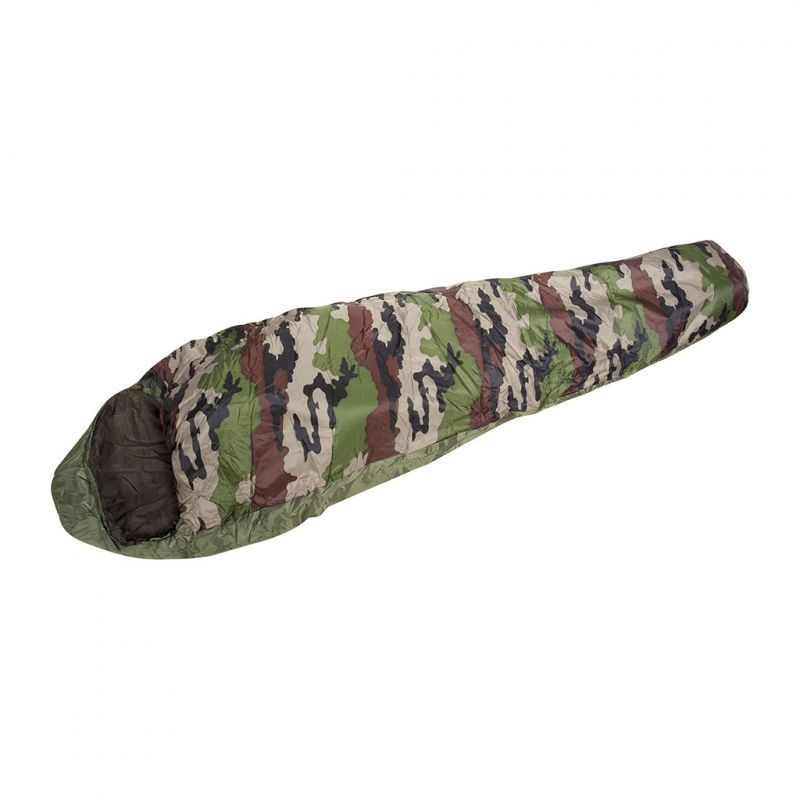
The OD Green extreme cold sleeping bag – OPEX
The OD green extreme cold sleeping bag from the OPEX brand is specially designed for four-season use. With its mummy shape and its double-layer microfiber padding, it allows for a restful night's sleep even in winter.
- Comfort temperature: -3°C
- Limit temperature: -8°C
- Extreme temperature: -20°C
This extreme cold sleeping bag weighs 2 kg and comes with a stuff sack and compression straps that allow it to reduce its bulk in your backpack to only 31 x 25 cm.
It is ideal for military personnel or outdoor enthusiasts looking for the best value for money.
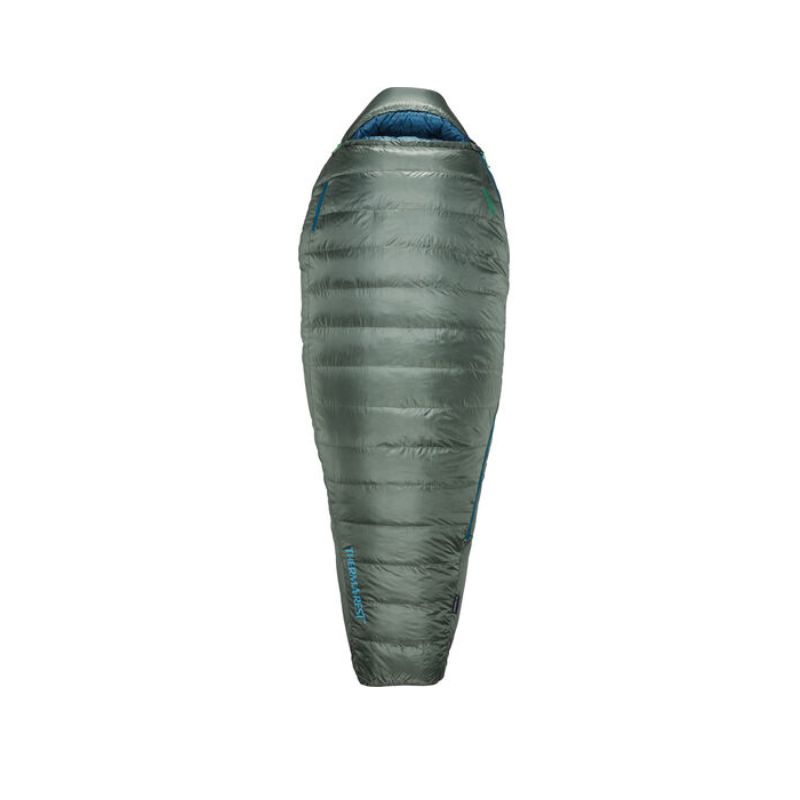
The Questar™ -18°C Long sleeping bag - Thermarest
The Questar -18°C long sleeping bag from the Thermarest brand is made from hydrophobic duck down. It has many advantages, including its featherweight of 1.17 kg and its high compressibility since it measures only 20 x 25 cm when folded in its storage bag.
- Comfort temperature: -10°C
- Limit temperature: -18°C
This extreme cold down sleeping bag is ideal for mountaineering or winter bivouac enthusiasts looking for the ultimate.
It is also available in SMALL version to save even more space and weight in the backpack.
The X-Pro Extreme sleeping bag from Ares
The XPRO Extreme sleeping bag from the Ares brand is specially designed for four-season use. With its waterproof anti-cold collar and its polyester fiber filling, it is ideal for very cold nights, even in humid conditions.
- Comfort temperature: -10°C
- Extreme temperature: -20°C
This extreme cold sleeping bag weighs 2.2 kg and compresses to 40 x 22 cm when folded.
It is ideal for military personnel or hikers looking for a synthetic sleeping bag that withstands negative temperatures.
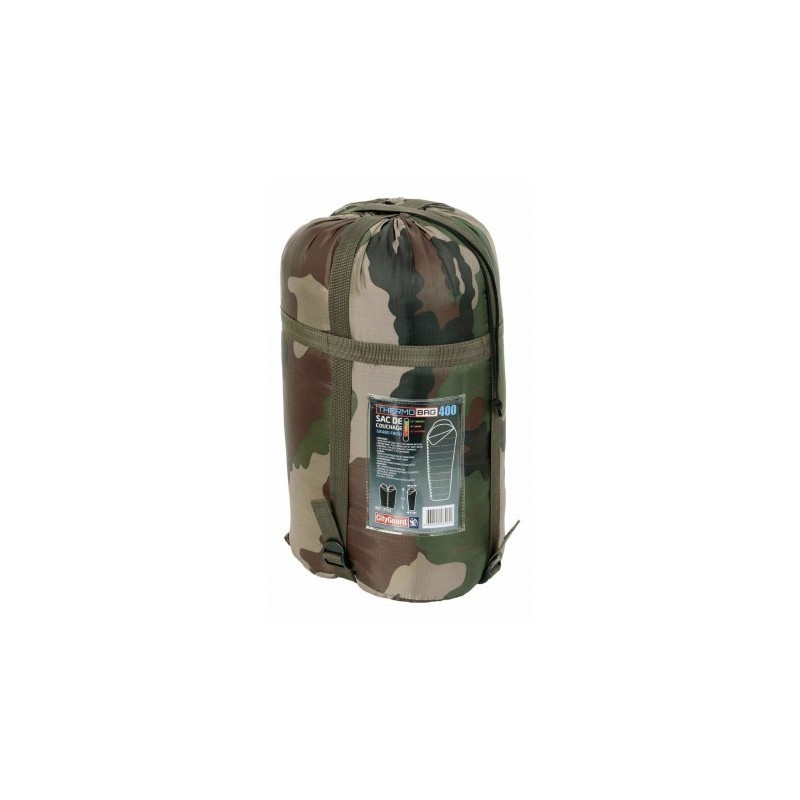
The Thermobag 450 extreme cold sleeping bag - CityGuard
The Thermobag 450 Extreme Cold sleeping bag from the brand Cityguard has a side closure that allows it to combine with a second sleeping bag.
- Comfort temperature: +5°C
- Limit temperature: -5°C
- Extreme temperature: -15°C
This extreme cold sleeping bag in synthetic weighs 2.26 kg and compresses to 39 x 25 cm when folded.
Less warm than the other sleeping bags in our selection, it should be reserved for cool nights, but not extremely cold ones. It is also available in khaki color.
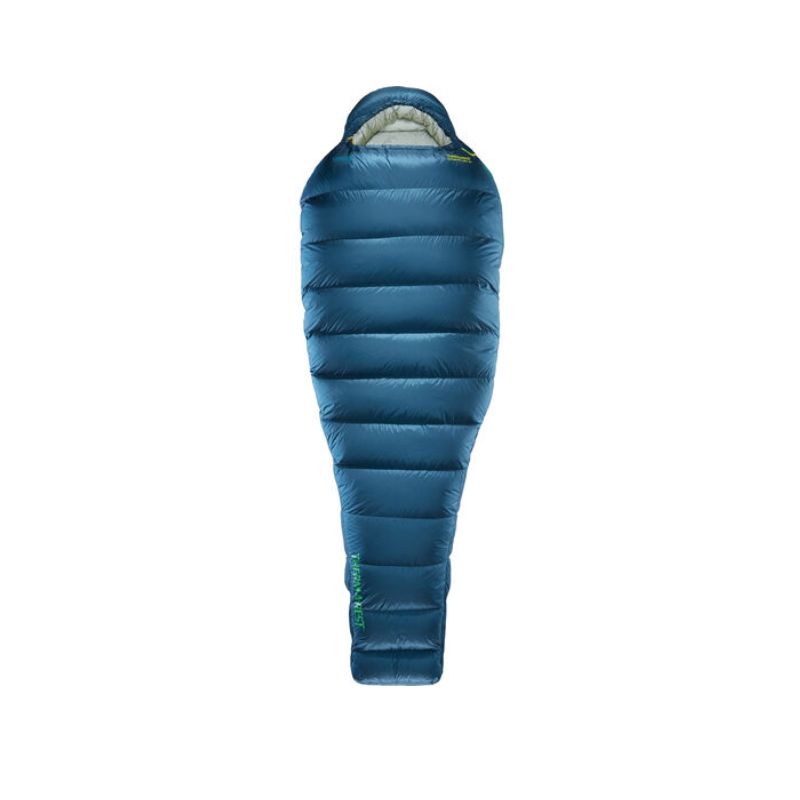
The Hyperion™ -6°C Regular goose down sleeping bag - Thermares
The ultra-light Hyperion -6°C Regular sleeping bag from the Thermarest brand is made from hydrophobic duck down. It is even lighter than the Questar with only 0.58 kg for the Regular and 0.63 kg for the Long format. It also takes up less space, measuring only 15 x 20 cm when folded in its included compression sack.
- Comfort temperature: -0°C
- Limit temperature: -6°C
- Extreme temperature: -23°C
This extreme cold down bag is ideal for alpine climbing enthusiasts in alpine style, hikers or bicycle travelers for whom every gram counts!
It is also available in Long format for people measuring up to 198 cm.
Our bonus tips to gain a few degrees in winter bivouac
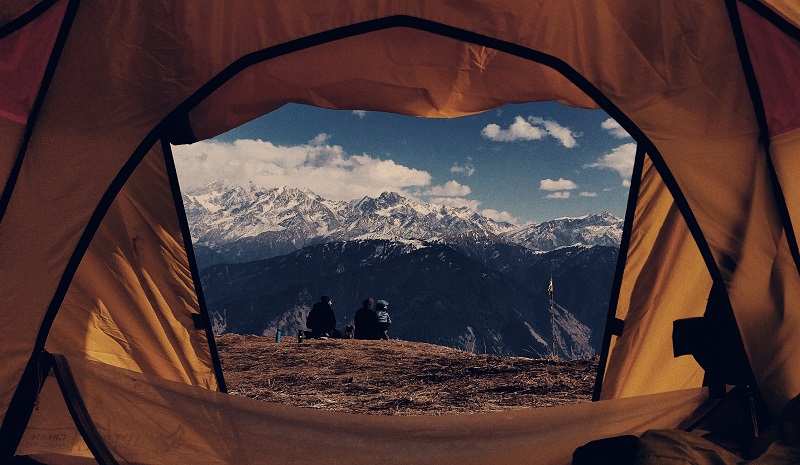
The silk liner or sleeping bag liner
Being naturally sensitive to cold, you took the warmest extreme cold sleeping bag on the market and yet, your bivouac nights are not as cold as you had imagined? Result, you sweat and you still end up getting cold!
To avoid this, rather take a sleeping bag adapted to your expedition and, if you're afraid of being cold, complete with a silk sheet or a microfleece liner Ares. This will allow you to increase the temperature of your sleeping bag by a few degrees and gain versatility. Moreover, a sleeping bag liner or sheet is more hygienic because it's easier to wash than a sleeping bag!
A survival blanket under the tent
You probably already know this if you've read our article on the survival blanket, but you can install one outside, silver side up, before laying the ground sheet of your tent. This will help limit heat loss, especially on cold and damp ground. Be careful though, this tip is not valid in case of thunderstorm or near incandescent materials like a campfire since survival blankets are generally made with highly flammable material.
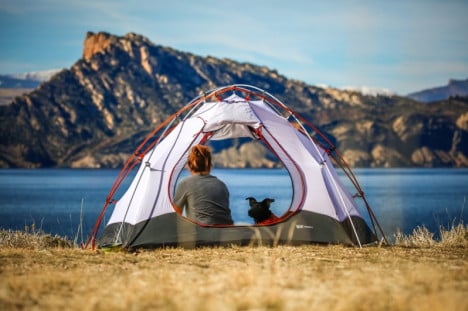
Don't hesitate to take a look at the Bivouac category of our online store to find your favorite brands at the best price: shoes, clothing, ground mats, tents, survival equipment, first aid kits, freeze-dried meals, etc.


-
![Over 200 brands At the best price]() Over 200 brands At the best price
Over 200 brands At the best price -
![Secure payment In 3 or 4 interest-free installments]() Secure payment In 3 or 4 interest-free installments
Secure payment In 3 or 4 interest-free installments -
![Delivery across Europe From €79 of purchase]() Delivery across Europe From €79 of purchase
Delivery across Europe From €79 of purchase -
![Customer service Monday to Friday]() Customer service Monday to Friday
Customer service Monday to Friday


