The best equipment for pros and enthusiasts alike

 Professions
Essential for all your outdoor outings and outdoor activities, the survival blanket is so light that it is quickly forgotten at the bottom of the bag, in a first aid kit or in the trunk of a car, but in case of an emergency situation, will you know how to use it correctly ?
Table of contents:
It was NASA that developed, in the 1960s, the material used to manufacture survival blankets. Originally, this reflective and ultra-thin material was used to thermally insulate the space agency's equipment (satellites, suits, shuttles, telescopes...). This revolutionary technology became popular with the general public when a former employee decided to use it to prevent hypothermia at the end of a marathon.
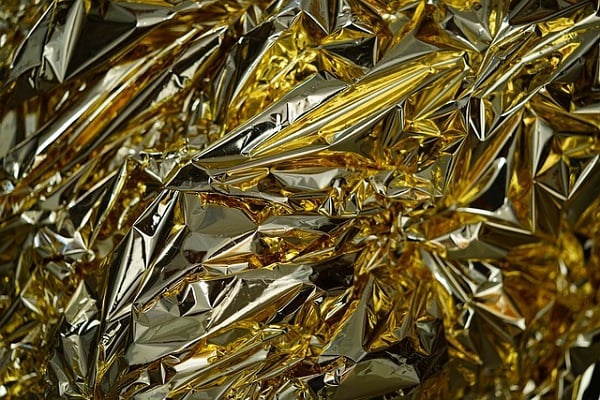
Light and very resistant, the survival blanket is composed of a plastic sheet, polyethylene terephthalate (PET) or Mylar, and is covered with a metallized coating.
The most classic survival blankets are composed of two sides : one gold (or orange) and one silver. These colors are very important as they determine the direction of use.
It should be noted that the survival blanket does not produce heat. Indeed, it allows to retain or reflect up to 90% of infrared radiation and, consequently, to maintain a stable body temperature. Isothermal blankets are also waterproof and rot-proof. In other words, they never rot and allow the user to protect themselves from rain and humidity.
The vast majority of survival blankets are not reusable. Indeed, once unpacked, it is difficult, if not impossible to fold them and make them fit again in their packaging bag. Very thin, disposable survival blankets get damaged or tear quite easily. They are therefore intended for single use. Now, it is nevertheless possible to find reusable survival blankets that are strong and thick enough to be used several times. The packaging is generally larger to facilitate storage. In any case, a punctured or torn survival blanket loses its properties and should not be reused.
To fight against the cold and reduce the risks of hypothermia, you must put the gold (or matte) side facing outward. On the contrary, to fight against heat and limit the risks of hyperthermia and heat stroke, it is the silver side that must be presented outward. It will not lower body temperature, but it will at least prevent it from increasing dangerously.
You can also use your survival blanket to set up your tent/shelter. To do this, you must place it under the tent with the silver side facing up. It will limit heat loss and help insulate your campsite from cold and wet ground. Why outside the tent? Simply because if you use it inside, it will wrinkle quickly, won't stay in place and above all, it will make a lot of noise. You can say goodbye to your good night's restorative sleep!
Warning : the survival blanket should not be used during a storm or near incandescent materials such as a campfire.
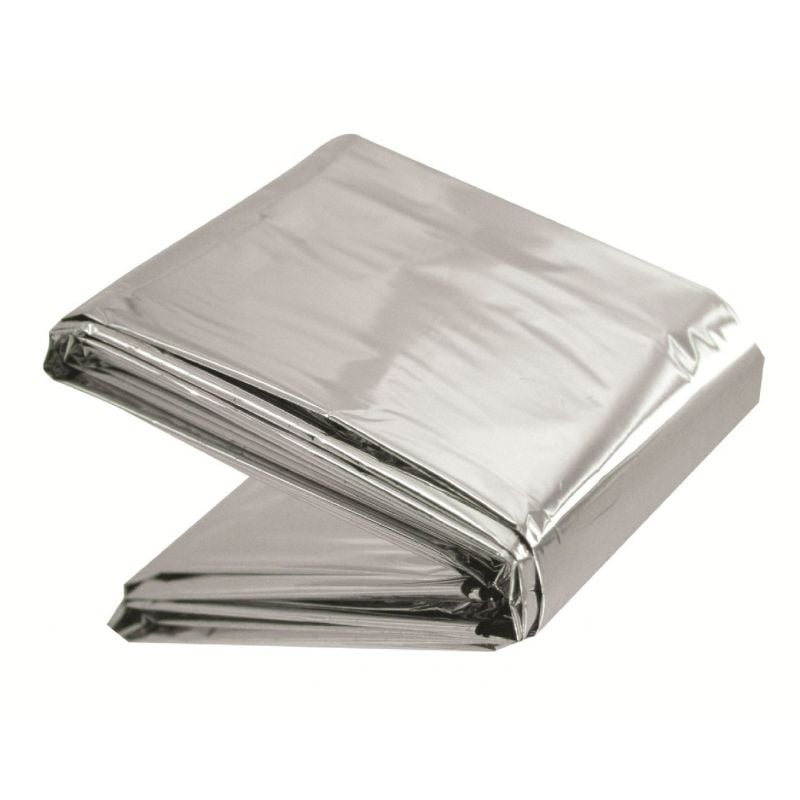
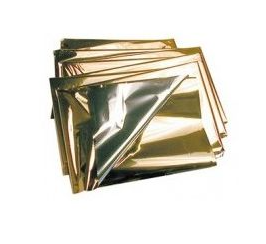
Survival blanket - Highlander
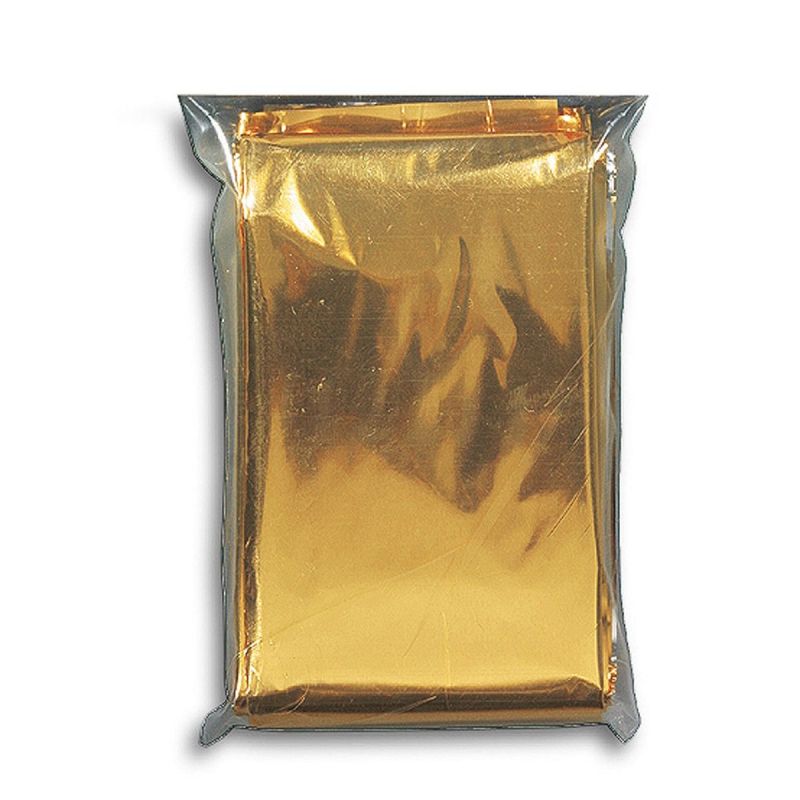
Survival blanket 210 x 160 cm - Tatonka
Non-sterile isothermal blanket 160 x 210 cm - Cir medical
The choice of a survival blanket depends mainly on the use you intend to make of it. Indeed, if you plan to use it only in case of extreme emergency, opt for a basic disposable survival blanket, lightweight and at a reduced price. According to your morphology, opt for a more or less large isothermal blanket.
The survival blanket poncho is, for its part, easier to use while walking, which can prove very useful for sports use, after a long effort, for example a marathon or a long-distance triathlon.
Finally, if you plan to reuse your survival blanket several times, opt for a survival blanket in the form of a sleeping bag. This version is heavier and bulkier, but it is also more resistant and comfortable.
Find all our survival blankets and much more in the first aid kits category of our online store !
What are the common mistakes to avoid when using a survival blanket, and how to prevent them?
When using a survival blanket, it is crucial to avoid certain common mistakes to ensure its effectiveness. Among these are the incorrect orientation of the blanket, not taking into account the gold and silver sides which have distinct functions of heat retention or heat reflection, and incorrect storage that could deteriorate it. It is also essential to avoid using it near high heat sources, such as campfires, to avoid any risk of combustion. Preventing these errors requires prior knowledge of its operation and proper use, as well as appropriate storage in a dry place away from direct sunlight.
Are there specific situations where the use of a survival blanket is contraindicated, apart from storms and incandescent materials?
Apart from storm situations and near incandescent materials, it is important to avoid using a survival blanket in conditions where it could be damaged quickly, such as in very windy environments or in areas where it could be caught or torn easily.
How can a survival blanket be used to improvise an emergency shelter in extreme weather conditions?
A survival blanket can be used to improvise an emergency shelter in extreme weather conditions by acting as an insulating layer against cold and humidity. To do this, it can be spread on the ground to create a barrier between the body and the cold and wet ground. Then, by hanging it on branches or other supports, it can serve as a roof to protect against rain, snow or wind. This use helps limit body heat loss and provides temporary protection against the elements, thus allowing better survival while waiting for rescue or more favorable weather conditions.