The best equipment for pros and enthusiasts alike
-15%
 Professions
Essential among elite athletes and in the Army, mental preparation and Potential Optimization Techniques are now investing the civilian professional world. But what is mental preparation? What is it for and how to implement it in daily life?
Table of Contents:
Mental preparation constitutes a set of techniques and tools to apply in situations of competition, combat or stress. These practices will allow you to perform in order to reach a level of fluidity and efficiency unattainable otherwise. In this case, the person has the impression that nothing can happen to them, this is what we call the " flow ".
Contrary to a common belief, a person's mental capacity is not an innate ability, it can be worked on. To do this, there are two methods. The first called " main " is focused on a problem-solving process. The second called " mindfulness " or " mindfulness " in English consists of accepting discomfort without judgment and refocusing on what is useful.
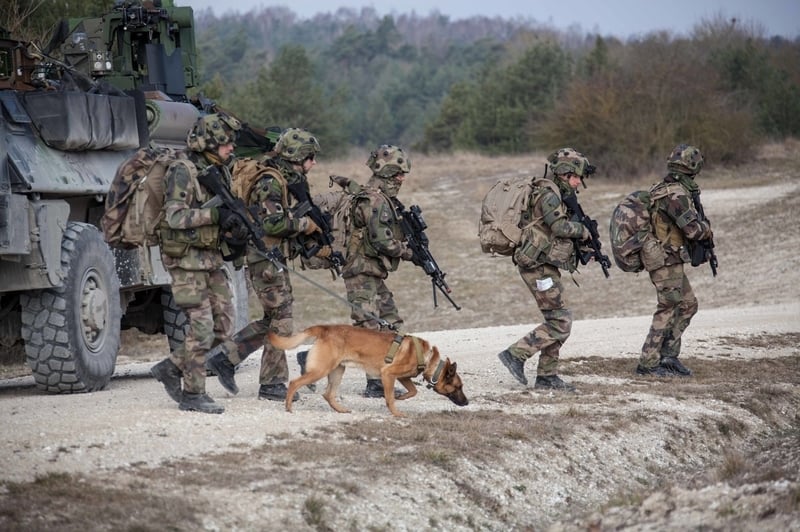
In an opposition where both parties possess identical strength and technique, it is the one who has benefited from the best mental preparation who will have the best chance of winning. Mental preparation acts on mental and cognitive capacities and skills : engagement, self-confidence, motivation, stress reaction, activation, relaxation, fear control, emotion management, visualization, internal dialogue, concentration, etc. So many skills that allow us to better understand why mental preparation is essential for military personnel and combatants. Indeed, to perform during a selection test, an exercise or in operational conditions, it is essential to stay focused, manage emotions and use fear and stress to one's advantage rather than being overwhelmed.
Designed and developed by Dr. Edith Perreaut-Pierre during the 1990s for the French armies, the Potential Optimization Techniques (TOP®) constitute a so-called complete mental preparation method since it acts on mental, technical, physical, tactical skills and on improving performance and recovery. TOP® uses several tools such as abdominal breathing, relaxation, positive internal dialogue or mental imagery.
Mental preparation and Potential Optimization Techniques can be used during OPEX preparation as well as for parachute jumps, shooting, long-distance runs with heavy equipment and more. This will help face potential apprehension in order to accomplish something that seems impossible at first. There are many techniques and preparations and we will detail one of them for you.
The Reflex Adjustment Signal Sign (SSAR) is a TOP that consists of convincing yourself, relaxing or putting yourself into action instantly. It corresponds to a sensory signal (gesture, movement, internal dialogue, etc.) in order to put yourself in condition, with the goal of perfectly performing an action. To achieve this efficiency, it will be necessary to work on this SSAR so that it becomes instinctive. Obviously, some criteria must be respected beforehand:
Know how to relax perfectly in order to regulate one's level of relaxation;
Be accustomed to mental imagery work in order to promote clarity and precision of sensations;
Have a positive, clear image corresponding to one's adapted stress;
Make sure your signal-sign is compatible with your context. Imagine you're undercover and just before the moment to intervene you want to boost yourself with your SSAR which consists of counting to 3 out loud before shouting "Go". Certainly, you'll be ready, but your intervention might not go as planned.
Besides the aspect dedicated to preparation, techniques are also used following operations, with the aim of physical and psychological release allowing the detection of potential PTSD (Post-Traumatic Stress Disorder).
The Wim Hof method consists of subjecting one's body, but also one's mind to extreme negative temperatures for benefits on physical and especially mental health.
This method bears the name of the one who conceived it, a 59-year-old Dutchman known for his extraordinary resistance to extreme cold. Also known as "IceMan", this man holds about twenty world records such as an apnea of more than 6 minutes under ice or a half-marathon (21 km) on the polar circle, barefoot and in shorts.
A very particular breathing technique allows him to push his limits, learn to control his emotions as well as his body's reactions. It consists of " breathing in fully and quickly then exhaling slowly 30 times, then holding your breath for 1 minute with empty lungs, then with full lungs". A respiratory cycle that must be repeated 4 to 5 times (average duration 20 minutes).
In addition to learning to resist cold, the Wim Hof method promises to improve physical and emotional health. If you wish to initiate yourself into this practice, go to Cantal, at Lac des Graves in winter period to follow training with a specialist (course by reservation).
Warning: this technique requires training and should not be practiced alone, as it can cause fainting or discomfort. If you are interested in this method, ask your doctor's advice and get trained by a certified coach (or Wim Hof himself).
In daily life, mental preparation can be performed through several means such as visualization of a situation in which one sees oneself succeeding, repetition of gestures or by immersing oneself in similar memories while using all five senses. Working on this mental imagery improves automatisms and consequently performance.
Among other available tools, athletes like military personnel can resort to sophrology or even mindfulness meditation. By replacing negative thoughts with positive thoughts, the person can thus focus solely on elements useful to their performance and turn towards the future rather than the past.
Managing parasitic or limiting thoughts can also help you improve self-confidence. You must know how to accept failure to learn useful lessons from it. In daily life, you can also work on your internal dialogue, you know, that voice that runs through your head and tells you that you'll never make it. By becoming aware of these negative thoughts, you will have already taken a big step. The next step is to let them pass to focus on more positive and constructive thoughts.
Some daily mental preparation tips:
Returning to SSAR, this method is also used to solve a problem that concerns us all: sleep.
Indeed, in case of difficulty falling asleep, when you perform your signal-sign, your breathing will become calmer, your muscles will relax and your mind will slip towards sleep. To do this, start by relaxing, choose a gesture that you systematically perform (turning your pillow, turning off the light, etc.) and associate this gesture with the state of deep relaxation in which you find yourself.
Obviously, this is a matter of regularity and will not allow you to fall asleep instantly from your first practice.
Also find an exceptional master class offered by Virtuoz, where Guillaume Nery teaches self-transcendence. Also enjoy 10% discount on master classes, thanks to the partnership between VET SECURITE and Virtuoz with the promo code VETSECURITE. On vetsecurite.com, also find a wide range of products for military personnel: military uniform, combat boots, equipment, military bags and gear.