The best equipment for pros and enthusiasts alike

-35%
 Professions
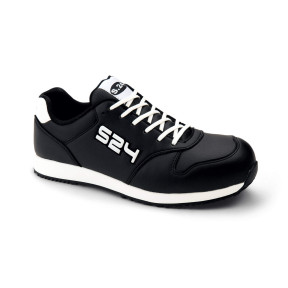
United under the general standard EN ISO 20345, safety shoes are to be distinguished from protective shoes (EN ISO 20346) and work shoes (EN ISO 20347). The first two have a protective toe cap capable of withstanding an impact of 200 and 100 joules respectively, while work shoes have none. This is what notably distinguishes the Jet S1P safety shoes from S.24 from the Jalnigel O2 work shoes from Jallatte. In all cases, these shoes are characterized by fundamental requirements required for their market placement, but also by additional requirements that are not mandatory, but which give them additional properties. This is the case with the WR and WRU standards which help identify the degree of waterproofing of a pair of shoes. We help you understand how to differentiate them.
Table of Contents:
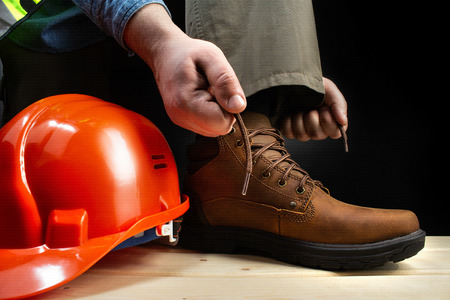
All safety shoes called "water-repellent", such as shoes meeting the S3 standard, benefit at minimum from the WRU waterproofing standard (for "Water Resistance of Upper"). This means they are water-repellent and offer water resistance on the upper, but not on the entire shoe. The WR standard is therefore an additional standard that designates a pair of waterproof shoes guaranteeing resistance to water penetration on the entire shoe. They are waterproof and resist immersion.
It is therefore necessary to take into account the work environment to determine what type of shoes to favor. Professionals who work in highly humid environments (plumbers, construction workers, delivery workers, etc.) will have every interest in equipping themselves with WR certified shoes to keep their feet dry.
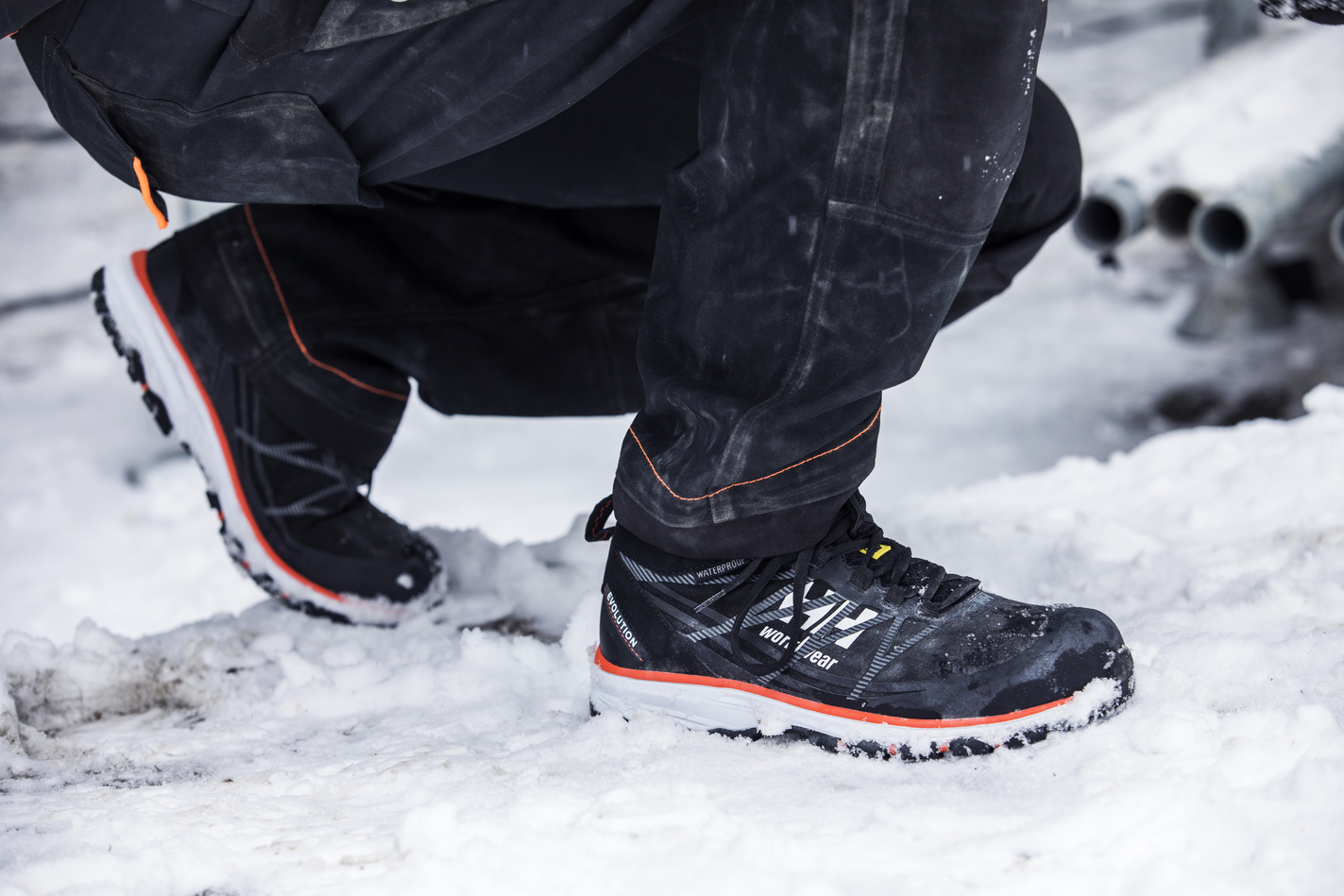
For a shoe model to obtain WRU certification, the material of its upper (leather, microfiber, canvas, etc.) must meet the standard's requirements in terms of resistance to absorption and water penetration. The compliance test is performed on a sample of the materials composing the shoe upper. It consists of partially immersing this sample in water for one hour. Validation is obtained if the upper has absorbed less than 30% of the amount of water in which it was immersed and the water penetration is equal to or less than 0.2 g.
The WRU standard being the least demanding in terms of protection against liquids, it is much more common than the WR standard. It is found in fields such as construction (structural work, finishing work), industry, crafts, landscaping or even food processing. However, while these water-repellent shoes effectively protect against splashes and moderate rain, they are insufficient when you actually work with your feet in water. Note that from 2022, the use of WRU marking will be progressively renamed WPA.
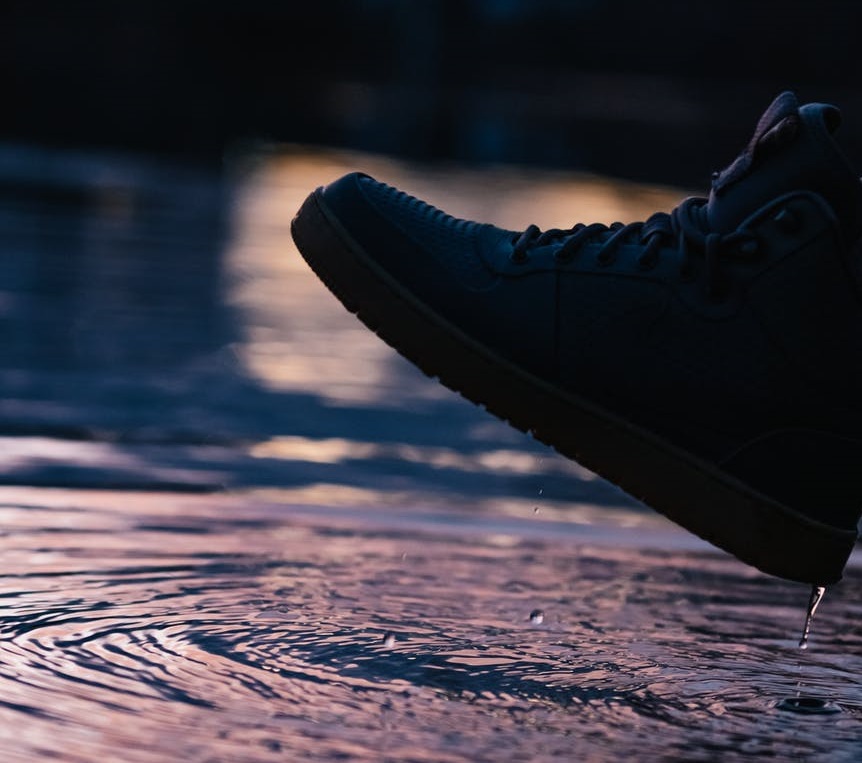
With shoes compliant with the WR marking, we approach near-perfect waterproofing... but not total. Indeed, even WR-certified shoes that attest to strong resistance to water penetration and absorption do not offer complete blockage of water passage. This time, the test does not concern the immersion of a simple sample, but rather the entire shoe. It is carried out for 80 minutes in a water tank of 2 cm. A second test consists of performing up to 100 lengths (approximately 1000 steps) in a tank several meters long, with a depth of 3 cm. The shoe is then mounted on a dynamic form that simulates the flexion of walking. The WR marking is obtained if the total surface area of water penetration does not exceed 3 cm². Through a special water-repellent membrane, the WR standard can be added to the characteristics of WRU shoes, or make waterproof shoes that were not initially so.
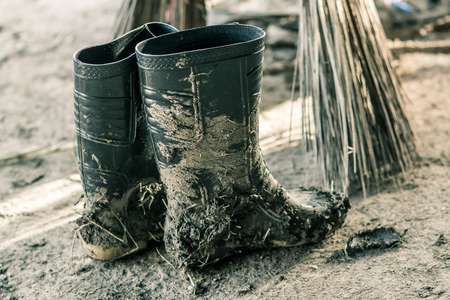
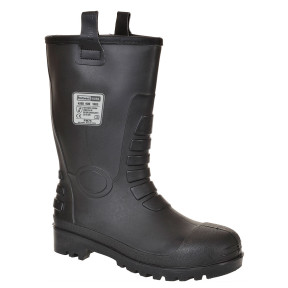
In case of hesitation, it is possible to decide between the WR and WRU standards by taking into account the cleanliness of the work environment. Indeed, in a humid and dirty environment, it is better to opt for a model with a smooth exterior material that is easy to clean. The nature of the upper is therefore also to be taken into consideration when making your choice. Logically, the shoes offering the best level of waterproofing remain the waterproof safety boots of standard S4 or S5, entirely made of rubber or polyurethane. Brands like Jallatte, S.24, U-Power, Nordways, Portwest or Gaston Mille offer numerous models on our online store. Do not hesitate to consult our article concerning the evolution of the safety shoe standard EN 20345 in 2022 to learn more.