The best equipment for pros and enthusiasts alike








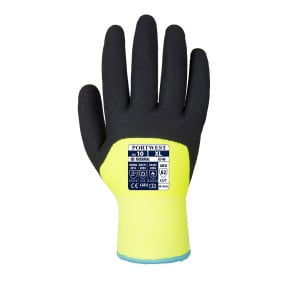
-35%
 Professions
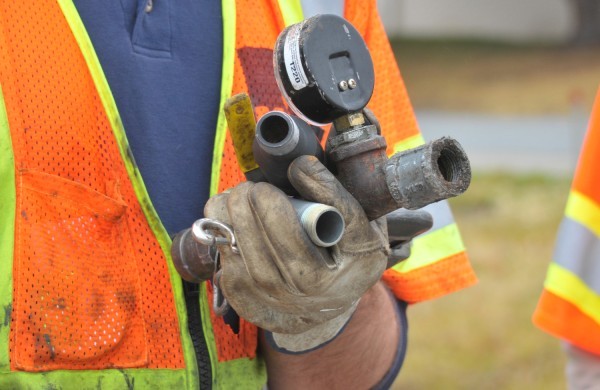
Whether on construction sites, in industry, or in crafts, workers handle multiple tools and machines with their hands. Effective protection with gloves is therefore essential. These are governed by different European standards to determine and classify the various needs and safety levels. Let's list in this article several of these categories of protective gloves.
Summary:
For hand protection, protective gloves of all categories have in common being governed by the EN 420 standard for general requirements. This is the basic and therefore mandatory standard for a pair of gloves to be categorized as protective gloves. This standard is thus always associated with additional standards that will define different types of specific protections. Here are some details about the regulation of the EN 420 standard.
First, gloves are marked with information verifying the compliance of a pair. It thus specifies the manufacturer's name, the size, the CE marking, the manufacturer's designation and finally the various pictograms according to the associated additional standards.
Gloves must then meet safety criteria to ensure safe and comfortable wear for the user. The chromium content must thus be below the detection threshold (3 mg/kg). The extractable protein content of natural rubber gloves is tested according to the EN 455-3 standard. Finally, the pH of materials must be neutral (between 3.5 and 9.5).
For comfort and functionality, gloves have a size that is expressed in European size. A dexterity index also indicates the level of hindrance or not during tool handling by the operator. It ranges across 5 performance levels where 5 indicates the best dexterity. Gloves meeting the EN 420 standard also present a good level of permeability and a good absorption capacity for water vapor.
Following compliance with these initial requirements, we can now list some additional standards that will guide the choice of protective gloves suitable for the needs of multiple professional sectors.

As we have just seen, protective gloves can offer various solutions to limit risks in multiple trades. Here is a brief presentation of the main additional standards that can be encountered.
 |
EN 388 : Standard that concerns mechanical resistance. It measures, according to specific indices indicated alongside the pictogram, the capacity of a pair of gloves to protect against theabrasion, the cuts by slicing, the tears, the perforations or the impacts. | |
 |
EN 1082 : This standard indicates cut resistance by impact. It is distinguishes and complements the characteristic of resistance to cut by slicing of the standard EN 388. | |
 |
EN 381 : This specific protection details the cut resistance when using chainsaws and others chain cutting tools. Generally, this type of asymmetrical gloves offers a increased protection on one hand and a better dexterity on the other for handling acceleration. | |
 |
EN 407 and EN 659 : The first standard defines the criteria for protection against heat or fire. The second applies specifically for protective equipment for firefighters. | |
 |
EN 12477 : The gloves under this standard are recommended for welding trades of the manual metal cutting or other metallurgy trades. The standard conditions combine several requirements from standards EN 388 and EN 407. | |
 |
EN 511 : The criteria of this standard list the properties of cold protection with the indices of resistances to the convective cold, contact cold and water permeability. | |
 |
EN 421 : This type of gloves brings together the criteria for protection against radioactive contamination and the ionizing radiation. | |
 |
EN 374 : This standard regulates the gloves that protect against hazardous chemicals or against microorganisms. These are subject to penetration tests, from permeation and degradation. | |
 |
Food contact : The glass and fork icon allows identification of gloves that do not present contamination risks of the food. Accompanied by the mention "suitable for food", these gloves will be highly sought after for food service trades. |
.jpg)
As we have just seen, hand protection PPE covers a wide range of gloves with diverse properties and governed by strict specifications. From chemical laboratory gloves to welder gloves, the needs of each professional sector require appropriate equipment that the different standards allow to determine effectively.
Find here our advice for choosing the right pair of gloves based on the risks your activity exposes you to.