The best equipment for pros and enthusiasts alike







-35%
 Professions
Whatever your field of activity, your hands are essential to you. Yet, although they are vital to you, they are all too often neglected, whether in terms of care or protection against attacks related to your work environment.
Indeed, 41% of workplace accidents concern your hands. Let's look together at the risks they face as well as the adequate protections.
Summary:

According to studies, the upper limbs, arms and hands are the most affected parts in non-fatal workplace accidents. They would indeed represent more than 40% of recorded accidents.
No sector of activity is spared, but the handling sectors are obviously the most severely affected by these accidents.
Depending on your activity, you are exposed to irritating, chemical, electrical products or to small, medium or large construction machinery that can cause numerous injuries. Being attentive and careful when performing your tasks is not sufficient. It is necessary to wear individual protective equipment adapted to your activity, normally provided by your employer.
If you don't wear adequate equipment, you risk serious injury. Among the most common injuries are:
This non-exhaustive list identifies the most frequent types of injuries within the European Union. Furthermore, this same study reveals that more than 70% of hand injuries result from wearing PPE that is not adapted to the required work.
Don't worry, VET SÉCURITÉ is here for you! We will help you, through this blog, find gloves that are perfectly suited to your activity. To do this, let's review the different types of gloves and their regulations.

For a glove to be designated as a protective glove, it must comply with a general standard, the EN 420 standard defining the general design and structural requirements for protective gloves. Within this standard, there are 3 categories :
These are gloves suitable for common use, with minimal risk only. Gardening gloves, cleaning gloves, made of cotton or leather, protecting against heat below 50°C, for example.
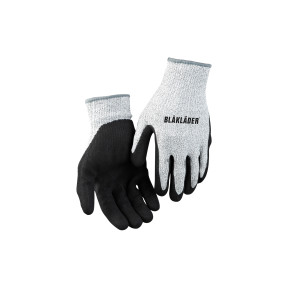
These are gloves adapted to so-called intermediate risks. They are tested and certified by an approved body that issues the CE marking. Cut-resistant, puncture-resistant or abrasion-resistant gloves, in short, gloves used for general handling work.
Category 3 gloves must provide maximum protection against fatal risks or those causing irreversible damage. They must also be tested and certified by an approved body. However, this body must print its identification number next to the CE marking for the quality assurance system.
Beyond this general standard, there are multiple regulations describing all types of protection:
This non-exhaustive list is subject to change over the years and with different safety protocols, but reflects all the types of gloves we can find on the market. Note that each of these standards is sequenced into several protection states, measuring their effectiveness. Most of the time, this protection is materialized by numbers from 1 to 4. It is essential to know these standards in order to identify the type of glove you will need in your workplace.
For an adequate selection, you need to focus on these key points:
If you work in heavy industry, you won't need the same type of protection as a gardener and vice versa. This is why you must refer to the previously mentioned standards in order to precisely determine the type of protection you need.
Once the selection of standards is made, you will also have to consider the work environment. If you work outdoors, indoors, in humid conditions, etc., in order to select the most efficient PPE for your activity. Note that the standards seen previously can be combined to form, for example, EN 388 EN 511 gloves, resistant to cold and mechanical risks.
You have now found the essential protection standards for your PPE, all you have to do is select a size. It is customary to find glove sizes in numerical form, from 5 to 12, respectively from 2XS to 3XL. At VET SÉCURITÉ, we make life easier for you, this conversion is already done when you select your sizes. Take the time to measure your hand and base yourself on the brand's size guide to select the ideal size. Neither too tight, nor too loose.

On vetsecurite.com, we offer a wide range of workwear products and PPE for professionals in many sectors of activity. Find at the best price our work clothing, safety shoes as well as an eco-responsible range.