The best equipment for pros and enthusiasts alike





 Professions
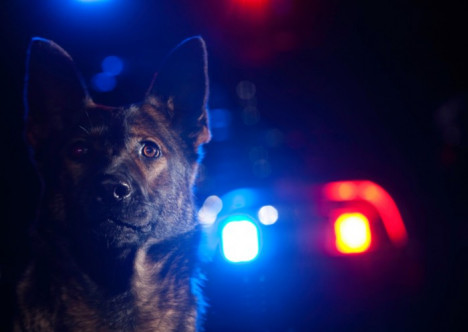
The National Canine Training Center of the Gendarmerie is a canine handler training center located since 1945 in Gramat in the Lot.
Summary:
The center has two distinct missions, one for training and the other operational. This specialized unit is engaged in human remains detection and criminal fire accelerant detection.
The gendarmerie's canine unit permanently maintains 480 handlers and 550 dogs with different specialties such as:
- avalanche victim search;
- tracking and search for persons;
- guarding and patrolling in private areas;
- assault (GIGN) for lightning arrests;
- detection of human remains;
- detection of weapons and ammunition;
- detection of narcotics;
- explosive detection;
- detection of fire accelerants;
- detection of banknotes;
- "SAMBI" detection: simultaneous detection of Narcotics, Weapons, Ammunition and Banknotes;
- explosive detection on moving persons.
The National Canine Training Center of the Gendarmerie has 80 workers, including civilians, civil servants or state workers as well as two veterinarians provided by the Armed Forces Health Service.
Its mission is to:
- recruit, condition and monitor medically all dogs entering training;
- ensure technical surveillance of everything related to cynology ;
- train, in theory and in practice, dog handlers;
- exploit field experience feedback;
- ensure continuous training of military and civilian instructor personnel at the center;
Before training the handlers, the center has the heavy task of recruiting dogs. Per year, more than 500 dogs pass through the kennel doors. These dogs come from private individuals as well as breeding kennels. The instructors look for dogs that are sociable towards humans, having a strong attraction to play, balanced and stable in their behaviors, having low sensitivity to noise and external elements with an aptitude for biting.
For years, recruitment mainly concerned the German Shepherd. Today, this is no longer the case. The Belgian Malinois represents 75% of the livestock. This dog has the advantage of being versatile and adapts very easily to the sought-after specifications. Alongside it, we also find Dutch Shepherds.
Once selected, the dog will undergo breaking-in for three months before being assigned a handler. All training is based on play. The dog doesn't work, it plays. For example, in explosive detection training, the idea is to associate a toy with explosive material, without any danger to the dog. This method will allow it to assimilate this scent so that during operational searches, it can act instinctively to recreate this play phase.
The national gendarmerie established the central gendarmerie kennel in Gramat in the Lot on December 19, 1945, thus becoming in the 1980s the ESOG-CFMC (Gendarmerie Non-Commissioned Officers School - Dog Handler Training Center) before evolving into the National Canine Training Center of the Gendarmerie on October 1, 1996.
It is attached to the command of the national gendarmerie schools from January 1st, 1972.
Over the years, new specialties emerge:
- 1956: Training of avalanche search dogs;
- 1975: Training of narcotics detection dogs;
- 1976: Training of assault dogs for GIGN;
- 1988: Training of explosive detection dogs;
- 2006: Training of fire accelerant detection dogs;
- 2008: Training of dogs for detection of banknotes, weapons and ammunition;
- 2016: Training of dogs for explosive detection on moving persons.
On January 24, 2002, the national canine investigation group was created. This unit brings together specialized canine teams for human remains detection, used in missing person cases or sensitive criminal procedures.
On Monday May 17, 2021, the CNICG signed a partnership agreement with the Society for the Protection of Animals with the aim of facilitating the adoption by the institution of dogs residing at the SPA.
Dogs offered to the gendarmerie for adoption must meet certain criteria. They must be aged 10 to 24 months and demonstrate very specific character traits: balanced, stable, sociable, playful, not very sensitive to the environment, resistant, enduring and receptive and must not be subject to judicial or administrative proceedings.
The dogs will be subjected, like all their counterparts, to an entrance test. At the end, they will be either excluded or fully adopted by the gendarmerie to join the canine ranks. After a breaking-in period, they will be assigned to a trainee to follow a training curriculum, prior to assignment within an operational cynotechnical unit.
In addition to these new recruits' participation in the essential and invaluable work of the gendarmerie's canine teams, this partnership also, and especially, aims to allow these abandoned animals to find a new and large family, that of the gendarmerie, within which they will evolve as a team with a handler who will give them the attention they need.