The best equipment for pros and enthusiasts alike






-65%
 Professions
Summary:
The security guard's main function is the protection of property and people in public or private places. They also have the mission to welcome, monitor, control, while ensuring citizen safety.
During an accident or incident, they are responsible for alerting authorities and must participate in rescue operations. During a fire, they must react immediately by raising the alarm, alerting firefighters, while supervising evacuation.
An agent can work in the fields of airport security, property protection, personal protection, mobile security, internal security, conflict management, fire safety services and must keep a register for each violation or unusual detail encountered.
They deter and investigate threats to property, people, but also to information and data in the area they monitor.
Security guards are mobilized at concerts, festivals, major events, but also in stores, shopping centers, airports... Theyensure security, well-being and integrity of populations and help prevent all types of disruptions.

To become a security guard, certain professional obligations must be respected.
In order to practice, an agent must meet three legal conditions:
- Be of legal age;
- Have a clean criminal record;
- Hold a professional card issued by CNAPS and valid for 5 years, which is obtained after a 140-hour training, the Professional Purpose Certificate for Prevention and Security Agent (TFP APS) formerly known as the CQP APS for Professional Qualification Certificate for Prevention and Security Agent.
A security guard must master their concentrationas well astheir behavior, they can perform missions for several hours in a row and must remain vigilant to the slightest suspicious movement. Good physical condition is essential, as they may sometimes have to stand throughout their entire mission and must be able to react quickly in case of an incident.
Certain skills are required:
- Patience, calm and self-control. Agents cannot afford to give in to panic and must be able to keep their composure under all circumstances;
- Basic first aid;
- Know the different alarm and surveillance equipment;
- Be vigilant, attentive to the slightest detail and know how to spot suspicious changes;
- Autonomy. In case of problems, agents must be able to make the best decision very quickly while respecting the general framework of instructions;
- Dialogue. They must indeed be able to defuse a dangerous situation by avoiding physical contact as much as possible;
- Know how to show authority;
- Excellent presentation. They are the first image that visitors see of the company;
- Compliance with rules. They must respect legislation and instructions given by their employer.

The security guard can specialize in several fields (fire safety officer, site supervisor, service manager ...) according to their training.
After the TFP APS (Professional Qualification Certificate for Prevention and Security Agent) then opens the prospect of SSIAP training.
The SSIAP 1 corresponds to fire safety officer training, the SSIAP 2 allows reaching a manager or site supervisor position and theSSIAP 3 leads to service manager functions.
Another perspective for an agent holding a TFP APS, obtaining the title of Post Supervisor, through apprenticeship for example (high school level), then continuing by obtaining a Team Leader title (level III equivalent to BTS) and then this former to the title of operational director of a profit center specialized in security (level II equivalent to Bachelor's + 3/4).
The salary of a security guard depends on their training and seniority:
- Salary from minimum wage to €1500 gross per month for a security guard;
- Salary of €1565.55 gross for an SSIAP 1 security guard;
- Salary of €1779.40 gross for an SSIAP 2 security guard;
- Salary of €2614.49 gross for an SSIAP 3 security guard.
As an example, we offer you to discover some average salaries according to the field of expertise:
- for a parking attendant position: €1774/month
- for a remote surveillance operator position: €1761/month
- for a security officer position: €1633/month
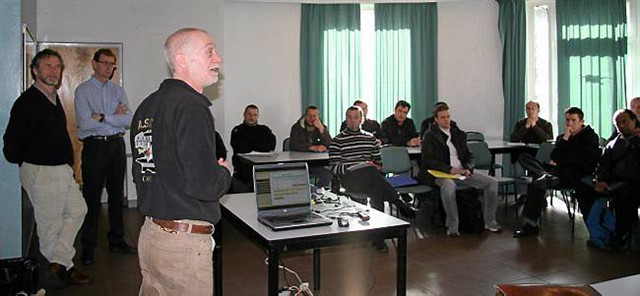
Some agents must possess specific professional qualifications:
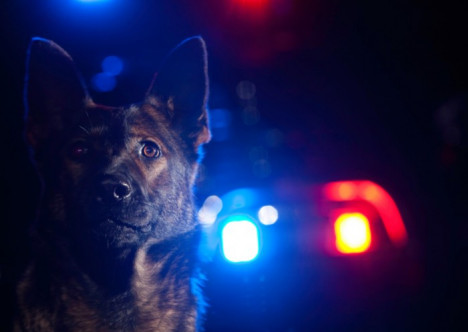
- Defense dog handler certified for canine agents;
- Certified operator in telesecurity for video surveillance operators;
- Certifications SSIAP 1, 2or 3 for agents specialized in fire safety.
And they must respect what the profession requires of agents:
- Compliance with orders from the security company that employs them;
- The client's indications on the risks at the site where they intervene, generally detailed in an instruction manual.
Besides the possible specializations, the field of work impacts the type of interventions:
- Security and surveillance missions;
- Access control missions;
- Customer service missions;
- Emergency missions.
Interventions will be adapted to the context and work environment:
- security guards inpublic transportation;
- night security guards;
- security guards for events;
- shopping center security guards;
- hotel security guards...
To start your training,start here.