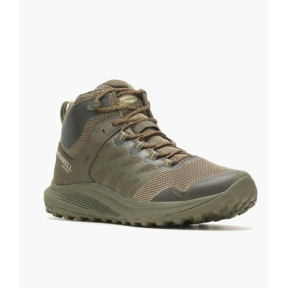
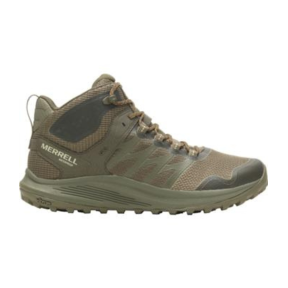
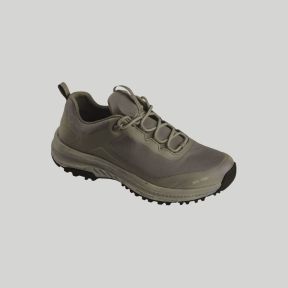
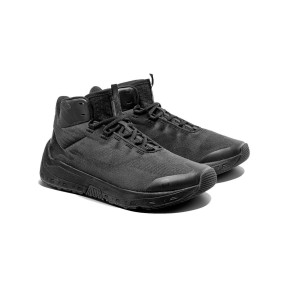
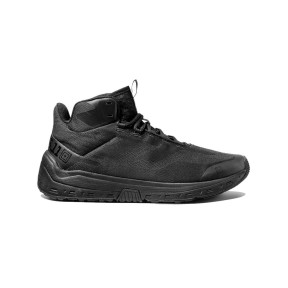
The best equipment for pros and enthusiasts alike
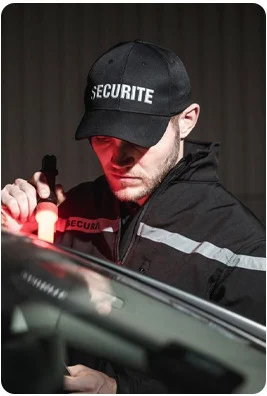

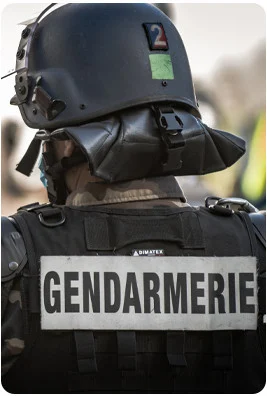


 Professions
Demanding hiking, patrol, airsoft, security professions, or simply wanting a robust everyday shoe: the choice between a high upper and a low upper directly affects your comfort and endurance.
Between ankle support, breathability, and overall weight, each model has its strengths. Here is how to choose comfortable tactical shoes, suited to your use, your morphology, and the duration of your outings.
For a long-shift shoe — meaning several hours of continuous wear, often standing or walking on uneven terrain — several technical elements make the difference between a comfortable end of day and aching feet.
Cushioning is the primary factor. A midsole that is too thin transmits every impact directly to the arch of the foot, accelerating plantar fatigue. Conversely, excessive cushioning harms stability on rough terrain. The balance lies in an EVA or polyurethane foam midsole, dense yet responsive.
Breathability comes just after. A foot perspiring inside a poorly ventilated shoe promotes friction and therefore blisters. Models featuring a technical mesh upper, combined with a breathable waterproof membrane (such as Gore-Tex or equivalent), allow moisture to escape while protecting against rain.
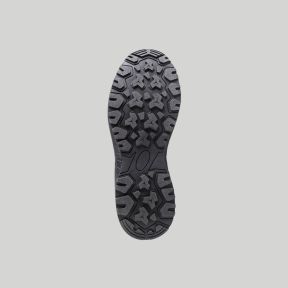
The grip of the outsole determines walking safety as much as comfort: a sole that grips well reduces the micro-muscular compensations the body makes unconsciously to avoid slipping, which tire the legs over time.
This is the central question when comparing high or low shoes. There is no universal answer, but there are objective criteria to help decide.
The downside: a generally greater weight and reduced ankle flexibility, which can slightly increase energy expenditure over long distances on stable terrain.
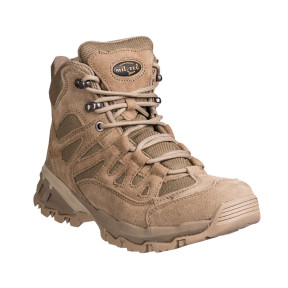
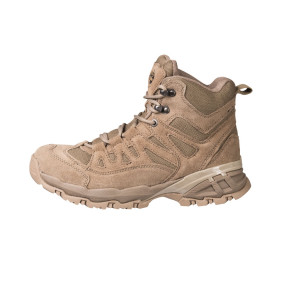
This is where lightweight ranger boots come in: hybrid models, often with a mid or low upper, that retain much of the tactical robustness while drastically reducing weight through composite sole materials and technical textile uppers. They are increasingly popular among professionals who walk a lot but do not need extreme ankle support.
The tactical shoe size is not chosen like a pair of everyday sneakers. Several specific factors come into play.
First, foot width is often overlooked. A tactical shoe is generally worn with a technical sock that is thicker than a regular sock, which reduces the available volume. If your foot is wide or if you wear thick hiking socks, consider going up half a size, or even checking whether the model is available in a "wide" width from certain specialist brands.
Next, always leave a gap of approximately one centimeter between the tip of the longest toe and the end of the shoe. This space absorbs the natural forward movement of the foot when descending or carrying a load, and prevents repeated impacts of the toes against the toe cap.
Always try on your shoes at the end of the day, when the foot is slightly swollen — this is the configuration closest to your real conditions of prolonged use.
Finally, if the model incorporates a waterproof membrane, be aware that it slightly reduces the available internal volume compared to an equivalent non-waterproof version: a fit adjustment to test before purchase rather than after receipt.
The vast majority of pain during prolonged use stems from avoidable mistakes, far more than from a manufacturing defect.
Choosing a size that is too tight or too large. Too tight, it compresses the foot and restricts circulation; too large, it lets the foot slide with every step, creating the friction responsible for blisters, particularly at the heel and on the sides of the toes.
Neglecting the break-in phase. A new tactical shoe, even a quality one, requires several short outings before intensive use. Wearing an unbroken-in pair for a long shift is one of the most frequent causes of pain.
Ignoring the condition of the midsole. Foam compressed by prolonged use loses its original cushioning, even if the outer appearance seems intact. This silently increases plantar fatigue, without the user immediately identifying the cause.
Wearing inappropriate socks. Cotton retains moisture and promotes friction; technical fibers (merino, breathable synthetics) significantly reduce this risk.
Underestimating the importance of grip. A worn-out sole that no longer grips forces the body to constantly compensate, generating unusual tension in the calves and ankles, leading to delayed pain.
The choice between a high and a low upper depends above all on your actual use: ankle support and protection for difficult terrain or load-carrying, lightness and freedom of movement for long distances on stable terrain. In both cases, invest in a quality midsole, a breathable waterproof membrane, a size and width well-fitted to your foot — and allow time for the break-in period. It is this combination, far more than the upper height alone, that truly determines long-term comfort.