 The best equipment for pros and enthusiasts alike

-
 Professions
-
-
-
-
-
-
-
-
All Tops
![All Tops]()
-
-
-
All Bottoms
![All Bottoms]()
-
-
-
All Footwear
![All Footwear]()
-
-
-
All Bags
![All Bags]()
-
-
-
All Accessories
![All Accessories]()
-
-
Le 15 December 2023
Firefighters: Rescue in Perilous Environments and Mountains (SMPM)
A true institution, the hazardous environment intervention group (GRIMP) was recently renamed Rescue in Hazardous Environments and Mountains (SMPM). An opportunity for us to introduce you to all aspects of this operational specialty of firefighters.
Summary:
The missions of Rescue in Hazardous Environments and Mountains (SMPM)
The Hazardous Environment Intervention Group (GRIMP) evolved to become the SMPM, expanding its skills to mountains in addition to traditional hazardous environments. This transformation has enabled better response to the population's needs for mountain rescue.
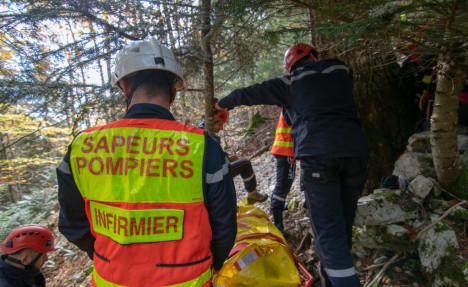
SMPM firefighters are called to intervene in complex situations, whether in natural, industrial or even urban environments. They can for example intervene for:
-
High mountain accidents.
-
Canyon rescue operations.
-
Underground rescues.
-
Cliff interventions.
-
Clearing operations in difficult-to-access areas.
-
Sea or whitewater rescues.
-
Accidents involving high-rise buildings or construction sites.
Their role is to rescue victims in distress, ensure their safe evacuation, and minimize risks for responders.
Unique techniques and know-how
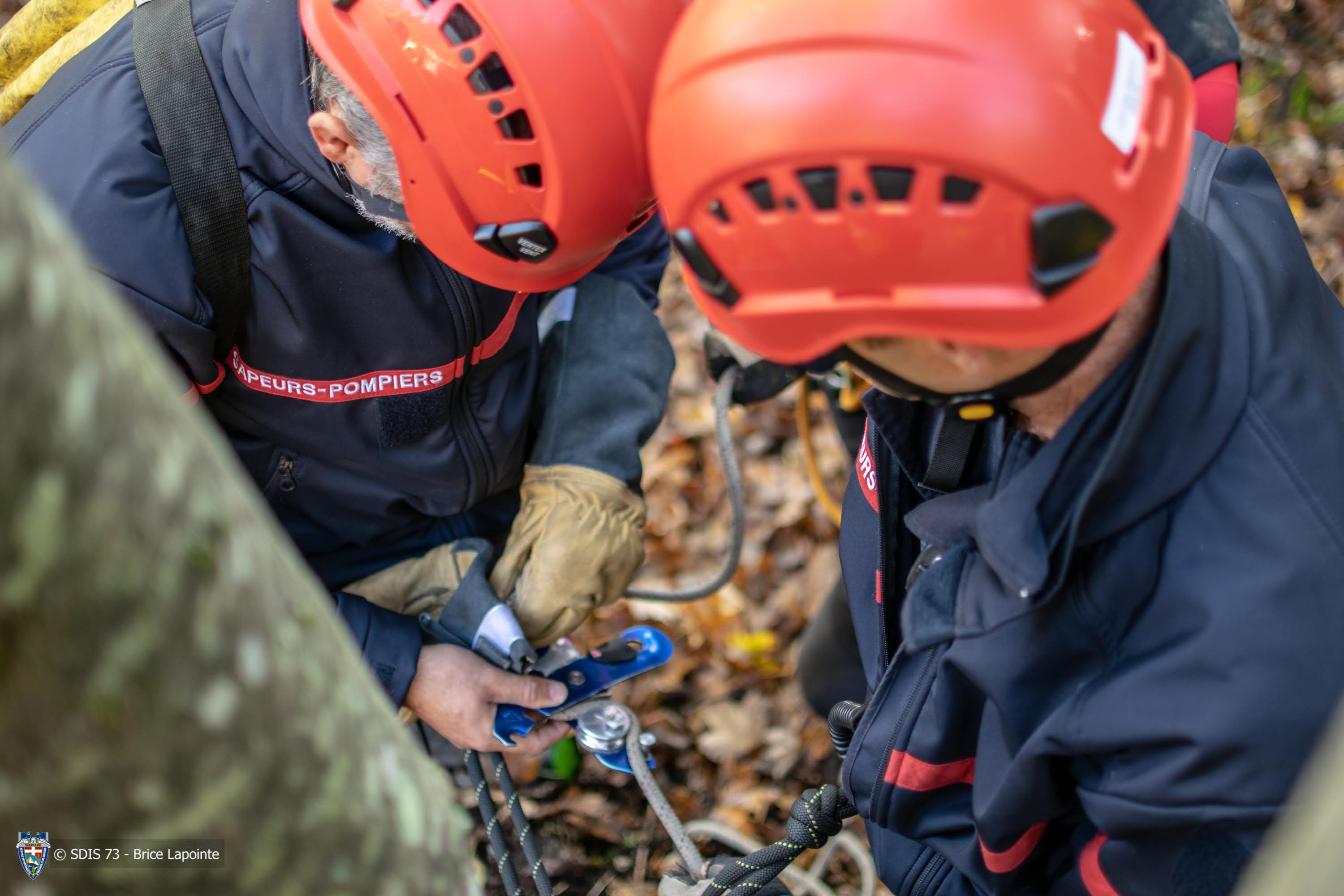
SMPM members must acquire specific technical skills since they are required to implement equipment that exceeds the limits of rescue and fall protection use. These techniques are largely inspired by those used in the fields of mountaineering and speleology. SMPM specialists are trained to climb, rappel, move on vertical terrain, master mountain rescue techniques and rope maneuvers, perform winching over water and much more. Their expertise in navigation and meteorology is crucial for evaluating and anticipating field conditions.
Vehicles, materials and equipment
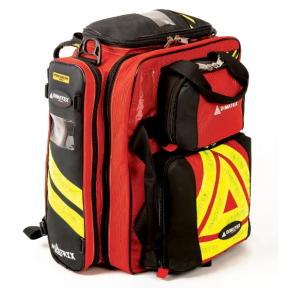
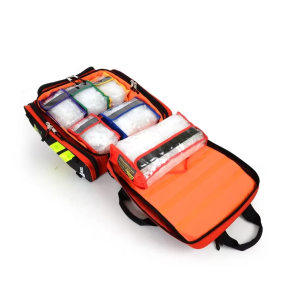
To accomplish their missions, SMPM firefighters are equipped with specific tools. This includes ropes, harnesses, helmets, advanced communication systems, rescue bags, anchoring devices, gas detection equipment, clothing adapted to extreme conditions and mountain rescue equipment such as clearing traps. They also have access to all-terrain vehicles to reach intervention sites. Some interventions may also require helicopter intervention, for example to heli-hoist an injured person.
How to join the SMPM?
Selection criteria
Access to this specialty requires rigorous selection. Candidates must have exceptional physical abilities, strong mental resilience and total commitment to the safety of others. They must generally be experienced firefighters before applying for the SMPM.
Training
Training SMPM members is an intensive process. It includes theoretical and practical courses on rescue techniques in hazardous environments and mountains, meteorology, topography, risk management, as well as handling specialized equipment. Trainees must also pass demanding physical fitness tests to ensure they are capable of working in difficult conditions. Training continues throughout their career, to maintain up-to-date skills and stay at the forefront of technological advances.
Types of employment
The SMPM specialty, formerly GRIMP, includes three positions:
-
The rescuer: equips sites, conducts reconnaissance and performs rescues.
-
The unit leader: performs technical direction of operations and provides training for rescuers.
-
The technical advisor: advises the fire and rescue services department director, organizes and monitors SMPM personnel training.
Each operation usually includes a unit leader and/or technical advisor and two pairs of rescuers.
To be operational, SMPM personnel must meet training requirements and annual tests.
Some examples of SMPM interventions
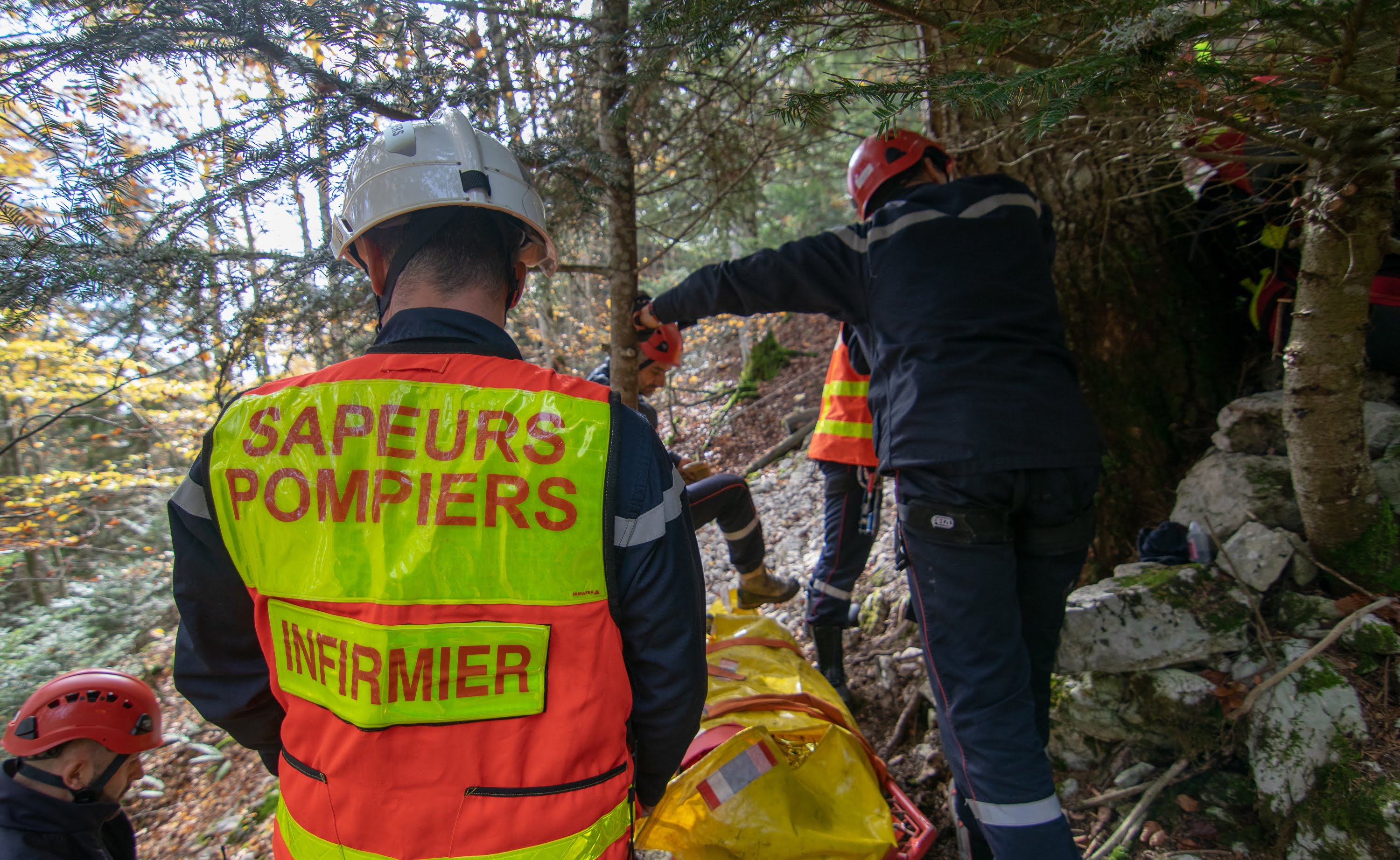
The SMPM (Rescue in Hazardous Environments and Mountains) firefighters have carried out several famous interventions over the years, each with its own challenges and unique circumstances. Here are some more specific examples of notable SMPM interventions:
-
Rescue on the Aiguille du Midi (Chamonix), 2013: In 2013, an SMPM team rescued a mountaineer stuck on the Aiguille du Midi, an iconic mountain in the French Alps. The mountaineer had been caught by a sudden storm and could neither descend nor climb up. The SMPM firefighters successfully rescued him despite extreme weather conditions.
-
Canyoning accident in the Verdon Gorges, 2017: In 2017, an SMPM team intervened to rescue a group of canyoneers trapped in the Verdon Gorges. The group had been swept away by a sudden flood. The SMPM organized a complex rescue operation using rappelling techniques to access the victims and evacuate them safely.
-
Rescue in the Chauvet cave (Ardèche), 2019: The SMPM was mobilized to rescue a group of cavers trapped in the Chauvet cave in 2019. They had to navigate through narrow and complex passages to reach the cavers and bring them back to the surface safely.
-
Sea rescue off Corsica, 2020: In 2020, the SMPM participated in a sea rescue operation off Corsica, rescuing sailors aboard a ship in distress. They used helicopters and winching techniques to evacuate the sailors to safety.
-
Rescue after a landslide in La Clusaz, 2021: In 2021, the SMPM was deployed to help after a landslide in La Clusaz, Haute-Savoie. They operated in unstable terrain conditions to search for and evacuate victims trapped under debris.
These examples of SMPM interventions highlight their expertise and ability to operate in extremely difficult environments. Each of these missions required a high level of skill, courage and dedication to save lives in perilous circumstances.
On vetsecurite.com, find a wide selection of competitively priced products for firefighters, volunteer or professional: clothing, intervention shoes, equipment, materials and bags.
Related products
Related articles



-
![Over 200 brands At the best price]() Over 200 brands At the best price
Over 200 brands At the best price -
![Secure payment In 3 or 4 interest-free installments]() Secure payment In 3 or 4 interest-free installments
Secure payment In 3 or 4 interest-free installments -
![Delivery across Europe From €79 of purchase]() Delivery across Europe From €79 of purchase
Delivery across Europe From €79 of purchase -
![Customer service Monday to Friday]() Customer service Monday to Friday
Customer service Monday to Friday


