The best equipment for pros and enthusiasts alike





-15%
 Professions
Table of Contents:
The Marseille Marine Firefighters Battalion (BMPM) or familiarly called "the battalion" is a unit of the French national navy. Mainly present in the city of Marseille, they also operate in the area of the major maritime port (Fos, Lavéra as well as Port-de-Bouc). The protection of Bouches-du-Rhône is ensured by this military corps as well as by the SDIS 13 which is the Departmental Fire and Rescue Service.
The marine firefighters were created on July 29, 1939, following a fire that occurred at the new Galeries, on the Canebière in Marseille, causing more than 70 deaths. In numbers, the battalion represents 400 intervention vehicles, 16 nautical vehicles, two helicopters and more than 2400 people. Of all personnel, 81% are marine firefighters, 9% are part of the fleet crew, 4% are civilians, 4% are officers and 2% are part of the health service. Note that 7% of the overall personnel is female.
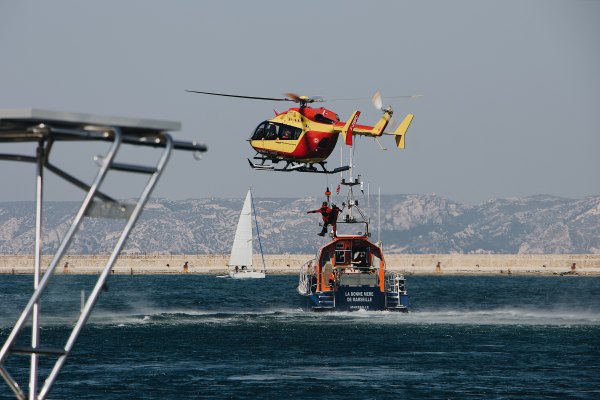
Previously structured in 5 sectors, the Marseille marine firefighters battalion has, since May 2015, been organized into 22 Fire and Rescue Centers (CIS). This ensemble is structured around two operational groups: a northern group, located at the Plombière Barracks and its CIS, as well as a southern group, located at the Saint-Pierre Barracks with its CIS. Each of these groups is commanded by a senior officer. The other stations and barracks have all become CIS and now focus only on interventions.
In order to meet specific needs, the BMPM has developed and specialized into different Specialized Operational Sections (SOS) which number 7:
To these 7 Specialized Operational Sections is added the UMIMM which is the result of an association between the French national navy, the armed forces health service and the city of Marseille. This Medical Intervention Unit in Maritime Environment operates with 9 SMUR agents (4 doctors, 3 nurses and 2 marine firefighters).
If you want to become a marine firefighter, you must meet different conditions, such as being at least 18 years old and having an educational level of 9th grade. No specific program prepares for the military profession such as that of marine firefighter in Marseille.
The Marine Firefighters School:
The BMPM has a company dedicated to instruction and training: the 8th company. Since 1997, the marine firefighters school has been under the French Navy. It provides training for Marseille marine firefighters, but also for personnel intended to serve in naval bases, totaling 800 students. It also provides continuing education for marine firefighters who are destined for higher ranks and functions.
Since 2004, the BMPM has had a unique training site in Europe, the CETIS (Training Center for Fire and Survival Techniques) which includes two types of special activities:
- Fire training with three fire areas in enclosed environments that simulate ship, industrial and urban fires.
- Simulation and survival at sea designed in an immersive way.
CETIS welcomes many partners who come to train in these techniques such as Michelin and Total for example.
If you want more information on the recruitment of marine firefighters, officer personnel, medical personnel, but also young marine firefighters, don't hesitate to consult the links above.
Moreover, in this period of health crisis, the marine firefighters as well as their doctors and nurses are present to perform PCR tests on voluntary passersby. This action helps to relieve the burden on laboratories. Certainly, it represents only a small volume of tests, but nevertheless allows to take care of and record new cases of COVID-19.
On vetsecurite.com, find thousands of items for firefighters: clothing, shoes, equipment, materials and bags.