The best equipment for pros and enthusiasts alike



-45%
 Professions
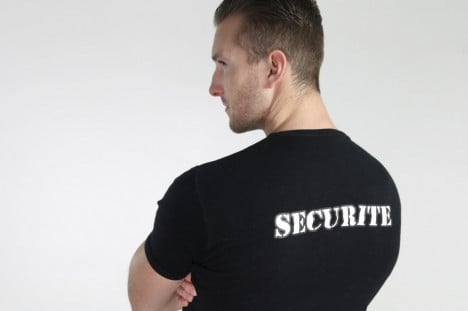
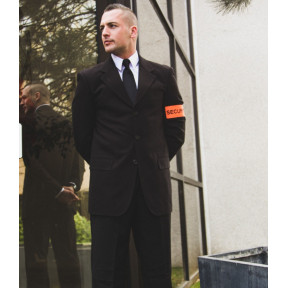
In France, private security represents 11,000 companies, including 3,500 self-employed, 170,000 employees and a constantly growing sector with more than 5,500 job creations every year. Private security comes in different forms such as remote monitoring, close protection, private investigators, fire safety, etc.
In this field, each country has different laws and regulations. A company accredited in one country is not necessarily accredited in another and vice versa.
Summary:
The National Council for Private Security Activities (CNAPS) was created to moralize and professionalize this sector which has experienced significant growth in recent years. CNAPS acts to regulate all activities, enhance and assist private security professions, but also has the power to issue, suspend, or withdraw approvals and authorizations (professional cards, requests for prior authorization for private security profession training, etc.).
Private security is highly regulated and companies are subject, in France, to a non-cumulation of activities. Each domain is the subject of an independent company that has no right to do anything other than private security. Furthermore, a mission entrusted by a new client can only be accepted on condition that the secrecy of information given by a former client is not at risk of being violated, or when knowledge of the latter's affairs does not favor the new client.
A foreign company can work in France provided it has an exemption. Similarly, to work abroad, a French company must have an agreement with the country in question (headquarters on site, subcontracting to a local company, etc.).
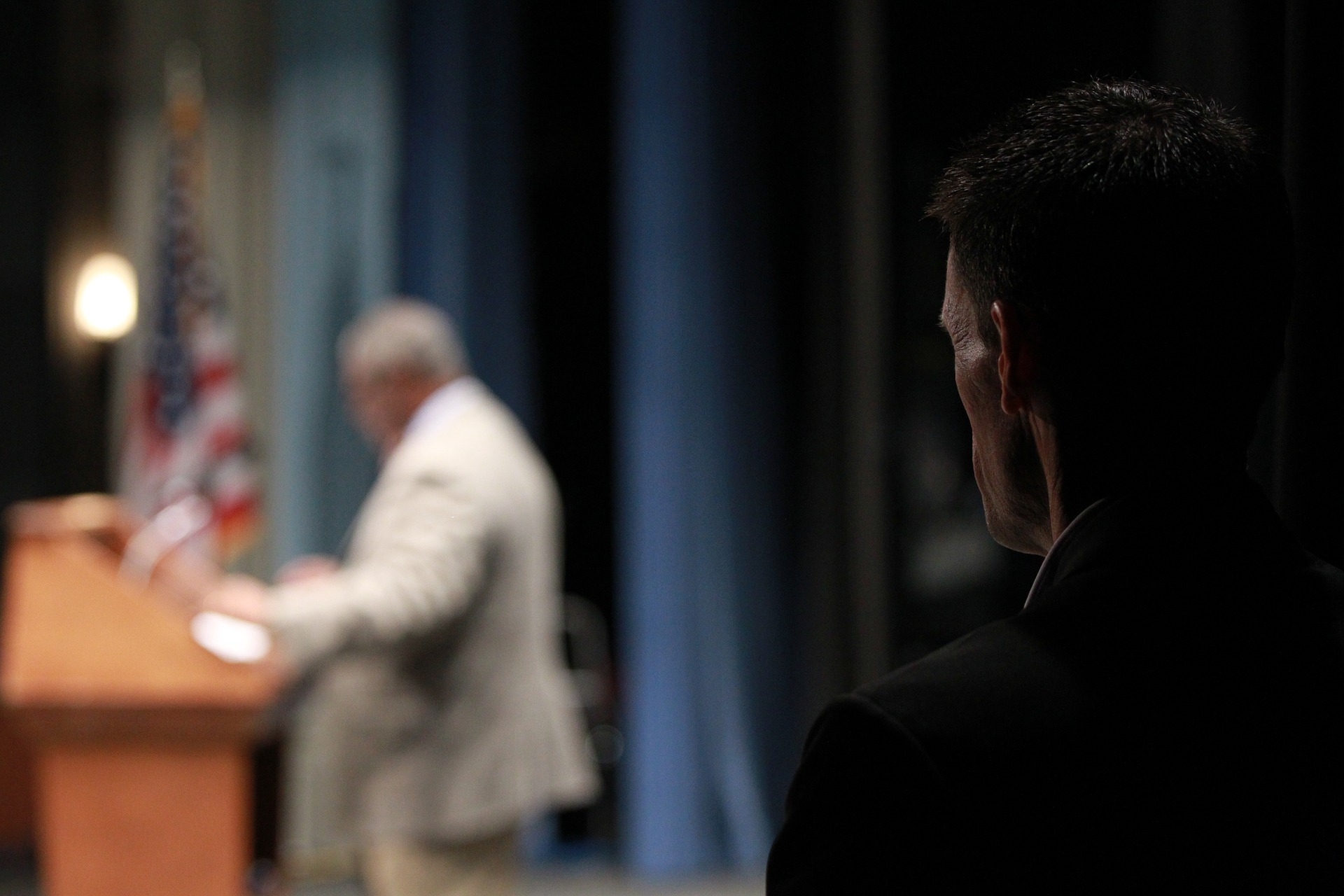
Close protection consists of three types of missions: one-time, short-term or long-term.
One-time missions often take place in the context of events such as concerts or shows for example. These are then reinforcement missions to a personal bodyguard team for an artist or star. These one-time contracts are not necessarily planned in advance, which is why companies have an important directory of agents in order to be able to recruit quickly. The remuneration for these missions is quite significant given that they are frequently planned urgently (200 to 300€ daily).
There are missions that extend a little longer in time, these are short-term missions (a few weeks). They concern influential personalities or those with high notoriety who are in France for work, vacation, etc. There are also embassies in Paris that are protected by French private security companies. These missions are remunerated at around 200€ per day.
Finally, long-term missions can extend from 1 to several years. The work can be carried out in different ways according to client needs. It happens that agents work in pairs to cover for each other when surveillance must be constant. The daily rate will depend on the number of service hours and if the agent stays with the VIP on weekends. The remuneration is approximately 4000 to 4500€ per month.
A close protection company must only employ agents holding a Close Protection Agent professional card (CPO) or Private Personal Protection Agent (A3P) recognized by CNAPS.
To obtain it, there are two possibilities: follow training in France, or follow training abroad recognized in France (very rare). Furthermore, many agents have it by equivalence through their service record in the army or police. These equivalencies take into account rank, units the agent was part of, qualifications, number of years of service, etc.
If the future agent does not have these equivalencies, he will have to follow a 250-hour training program covering combat techniques, legal aspects of the profession, techniques specific to close protection, etc.
The French CPO title is not recognized abroad, except for certain countries listed on the CNAPS website. It is not necessary to have a professional card in certain countries, it is sufficient to be recruited based on CV by a company that will train the agent internally.
One must not confuse private security agent (securing a site or infrastructure) and CPOs or A3Ps (protection of a personality). The Private Personal Protection Agent has no break or almost none and can work up to 12 hours straight. A person is more precious than a site, which is why remuneration is adjusted accordingly.
In a secure country, the choice of CPO will focus more on an imposing physique that will deter any aggressor through their stature. In a country with low crime, the power of deterrence is important and it can be sufficient. Unarmed defense is necessary if carrying weapons is not authorized.
Furthermore, in a high-risk country (at war or with high armed crime), we move away from imposing physique to turn towards versatile operators. Military or police experience is favorable in order to be comfortable with a firearm. There are typical tactics for close protection in hostile environments with vehicle evacuation, shield use, etc. One must also be experienced in tactical combat.
In France, a bodyguard can only be armed in extremely rare circumstances (enhanced surveillance agent). There is no armed bodyguard status, only Prefecture exemptions issued on a case-by-case basis. In the case of an exemption, the agent will then have a weapon at their workplace that they will be authorized to carry and use (category B weapon such as 9mm pistol). If the agent is a sport shooter, the exemption may provide for the use of their personal weapon. One must not confuse carrying a weapon (having it on the belt) and transporting a weapon (stored in a safe, without loaded ammunition, all in a bag).
French agents may be required to intervene in a high-risk country. In this case, they may be armed according to the regulations of the country.
Agents holding a card allowing the exercise of armed activity are subject to regular annual training (two seven-hour sessions for category D weapons and four one-hour sessions for category B weapons). This training will allow the renewal of the professional card. The initial training will be carried out by organizations approved by CNAPS.