 The best equipment for pros and enthusiasts alike




-
 Professions
-
-
-
-
-
-
-
-
All Tops
![All Tops]()
-
-
-
All Bottoms
![All Bottoms]()
-
-
-
All Footwear
![All Footwear]()
-
-
-
All Bags
![All Bags]()
-
-
-
All Accessories
![All Accessories]()
-
-
Summary:
- One man, two dreams
- His CV
- His educational background
- His military career
- His weaknesses
- His strengths
- The sacrifices necessary to do this job
- To be continued...
One man, two dreams
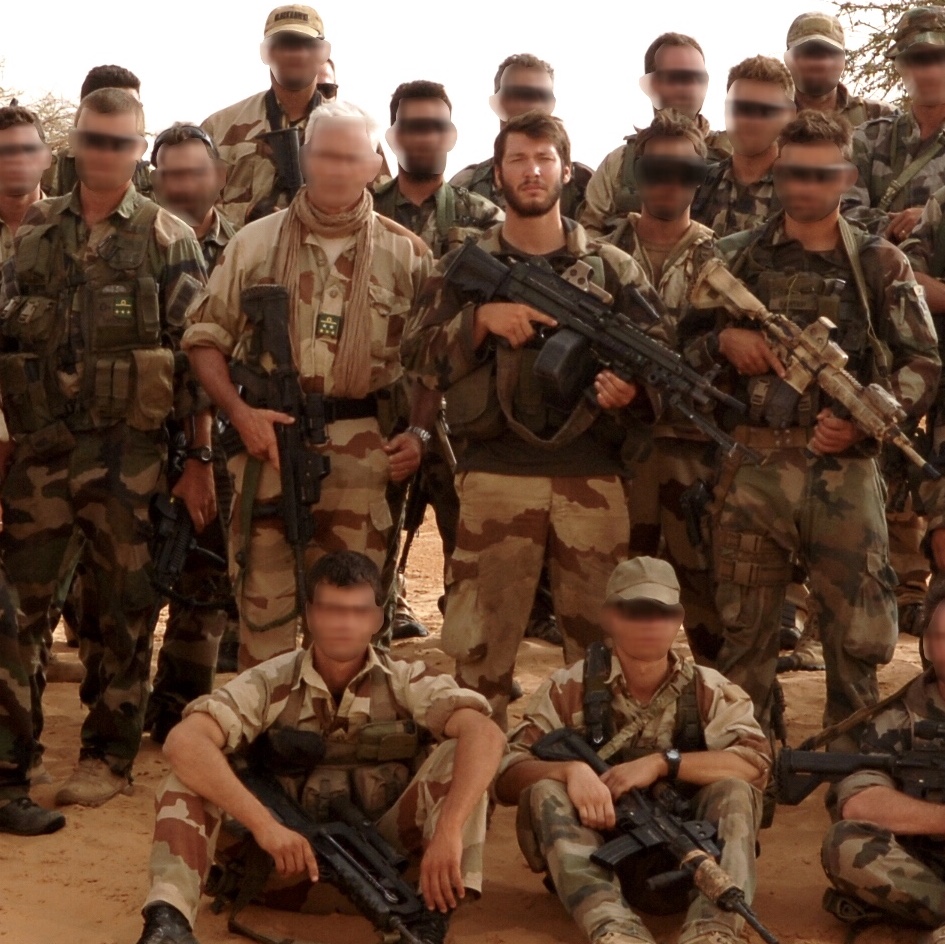
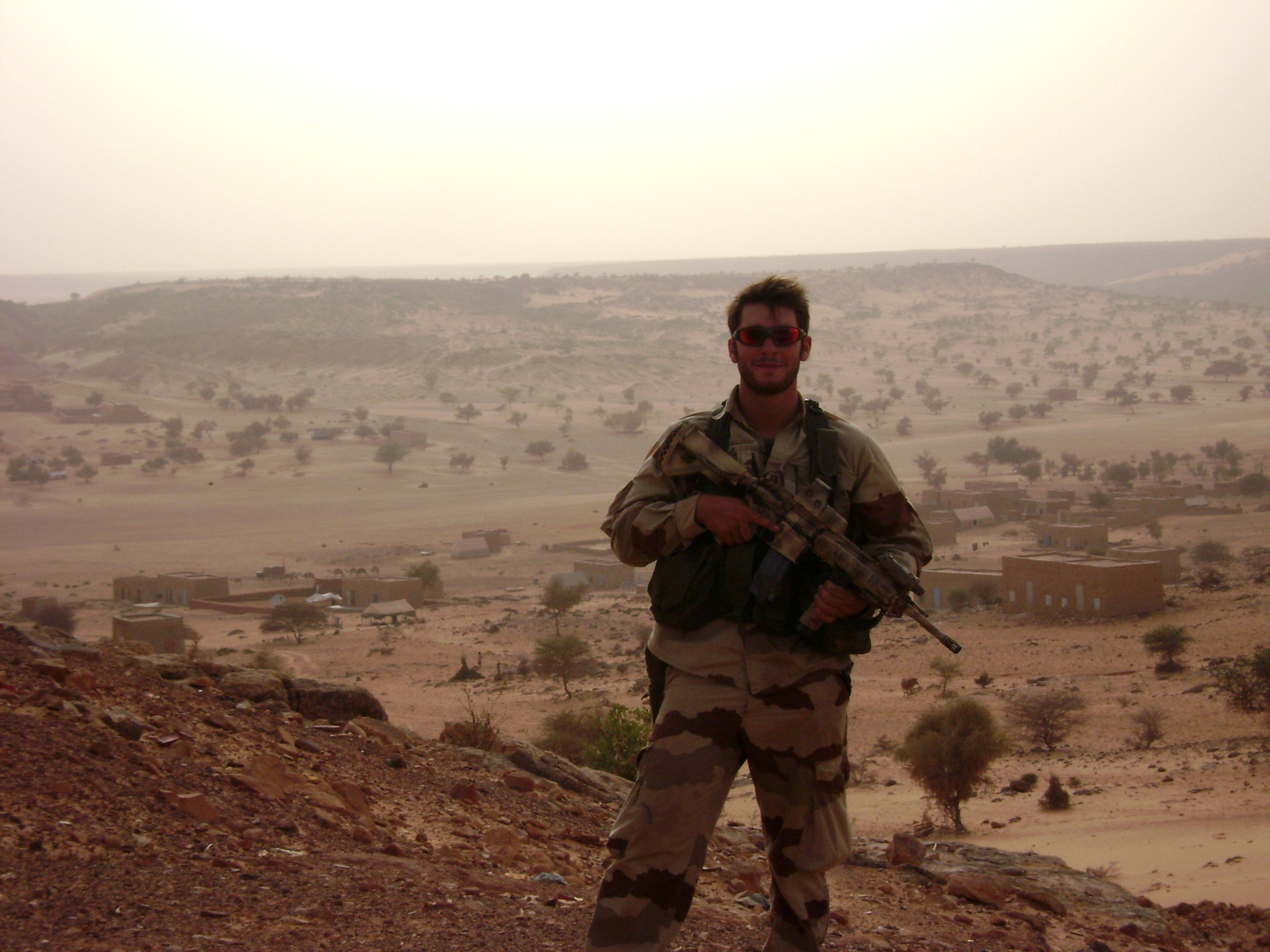
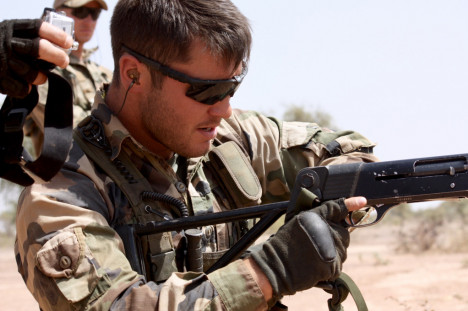
Former Special Forces operator (SF) French (1st RPIMA), military advisor (for clients as diverse and varied as Ubisoft, industrialists for tests and feedback on prototypes or even a British private security company), partner in a shooting complex (Subtac) in the Parisian suburbs in Villebon-sur-Yvette, Alex has a very busy schedule.
He therefore relies on 7 former colleagues from his unit to whom he entrusts the consulting and training services that he is unable to provide.
He has just returned from Northern Ireland where he was in charge for a pharmaceutical company of setting up checkpoints on 3 sensitive sites (research, production, distribution) and thus preventing infected people from entering these sites at the risk of contaminating essential employees. For this mission, he was able to transfer his experience acquired during the hunt for terrorists in the search for symptoms in people contaminated by Covid 19.
He is also very present on Instagram (@alex_french_sas) with more than 14,000 followers and very popular live streams where he takes the time to answer all the questions one might have about elite units. The tone is relaxed but knows how to be serious when the situation requires it (commemorating deaths in operations or national holidays). Always take on the challenge and succeed, that's his objective.
His CV
Former versatile SF operator (SAS1 group of the first company), commando instructor, combat shooting instructor, C4 instructor (hand-to-hand combat), explosives specialist, ERYX shooter (missile launcher), Minimi shooter (mini-machine gun), high-speed VPS pilot (piloting courses), soft break-in specialist, SAS instructor (SAS combat tactics instructor), bodyguard…
On mission: Team leader, explosives specialist, health officer (Combat Medic 1 training only but trained with the main reference of his SC2 group who was keen to share his experience and whom he had to replace).
His educational background
After high school, my parents, like all parents, wanted me to study so I started a MATH SUP preparatory class to become an engineer. I didn't finish the year. I went to CIRFA where I submitted an application for infantry. They directed me to Saint-Maixent. Since I thought I would be accepted right away, I stopped everything. But, it didn't happen like that and I found myself having to find a job while waiting for my incorporation. So I was a delivery driver at Rungis for almost 1 year. I continued my physical preparation and when I was called my motivation was at maximum. I always see the positive in any situation. While making my deliveries, with the regional map on my knees (no GPS at the time), I was able to continue perfecting my topography and I strengthened my ability to work autonomously.
His military career
At Saint-Maixent, I finish 3rd and there are only 2 places for the 1st RPIMA. The first is taken by a friend who did all his training with me. And the one who comes 2nd doesn't choose the 1st RPIMA because he is not fit due to poor eyesight so I am taken. You should know that trying to enter the SF through Saint-Maixent or Saint-Cyr is Russian roulette because the places are decided by a few hundredths of points.
Before starting the RAPAS training (former name of the SAS branch), they send me to CT1 00 (Infantry group leader) in Montpellier (at the time, now in Draguignan) to have a bit more knowledge before attacking the CT1 RAPAS which is very hard. I also pass in this curriculum the Level 2 Commando of the CNEC (Level 1 obtained at Saint-Maixent). I finish 1st on the 2 tests. Then I finally attack my CT1 RAPAS at the regiment and I finish 2nd, which is very rare for a young direct sergeant without experience.
I always stayed in the same regiment and the same group for nearly 10 years : the 1st group of the 1st company (the SAS1 or SAS Kick Ass formerly the RAPAS Kick Ass). There was a great team spirit, strong characters too but who managed to work together. I didn't want to change groups because it gave me complete satisfaction. In addition, we had this chance to have missions with quite a lot of real operations. We, for example, participated in a hostage rescue, experienced fire situations, found IED factories (Improvised Explosive Device otherwise called Improvised Explosive Devices, IED, or Circumstantial Explosive Devices, CED) and carried out several close protection missions (we were all trained in the 2 curricula of the 1st RPIMA: SAS curriculum and close protection) in tense situations with VIP evacuation... I was on all theaters of the French army between 2006 and 2015. I participated in a total of 8 OPEX and I am very happy with the experience I had. This job brings you great wealth and maturity, makes you meet incredible people, travel, feel useful by being an actor in current events instead of staying with arms crossed watching the news.
His weaknesses
I have a big reading problem since I was a child. I understand very well what I read but I read extremely slowly. It's a real problem since elementary school, especially in French obviously. I have, consequently, never been able to read a single book in my life. I completely lose track as soon as there are more than a few pages. Eager to learn despite everything, I manage to read summaries, articles, I watch documentaries but I get most of my knowledge from oral transmission. This was obviously a big weak point during the theoretical training phases.
I was also very bad at languages at school, it's actually because of that that I finished 3rd at St Maixent and it could have cost me my place at the 1st RPIMA. Except that in my job, I had to work with English, Americans, Afghans, Mauritanians, Germans, Poles,... My learning was painful but I finally understood the interest and, today, I speak English fluently.
I have a winner's mentality, which is both a quality and a flaw. I have very great confidence in myself but it sometimes pushes me to put myself in danger, to risk everything and, in business, to put all the money in the same basket. Watch out for excesses. Self-confidence allows you to have the energy to try things, always push your limits but the risk is also that, often, you find yourself a bit ahead compared to others, you always find yourself a bit of a leader of a group during training and you are also more exposed if you mess up. Mistakes are less visible when you're lost in the crowd. As long as it works, it pays off and you end up in the top of the ranking but when it's not the case, it shows and then you sink to the depths. And it's very tiring to be in charge during your training. Moreover, you have to be careful that self-confidence doesn't become arrogance that would end up annoying the officers and colleagues. For me, it was a bit of a bad start at Saint-Maixent. I had no family in the army, I hadn't attended a military high school and I had trouble adapting to military life. Topography was a field I mastered, maybe even more than the instructor and I wanted to play my know-it-all, which was the worst thing to do. Especially since I didn't do it to help the group move forward but to show that I knew more than the others. I realized it and corrected it right away but he had already taken a dislike to me even if it didn't last. So you don't show off during instruction because you have everything to learn. And you only ask a question when you want to hear the answer, not when you want to show that you already know it. It's very annoying for the instructor and it will cause problems later.
His strengths
I am, apparently, a good leader. You have to be the one who is always willing to sacrifice for others, take the responsibilities that nobody wants to take and not the arrogant little boss who puts down others around him by saying that he is the best. You have to be the leader who pulls others up and from that moment everyone follows you. That's really what happened to me during my training.
I am excellent in topography because, when younger, I did orienteering and autonomous hiking with friends. I am very comfortable with maps and I always had the best grades. In addition, your leadership is tested if you're not good at topo. If you don't know where you're going, nobody follows you. A key moment in all training is to do night marches and if the person we trust the most to go from point A to point B, in the least time possible and getting tired the least, is you, then naturally you become a natural leader. And that's a big strength.
I am pedagogical and I also have ease in transmitting what I know. When you're going to ask your team for something that isn't necessarily easy and/or doesn't necessarily get unanimous support, you have to be able to be pedagogical and convincing to explain the why and how. That's how you get your group's buy-in. I'm not the type of leader who demands things. I'm the type of leader who gets people to buy into his ideas.
I don't really have any physical weakness and I am psychologically balanced. I have good cardio, I'm enduring, strong and fast. I've always been quite muscular and sturdy but it never prevented me from being good at climbing, running or swimming. I'm not excellent in any of these sports but I'm not bad in any of them.
The sacrifices necessary to do this job
This job involves enormous sacrifices. Your personal life is completely different from that of someone normal because you're never there. During training, we are not available. We work all week or even on weekends. We don't often have vacations or holidays. When we are operational, we are deployed 4 to 8 months per year. And when we come back, we have 2 months of vacation but we don't necessarily have time to take them entirely. You also have to pass new qualification courses, train with your group and that leaves very little time for family and friends other than those you make in the regiment. And it's very hard. I was lucky to have a girlfriend who followed me throughout my career and who didn't give up on me because she had a fulfilling professional life. She accepted my absences, supported me and gave me a lot of emotional stability. We do a difficult job, the morale gauge is already almost full and on top of that, we are confronted with missions where we see things that are still hard. At the 1st RPIMA, 3 out of 4 marriages fail with the child custody problems that this implies. And I'm not talking about those who can't find a partner to follow them in this particular life.
To be continued...
Discover the part II of this interview with Alex_French_SAS.
Related products
Related articles


-
![Over 200 brands At the best price]() Over 200 brands At the best price
Over 200 brands At the best price -
![Secure payment In 3 or 4 interest-free installments]() Secure payment In 3 or 4 interest-free installments
Secure payment In 3 or 4 interest-free installments -
![Delivery across Europe As soon as possible]() Delivery across Europe As soon as possible
Delivery across Europe As soon as possible -
![Customer service Monday to Friday]() Customer service Monday to Friday
Customer service Monday to Friday


