 The best equipment for pros and enthusiasts alike






Underestimating wind force while camping is one of the most common mistakes campers make, whether beginners or experienced. Yet the consequences can be dramatic and jeopardize not only your equipment, but also your physical safety.
-
 Professions
-
-
-
-
-
-
-
-
All Tops
![All Tops]()
-
-
-
All Bottoms
![All Bottoms]()
-
-
-
All Footwear
![All Footwear]()
-
-
-
All Bags
![All Bags]()
-
-
-
All Accessories
![All Accessories]()
-
-
Camping in windy conditions can quickly turn into a nightmare if you're not properly prepared. Whether you're an experienced hiker, bivouac enthusiast, or outdoor professional, knowing how to protect your camp from wind is an essential skill for your safety and comfort.
Table of Contents
- Why Does Wind Represent a Real Danger in Camping?
- Preparation: The Key to a Wind-Resistant Camp
- Installation: Technique and Method
- During the Stay: Continuous Vigilance
- Ultimate Checklist for Camping in High Winds
- Conclusion: Anticipation and Rigor
Why Does Wind Represent a Real Danger in Camping?
Risks to Equipment
Wind exerts considerable pressure on camp structures. Even with moderate gusts of 40-50 km/h, a poorly secured tent can begin to deform. Seams experience repeated stress that can cause tears, while aluminum poles bend or break under mechanical strain.
A lifting tent is not a movie scenario: it can literally take off and be carried several dozen meters if anchoring is insufficient. Stakes pull out of the ground, particularly in loose terrain (sand, wet earth, snow), transforming your shelter into a giant kite.
Awnings and tarps are even more vulnerable. Their large flat surface acts as a sail that catches all the wind's force. Without perfect tension and multiple anchor points, they flap violently, wear out prematurely, or detach completely.
Dangers to Campers
Beyond the material loss, an insufficiently secured camp quickly becomes a zone of real danger for its occupants.
Improvised projectiles constitute the primary threat: a rolling camping chair, a flying bowl, a tipping stove. These objects, propelled by gusts exceeding 70 km/h, become real projectiles capable of causing serious injury.
Unstable trees and branches represent a deadly danger. In windy conditions, dead branches detach without warning. Some weakened trees can even uproot, especially if the ground has been soaked by rain. Setting up your tent under a tree to protect yourself from the wind can therefore paradoxically increase the risk.
Tent collapse in the middle of the night immediately exposes occupants to cold, rain, and wind. In already difficult conditions, this situation can quickly lead to hypothermia, particularly if clothing and sleeping bag are wet.
Failing openings (zippers opening, poorly closed doors flapping) create air intakes that inflate the tent from inside, further increasing structural pressure. Cold and moisture rush in, brutally degrading rest conditions.
Secondary Effects of Wind
Beyond immediate risks, wind generates a cascade of secondary effects that significantly degrade camp comfort and efficiency.
The perceived temperature drops drastically under wind effect. The wind chill phenomenon can make a 5°C temperature feel like -5°C with 50 km/h winds. Your body loses heat much faster, increasing hypothermia risk even in seemingly mild temperatures.
The constant noise of whistling wind, flapping fabric, and vibrating guy lines generates permanent acoustic stress. This incessant background noise disrupts sleep, prevents recovery, and gradually erodes group morale. After a sleepless night, decision-making abilities and vigilance dangerously diminish.
Basic activities become complicated: cooking with a stove becomes a challenge (unstable flame, tipping risk), filling a water bottle without spilling is an achievement, and even consulting a map requires multiple pairs of hands to prevent it from blowing away.
Dust and sand infiltration into all equipment is inevitable in strong winds. Sand penetrates sleeping bags, clothing, backpacks, and zippers, gradually damaging them. Grains carried by the wind can even erode tent fabric over time.
Operational Impact for Professionals
For a military, law enforcement, or outdoor professional audience, these stakes take on a critical dimension. A failing camp directly compromises operational capability: damaged equipment, fatigued personnel, time lost to repair or recondition the installation.
Rigor in camp security is not optional but a tactical necessity. A poorly installed camp can compromise position (noise, movement), reduce rapid response capability, or immobilize resources for its monitoring and maintenance.
The objective is therefore twofold: protect people and equipment on one hand, maintain a perfectly operational camp even in a hostile environment on the other. This rigor makes all the difference between a successful mission and a potentially dangerous failure.

Preparation: The Key to a Wind-Resistant Camp
Selecting the Right Equipment
The ideal tent for wind has a low profile, robust structure, and numerous anchor points. Four-season or mountaineering models generally offer better resistance to combined elements (wind, snow, rain).
Invest in quality equipment: reinforced stakes, terrain-appropriate pegs, durable guy lines. Favor static ropes that don't stretch under tension.
Don't forget the repair kit: replacement or splint pole, ultra-strong adhesive tape, needle and thread to repair a tear. Better safe than sorry.
Checking Weather Forecasts
Before departure, meticulously check wind forecasts: speed, direction, and evolution. Gusts exceeding 60 km/h should make you reconsider your trip or plan a backup with stronger shelter.
Identify prevailing wind directions in your camping area. This information will be crucial for properly orienting your tent.
Choosing the Strategic Location
Avoid exposed areas: ridges, hilltops, open beaches, and unprotected plateaus must be absolutely avoided. These locations concentrate and amplify wind force.
Look for natural protection: a grove of stable trees, a rocky outcrop, an embankment or a natural wall can significantly reduce wind exposure. However, be careful of trees with dead or unstable branches that become dangerous during strong gusts.
Installation: Technique and Method
Optimal Tent Orientation
Position your tent's narrowest face toward the wind. This configuration minimizes surface area and reduces pressure on the structure.
Systematically orient the door away from the wind to prevent gusts from rushing directly inside during entries and exits.
Reinforced Anchoring and Guy Lines
Use absolutely all available anchor points on your tent. Each unused strap represents a structural weakness.
Plant stakes at 45 degrees angling away from the tent. This angle significantly increases pull-out resistance.
Tension guy lines firmly while keeping them as short as possible. Ropes that flap in the wind destabilize the entire structure and wear out prematurely.
On loose or sandy ground, reinforce anchoring with additional weights: rocks, bags filled with sand or earth. Some experienced campers even bury their stakes horizontally for extreme anchoring.
Reducing Wind Resistance
When conditions deteriorate, lower your tent's height by adjusting poles or supports. A low structure offers less wind resistance.
Close and secure all openings on the windward side. Fold back or remove any non-essential elements (awning, vestibule) that could act as a sail.
Creating a Windbreak
If terrain allows, install a tarp or tensioned tarp between wind and your camp. This screen can deflect a significant portion of the wind load.
Exploit natural features: a line of rocks, an embankment, or a low wall can create an aerodynamic shadow zone where wind intensity decreases.
Securing the Camp Environment
Secure or store any object that could become a projectile: camping chairs, folding tables, light bags, cooking utensils. Wind can turn the smallest object into a potential hazard.
Avoid open fires until your installation is perfectly stabilized. Embers and sparks can be projected several meters by wind.
During the Stay: Continuous Vigilance
Regular Monitoring
Frequently inspect guy line tension and anchor solidity, particularly after a significant gust or if the ground has been saturated by rain. Waterlogged terrain offers less pull-out resistance.
Adapting to Conditions
If wind intensifies, don't wait to react. Reinforce your installation: lower the structure further, remove secondary elements, tighten tensions.
When faced with a major weather deterioration (storm, extreme gusts), wisdom sometimes dictates evacuating or shortening the stay rather than taking unnecessary risks.
Personal Protection
Don't forget that wind greatly amplifies the feeling of cold. Plan appropriate clothing: waterproof windproof layer, hat, gloves, and a sleeping bag suitable for the felt temperatures rather than the actual temperatures.
Ultimate Checklist for Camping in High Winds
Before departure:
- ☑ 4-season or low-profile tent checked
- ☑ Reinforced stakes and quality guy lines
- ☑ Complete repair kit
- ☑ Weather forecast consulted (wind speed and direction)
On site:
- ☑ Sheltered location identified
- ☑ Narrow end facing wind
- ☑ All anchor points used
- ☑ Stakes planted at 45°
- ☑ Guy lines tensioned and short
- ☑ Natural or artificial windbreak in place
- ☑ Light objects secured or stored
During the stay:
- ☑ Regular checking of anchorages
- ☑ Continuous weather monitoring
- ☑ Warm and windproof clothing accessible
- ☑ Evacuation plan in place
Conclusion: Anticipation and Rigor
Securing a camp against violent wind is not a matter of luck, but of preparation, technique, and vigilance. By combining appropriate equipment, a judicious location, methodical installation, and constant monitoring, you'll transform a potentially dangerous situation into a controlled experience.
Wind is an integral part of the outdoor adventure. With the right practices, it will no longer be a threat but simply an element to manage in your relationship with nature.
Happy camping and stay safe!
Related products
Related articles

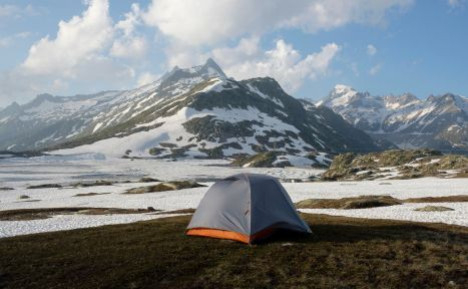
Solo bivouacking: an experience to try at least once in your life!
Read the article
-
![Over 200 brands At the best price]() Over 200 brands At the best price
Over 200 brands At the best price -
![Secure payment In 3 or 4 interest-free installments]() Secure payment In 3 or 4 interest-free installments
Secure payment In 3 or 4 interest-free installments -
![Delivery across Europe As soon as possible]() Delivery across Europe As soon as possible
Delivery across Europe As soon as possible -
![Customer service Monday to Friday]() Customer service Monday to Friday
Customer service Monday to Friday


