The best equipment for pros and enthusiasts alike





-10%
 Professions
In a world where the unexpected can arise at any moment, having suitable equipment on hand is no longer a luxury, but a necessity. Tactical EDC, or Every Day Carry, represents much more than a simple collection of objects: it's a life philosophy focused on autonomy, preparedness, and the ability to face unexpected everyday situations.
Tactical EDC refers to the set of objects you constantly carry on you, strategically chosen to maximize your autonomy and your security. Unlike a simple keychain and phone, a well-prepared EDC allows you to respond effectively to emergencies, breakdowns, injuries, or any unforeseen situation requiring a specific tool.
The term "tactical" emphasizes that these objects are selected for their robustness, their versatility, and their rapid accessibility in potentially hostile or operational contexts. The objective is simple: never be left helpless when faced with the unexpected.
Your EDC must reflect your daily reality. Ask yourself these essential questions: where do you travel each day? What is your main environment (urban, rural, mixed)? Do you use public transportation, your vehicle, or are you a pedestrian? What unforeseen situations could you reasonably encounter?
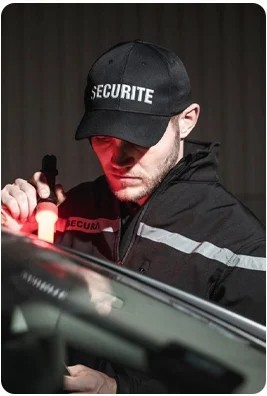
A security officer in an urban environment will not have the same EDC as a professional working in a rural area. Your equipment must align with your actual needs, not a theoretical ideal.
.jpg)
The perfect EDC doesn't exist. The real challenge is to find the balance between what you can carry without hindrance and what will actually be useful. Too many objects create a crippling overload, too few leave you helpless. Each element must justify its presence by its concrete utility.
Favor multifunctional objects, but beware: they must remain reliable for each task. A tool that does everything poorly is worthless. Moreover, never depend on a single gadget for a critical function. Light and thoughtful redundancy can save the day.
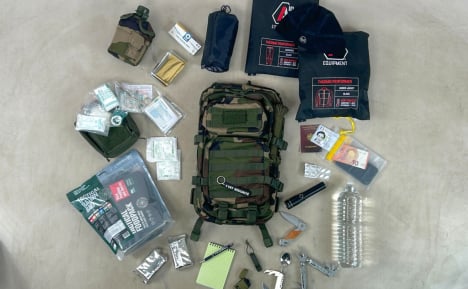
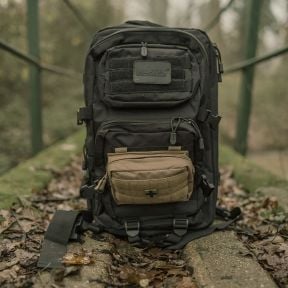
The best tool in the world becomes useless if it remains stuck at the bottom of an inaccessible pocket. The organization of your EDC is as important as its content. Holster systems, modular pouches, MOLLE layout: all these elements guarantee rapid access under stress. The most critical objects (flashlight, knife, phone) must be immediately accessible: chest pocket, belt, easily reachable exterior pocket.
An EDC is never fixed. It evolves with you, your needs, and your experiences. Test your equipment in real situations for several weeks, note what is missing, what is bothersome, what you never use. Adjust accordingly.
Regularly check batteries, worn parts, consumables like bandages, fasteners, and the general condition of your tools. Establish a control schedule every three to six months. Immediately replace any defective or expired item.
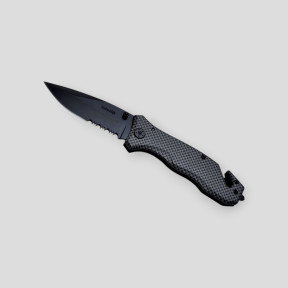
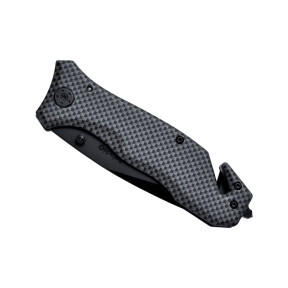
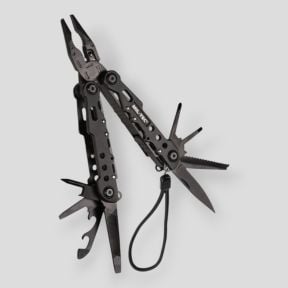
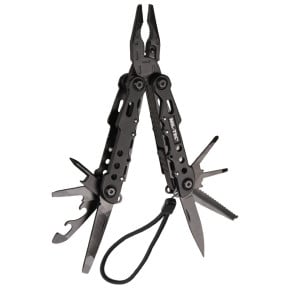
Essential for cutting, opening, tinkering, repairing, or unscrewing, these tools represent the core of any EDC. Opt for a robust folding knife with a solid locking system and a multi-tool like Leatherman or Victorinox including pliers, screwdrivers, and file.
Crucial point: Check local legislation regarding blade carrying. In France, the rules are strict. Favor a locking blade, easily usable even with gloves, and a reliable opening mechanism.
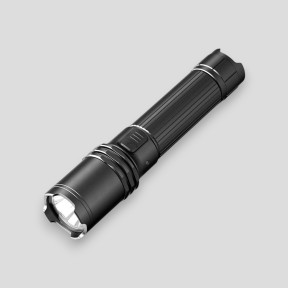
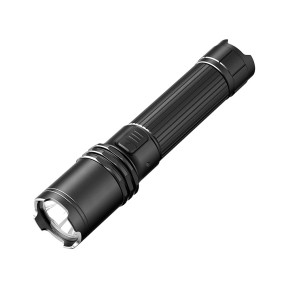
A high-performance compact flashlight is non-negotiable. It allows you to see in darkness, signal your presence, and even deter a potential aggressor with a strobe mode. Favor a powerful LED with multiple usage modes, shock-resistant and waterproof. A small keychain light can serve as backup.
Complete with a powerful whistle, a signaling mirror (visible for several kilometers), and possibly a compact compass for orientation.
The medical kit is potentially the most vital element of your EDC. A mini IFAK kit must include: gauze pads, pressure dressings, CAT-type tourniquet, bandages, medical gloves, and specialized scissors.
Major warning: Training in the use of this equipment is essential. An improperly used tourniquet can cause more damage than it prevents. Invest in first aid training and regularly renew your consumables by checking expiration dates.
Depending on your jurisdiction, you can integrate protective elements: tear gas spray (if authorized), multifunctional tactical pen, kubotan, window breaker and seatbelt cutter for vehicular emergencies.
Legal imperative: Carefully verify the legality of each piece of equipment in your jurisdiction. What is authorized in one country may be strictly prohibited elsewhere. Legal compliance must always take precedence over theoretical effectiveness.
In our hyperconnected world, keeping your devices powered is crucial. A compact power bank, short charging cables, and a backup USB battery constitute the minimum. Prioritize ruggedness and shock protection over excessive capacity. Ensure compatibility with your existing devices.
These elements allow you to connect, secure, and improvise solutions: resistant paracord (550 paracord minimum), zip ties, carabiners, small roll of compressed duct tape, and waterproof zip bags.
Never skimp on quality. Poor quality paracord can break at the worst moment. Test the actual resistance before counting on it. A waterproof notebook and pen usefully complete this category for emergency note-taking.
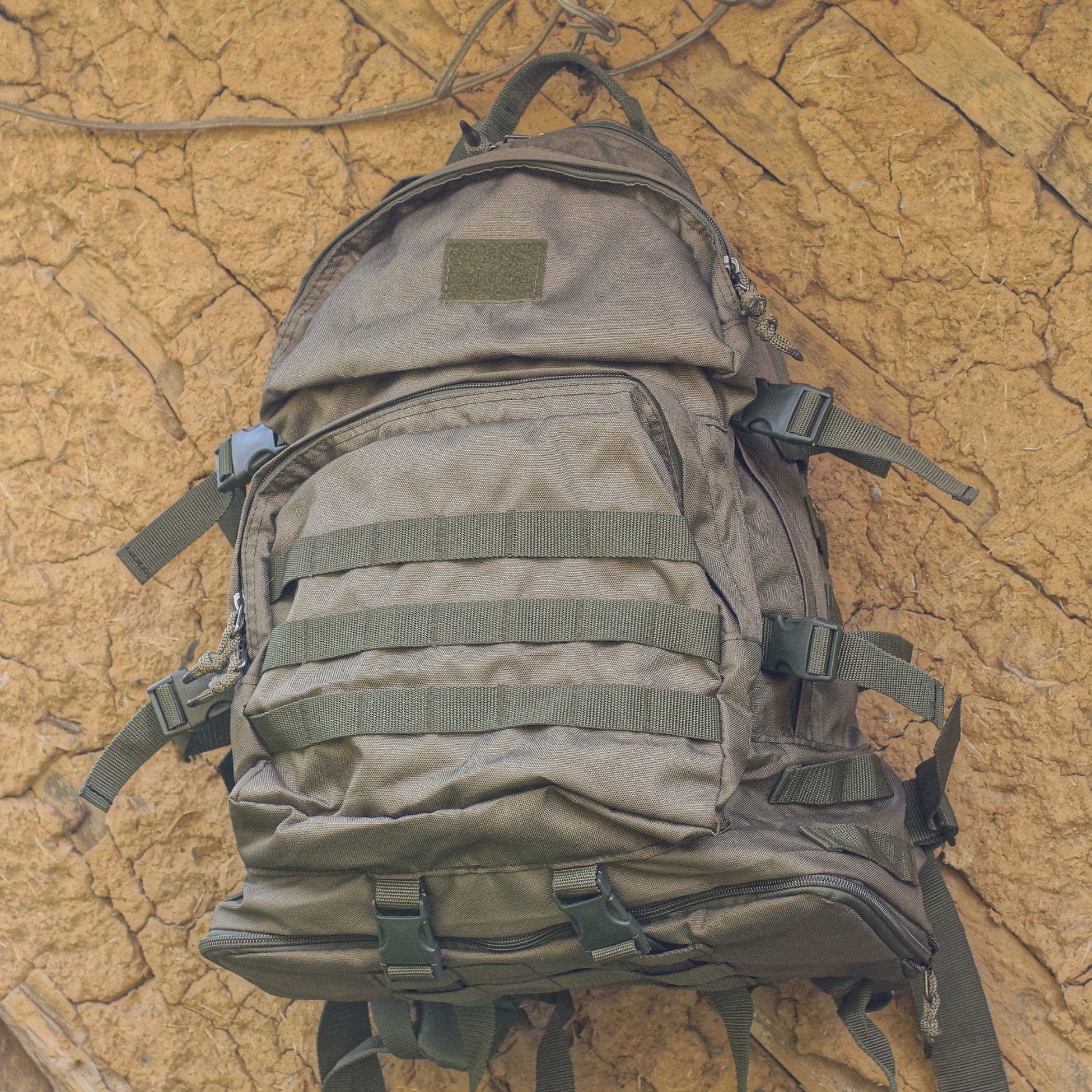
The physical organization of your EDC determines its actual effectiveness. Invest in a modular EDC pouch, suitable holsters, interior pockets, or a MOLLE system for modularity. Rapid accessibility takes precedence over capacity. Security against shocks and losses is crucial.
Adopt a two-tier approach: a minimal EDC core always on you in your pockets, supplemented by a secondary pouch in your bag or vehicle for less frequently used but nonetheless important items.
Avoid overloading one side of your body. Intelligently distribute weight between belt, back, and torso if you use a complex carry system. Securely fasten each object to prevent movement, noise, and friction. In a tactical or security context, noise can compromise your discretion.
Your EDC must integrate naturally into your outfit without appearing excessive or attracting attention. Favor clothing with concealed and reinforced pockets, combining urban look and operational robustness.
Carry your complete EDC for several weeks in your normal daily activities. This period will reveal what actually bothers you, what is sorely lacking, and what you ultimately never use.
Create fictional but realistic situations: nighttime vehicle breakdown, injury requiring first aid, situation requiring a specific tool. Check if you can access and use your equipment under stress, in darkness, with gloves.
Keep a detailed notebook of each adjustment: what was missing in a given situation, what proved superfluous, what was physically bothersome. This journal becomes your reference for intelligently evolving your kit.
Establish a control routine every three to six months. Systematically check consumables (bandages, sprays), batteries, tool condition, signs of corrosion or wear. Regularity prevents unpleasant surprises and ensures your EDC remains operational when you need it.
An EDC that is too heavy or bulky will never be carried regularly. It will end up abandoned at home, leaving you helpless precisely when you would need it. Lightness and comfort guarantee daily adoption.
The tactical industry is full of attractive but useless accessories. If you can't clearly see three real situations where you would use an object, it probably doesn't belong in your EDC.
Possessing a tourniquet or sophisticated medical kit is useless if you don't know how to use it correctly. Invest in first aid training, in the use of your defense tools if you carry them. Competence transforms equipment into a real advantage.
An uncomfortable EDC (pressure points, objects that poke, constant rattling) will be progressively abandoned. Comfort is not a luxury, it's a condition for long-term effectiveness.
.jpg)
The useful tool exists in your EDC but remains stuck under other objects, protected by several layers, difficult to extract quickly. Organization takes precedence over quantity. Regularly test your ability to quickly access each element.
Your needs evolve with your life, your environment, your work. An EDC that never changes gradually becomes unsuitable. Regularly reassess its relevance and don't hesitate to remove what no longer serves or add what is missing.
Carrying prohibited items in your jurisdiction can create far more problems than their use would solve. Research precisely what is authorized and scrupulously respect these limits. An effective EDC is above all a legal EDC.
Effectively preparing your tactical EDC goes far beyond simply selecting objects. It's adopting a mindset of preparedness, autonomy, and personal responsibility. It's recognizing that your security and your ability to face the unexpected depend first on you.
A well-designed EDC becomes invisible in daily life while providing considerable peace of mind. It allows you to move from the state of potential victim to that of prepared actor, capable of intervening effectively when the situation requires it.
Start small, test regularly, adjust constantly. Your perfect EDC doesn't exist on day one: it is built progressively, through your experiences, your actual needs, and your continuous learning.