The best equipment for pros and enthusiasts alike









-15%
 Professions
In the world of tactical equipment military, few innovations have marked as decisive a turning point as the advent of the MOLLE system (Modular Lightweight Load-carrying Equipment). This technological revolution has transformed the way soldiers carry and organize their equipment in the field. But where does this innovation come from and how has it evolved over the decades?
The idea of modularity in carrying military equipment is not new. Since Antiquity, Roman legionnaires had already understood the importance of an organized system: they used grid arrangements allowing them to secure their tools and equipment in a stable and methodical manner. This ancestral approach already laid the philosophical foundations of what would become, centuries later, the MOLLE system.
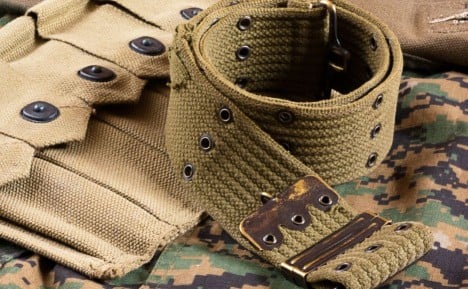
The true beginnings of the modern system emerge in the 1970s with the adoption by the U.S. Army of the ALICE system (All-Purpose Lightweight Individual Carrying Equipment). This innovation marked a fundamental break with the heavy canvas packs used during the two World Wars.
The ALICE system brought two crucial improvements:
A significant reduction in the total weight of equipment
Better distribution of load on the soldier's body
However, despite these advances, ALICE still presented significant limitations in terms of modularity and adaptability to different types of missions.
In the 1980s, the U.S. Army develops the IIFS system (Individual Integrated Fighting System), designed to further improve portability. This project relied notably on the field experience of the Navy SEALs, an elite unit whose specific needs required innovative solutions.
Unfortunately, the IIFS proved disappointing in its practical implementation, not meeting the expectations placed in it. This experience, though unsuccessful, would nevertheless fuel the reflection that would lead to the development of the MOLLE system.
It is in the 1990s that the MOLLE revolution truly begins. The system is developed by the prestigious Natick Soldier Research, Development and Engineering Center (Natick Labs), in close collaboration with the US Marine Corps and the U.S. Department of Defense.
This inter-service collaboration ensured that the future system would meet the varied needs of all branches of the armed forces, from conventional infantry to specialized units.
The MOLLE system officially sees the light of day in 1997, but its generalization will not be immediate. Its massive diffusion within the U.S. Armed Forces truly begins at the start of the 2000s, coinciding perfectly with military operations in Afghanistan where its advantages prove crucial.
This period of operational deployment allows for field validation of the theoretical innovations developed in the laboratory.
.jpg)
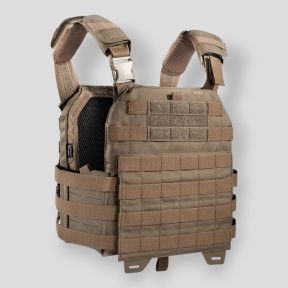
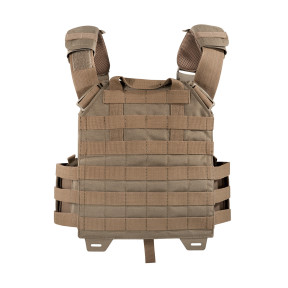
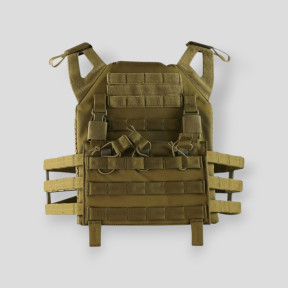
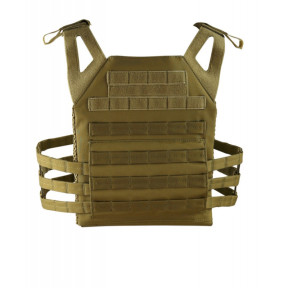
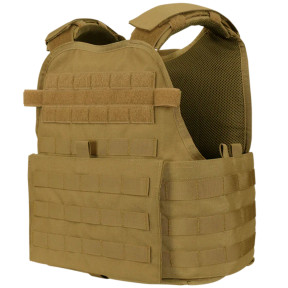
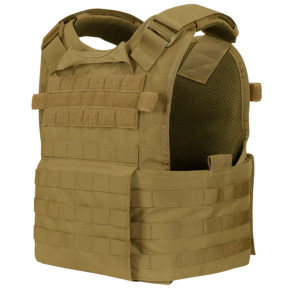
The truly revolutionary element of MOLLE lies in the PALS (Pouch Attachment Ladder System). This system consists of a network of woven straps (webbing) arranged vertically and horizontally in high-strength nylon, forming a modular grid.
This PALS network allows for secure and modular attachment of:
It is crucial to understand the distinction between MOLLE and PALS:
The main advantage of MOLLE lies in its adaptability. Each user can configure their equipment according to the specific requirements of their mission. Whether it's a reconnaissance patrol requiring light and discreet equipment, or an assault mission requiring heavy weapons and abundant ammunition, the system adapts perfectly.
PALS straps demonstrate remarkable resistance to extreme conditions:
The system is designed to be virtually impossible to detach accidentally while remaining easily manipulable intentionally.
MOLLE brings substantial improvements in terms of comfort:
The first versions of MOLLE had certain defects, notably fragile plastic frames and poorly adapted belt attachments causing back injuries among Marines. These problems were quickly identified and corrected in subsequent iterations, contributing to the system's current omnipresence.
.jpg)
After its success within the U.S. Army, MOLLE quickly established itself as the de facto standard in tactical equipment for NATO armed forces and many allied countries. This standardization facilitates interoperability during multinational operations.
The excellence of the MOLLE system quickly attracted the interest of civilian users:
This massive adoption testifies to the versatility and effectiveness of the MOLLE concept beyond its initial field of application.
The history of the MOLLE system perfectly illustrates how military innovation can transform not only the operational effectiveness of armed forces, but also durably influence civilian and commercial sectors. From the ancestral intuition of Roman legionnaires to the high-tech laboratories of the Natick Center, this evolution testifies to a constant quest for improvement in combatant equipment.
Today, more than 25 years after its creation, MOLLE continues to evolve and adapt to new tactical challenges, confirming its place as an essential reference in the world of modular equipment. Its success is based on a simple but revolutionary philosophy: allowing each user to build equipment perfectly adapted to their specific needs, while guaranteeing robustness, reliability and comfort of use.