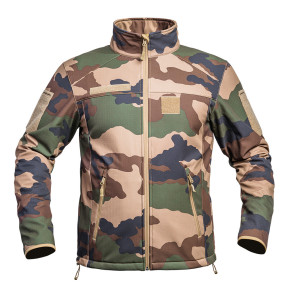
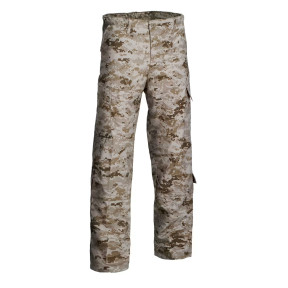
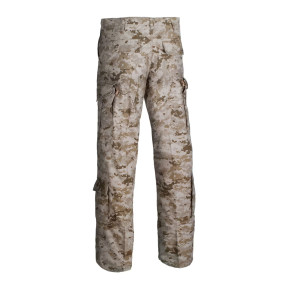
The best equipment for pros and enthusiasts alike


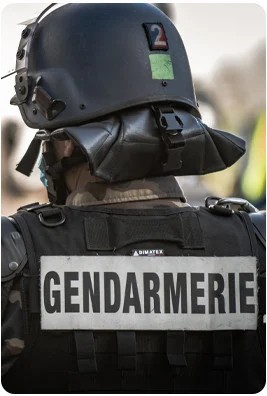





 Professions
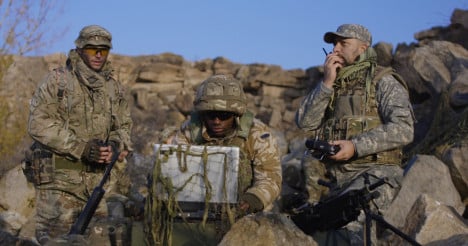
From its first rudimentary uses to modern technological innovations, military camouflage has always been an essential element to ensure survival and effectiveness of armed forces. This fascinating evolution reveals constant adaptability in the face of changing battlefield challenges.
Table of Contents:
Before the 19th century, military uniforms were often designed to impress and reflect soldiers' bravery. These garments, richly colored and ornamented, played an important role in battles, where visibility and recognition were crucial for maintaining troop cohesion and displaying their strength to adversaries. However, with the rise of firearms and the increase in their range, this approach became a handicap, forcing military strategists to rethink uniform design to integrate elements of concealment and protection.
The turning point began when the British, faced with the arid and dusty landscapes of colonial India, realized that conspicuous uniforms endangered their soldiers' lives. They adopted khaki uniforms, a neutral shade capable of blending into the terrain and minimizing visibility at distance. More than a simple aesthetic adjustment, this innovation responded to strategic thinking, laying the foundations for a modern approach to camouflage, where adaptation to environments became a priority for armed forces.
The beginning of the 20th century saw the emergence of more technological warfare, marked by an intensification of conflicts and growing sophistication of combat means. Concealment then became crucial to guarantee soldiers' survival on the battlefield. During World War I, the extreme conditions of trench warfare, combined with the rise of aerial reconnaissance and bombardments, highlighted the imperative need for techniques of camouflage adapted to preserve troops and thwart enemy strategies.
Artists were recruited within armies to design patterns and camouflage strategies capable of effectively concealing troops, equipment, and strategic positions. Their work involved exploiting combinations of colors, shapes, and textures to create visual effects that disrupted enemy recognition. In 1914, the term "camouflage" entered French military vocabulary, marking a major evolution toward systematic and strategic concealment, which became a pillar of modern warfare tactics.
The interwar period saw the appearance of the first printed camouflage patterns, such as the "Telo mimetico" introduced by the Italians in 1929 or the "Splittermuster" developed by Germany in 1931. These patterns were designed to meet the specific needs of different theaters of operations, whether the dense forests of Europe or the vast deserts of North Africa.
During World War II, camouflage strategies were widely applied to vehicles, ships, and aircraft to reduce their visibility and thwart enemy attacks. One of the most remarkable examples is the "dazzle" pattern, characterized by bold and contrasting geometric patterns. This concept aimed to disrupt perception of enemy ships' speed, size, and direction, thus complicating their targeting by submarines and other hostile forces.
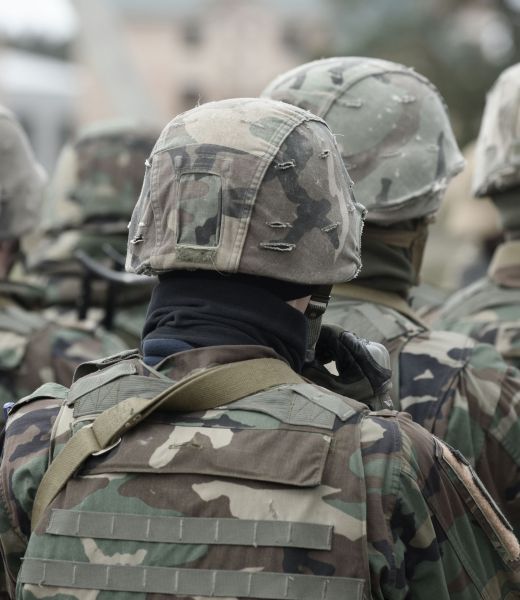
After 1945, technological advances modified camouflage needs. The emergence of radar and infrared imaging led to the development of multispectral patterns. These aimed to reduce the visual and electromagnetic signature of soldiers and their equipment.
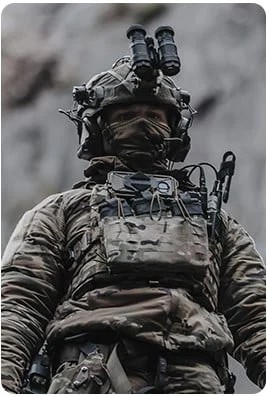
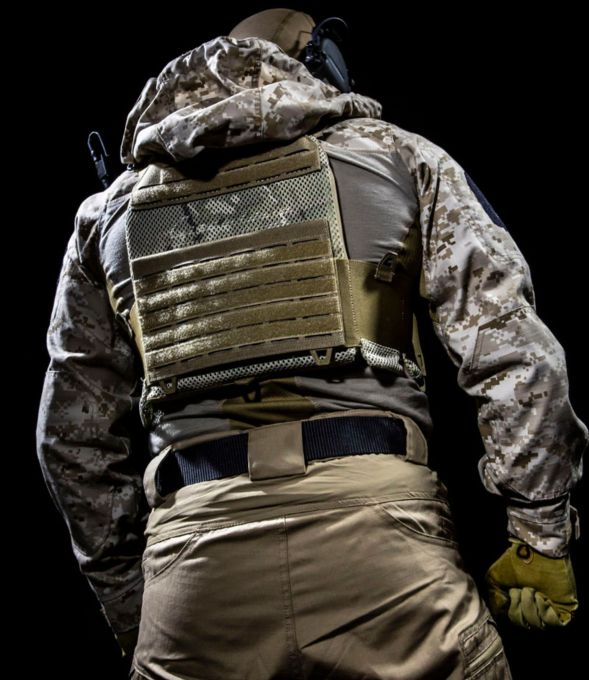
Pixelated patterns, such as the Canadian CADPAT and the American MARPAT, emerged to address these new technological and strategic challenges. These schemes use irregular geometric shapes that exploit principles of visual perception to disrupt recognition of human or equipment contours. By integrating varied colors and patterns, they ensure optimal concealment at both close and distant ranges, thus providing a significant tactical advantage on the field.
Contemporary camouflage has entered a new era where adaptability and stealth have become the key principles. Faced with the challenges of urban environments, advances in electronic sensors, and sophisticated detection systems, armed forces are seeking solutions capable of adapting in real time.
Innovations focus on smart textiles equipped with sensors that can adjust their properties based on the environment. These next-generation uniforms, combining technologies such as liquid crystal displays, photochromic coatings, and thermoreactive materials, allow soldiers to remain invisible to both the human eye and infrared and thermal sensors.
Concrete examples include research on polymer materials capable of reproducing complex camouflage patterns in seconds, or nanotechnologies allowing modification of surface texture and reflectivity. These advances pave the way for dynamic camouflage solutions, directly inspired by the animal world, like octopuses or chameleons, which excel in the art of concealment.
Furthermore, these advances are not limited to uniforms. Military vehicles and heavy equipment also benefit from these technologies, with adaptive coatings capable of changing color and thermal signature, thus offering increased stealth against drones and advanced surveillance systems.
The future of camouflage looks promising, with prospects such as the use of artificial intelligence to analyze environments in real time and instantly adjust concealment parameters. These revolutionary innovations are redefining military strategies and reinforcing the importance of camouflage as a key element of survival on modern battlefields.
 Ragnar Raids
Military camouflage embodies a captivating progression, starting from colorful uniforms that once reflected bravery, to reach advanced technologies that push the boundaries of stealth. This transformation results from a synergy between strategic ingenuity, technological breakthroughs, and the constant ability to adapt to increasingly complex and demanding theaters of operations.