 The best equipment for pros and enthusiasts alike









-
 Professions
-
-
-
-
-
-
-
-
All Tops
![All Tops]()
-
-
-
All Bottoms
![All Bottoms]()
-
-
-
All Footwear
![All Footwear]()
-
-
-
All Bags
![All Bags]()
-
-
-
All Accessories
![All Accessories]()
-
-
In 1982, occupational hearing loss was officially recognized as the first occupational disease in France, while today it ranks 4th behind Musculoskeletal Disorders (MSDs), respiratory diseases and dermatological conditions. Today, more than half of employees complain of recurring noise pollution in their workplace. This problem is particularly pronounced in the industrial sector, where 3,000 to 4,000 new cases of hearing loss are recorded each year.
Summary:
- The characteristics of occupational hearing loss
- Importance of hearing protection
- The progression of hearing loss
The most affected sectors
Certain professions are particularly exposed to hearing loss risks due to their work environment. Among the most concerned sectors, we find:
- The mechanical industry: Noisy machines such as jackhammers and air compressors constantly create high sound levels.
- The wood industry: Circular saws and other cutting equipment generate piercing and dangerous noises.
- Weaving trades: Looms operate at high sound levels.
- Publishing trades: The rotary presses used to print newspapers are extremely noisy.
- The construction sector : Construction equipment, jackhammers and other construction site equipment produce sound levels that can reach 100 dB.

The characteristics of occupational hearing loss
Occupational hearing loss is characterized by hearing loss that can be temporary or permanent. It is often accompanied by symptoms such as tinnitus (ear ringing), dizziness and ear pain. Non-auditory effects, such as fatigue, stress, insomnia and irritability, are also common.
Unlike auditory fatigue, which is reversible, noise-induced hearing loss is irreversible sensorineural hearing loss. It develops gradually in employees frequently exposed to noise without adequate hearing protection. Once established, this hearing loss is permanent and may require reassigning the employee to a less noisy position to prevent any worsening.
Importance of hearing protection
Hearing protection is essential to prevent irreversible damage caused by prolonged exposure to high sound levels in the workplace. By reducing the impact of dangerous sounds, they prevent hearing loss and alleviate associated symptoms such as tinnitus and dizziness. Additionally, they help reduce non-auditory effects like stress and insomnia, thus improving workers' quality of life and productivity. Compliant with regulations, these devices enable secure communication while effectively protecting against noise pollution, making the work environment safer and healthier.
There are several types of hearing protection adapted to different work environments and noise levels, each offering specific advantages in terms of comfort and effectiveness.
Earplugs
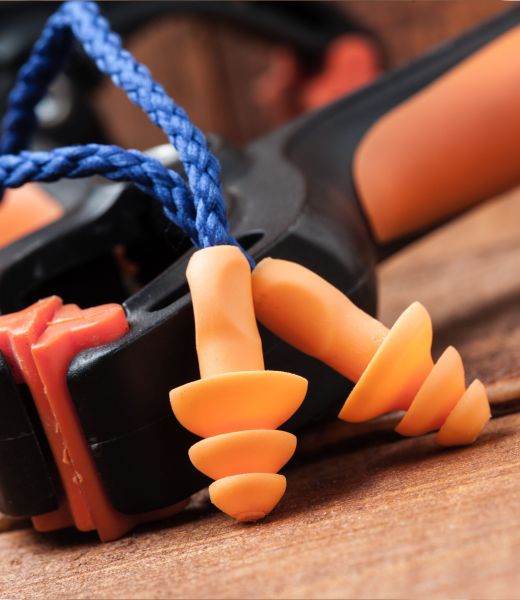
- Earplugs are devices that are placed directly in the ear canal to reduce noise levels. They can be made of foam, silicone or wax, offering a lightweight and portable solution. They are ideal for moderately noisy environments and are often used by workers in industry, construction and leisure.
Custom earplugs
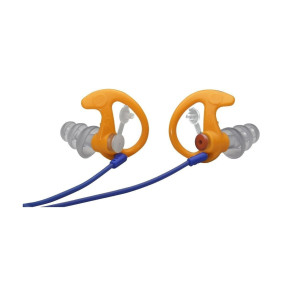
- Custom earplugs are manufactured specifically to fit the unique shape of the user's ear. They offer superior comfort and optimal noise protection. These plugs are particularly useful for workers regularly exposed to high noise levels, as they can be worn for long periods without causing discomfort.
Noise-canceling headphones
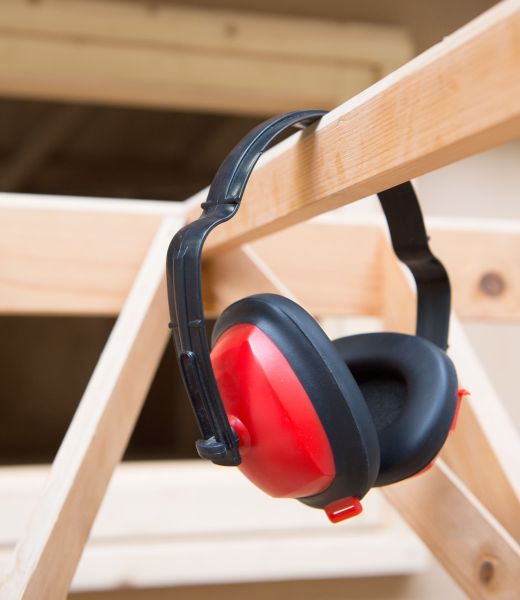
- Noise-canceling headphones are devices that completely cover the ears and are held in place by a headband. They offer effective protection against high noise levels and are often used in industrial and construction environments. Noise-canceling headphones can be equipped with additional features, such as active noise suppression and radio communication.
Noise exposure time
The effectiveness of hearing protection depends on the duration of noise exposure. For an 8-hour exposure, noise attenuation by protection must balance the perceived acoustic energy. The noise dose is the acoustic energy received by our auditory system during a given period and it doubles with each 3 dB(A) increase. Thus, the longer the employee is exposed to high sound levels, the more likely their hearing is to suffer. It is crucial to keep hearing protection on at all times in noisy environments to avoid any damage.
The progression of hearing loss
Noise-induced hearing loss evolves in stages:
- First stage: The employee is not yet aware of their hearing loss, as speech frequencies are little affected. Hearing loss begins with a notch at 4000 Hz frequency. Hearing loss exceeds 30 dB, but the clinical effect is null and often detected only during systematic medical examinations.
- Second stage: High frequencies of conversation are affected, making communication difficult. The lesion extends toward the 2000 Hz frequency. When the loss reaches 30 dB at this frequency, the employee begins to notice their hearing loss and often asks for repetition.
- Third stage: Hearing loss becomes profound and irreversible, affecting all frequencies, including 5000 Hz and 8000 Hz, where the loss exceeds 30 dB. Speech perception impairment is significant, and social discomfort is very strong.
Conclusion
Occupational hearing loss is a serious threat that requires rigorous prevention and the use of adequate hearing protection. Better understanding and workplace noise management are essential to protect employees' hearing health and ensure a safer and healthier work environment. By adopting effective prevention measures and raising workers' awareness of noise risks, it is possible to significantly reduce the incidence of occupational hearing loss.
Related products
Related articles


Textile Industry: What are the techniques and professions in the sector?
Read the article
-
![Over 200 brands At the best price]() Over 200 brands At the best price
Over 200 brands At the best price -
![Secure payment In 3 or 4 interest-free installments]() Secure payment In 3 or 4 interest-free installments
Secure payment In 3 or 4 interest-free installments -
![Delivery across Europe As soon as possible]() Delivery across Europe As soon as possible
Delivery across Europe As soon as possible -
![Customer service Monday to Friday]() Customer service Monday to Friday
Customer service Monday to Friday


