The best equipment for pros and enthusiasts alike



-15%
 Professions
On missions, military personnel may face emergency situations that put a person's life at risk. The tactical tourniquet is a medical device that, if used properly, can temporarily stop excessive bleeding. In this article, we will explore in detail the use of the tourniquet by providing generic instructions for use, identifying contraindications, and highlighting the risks that accompany it.
Table of contents:
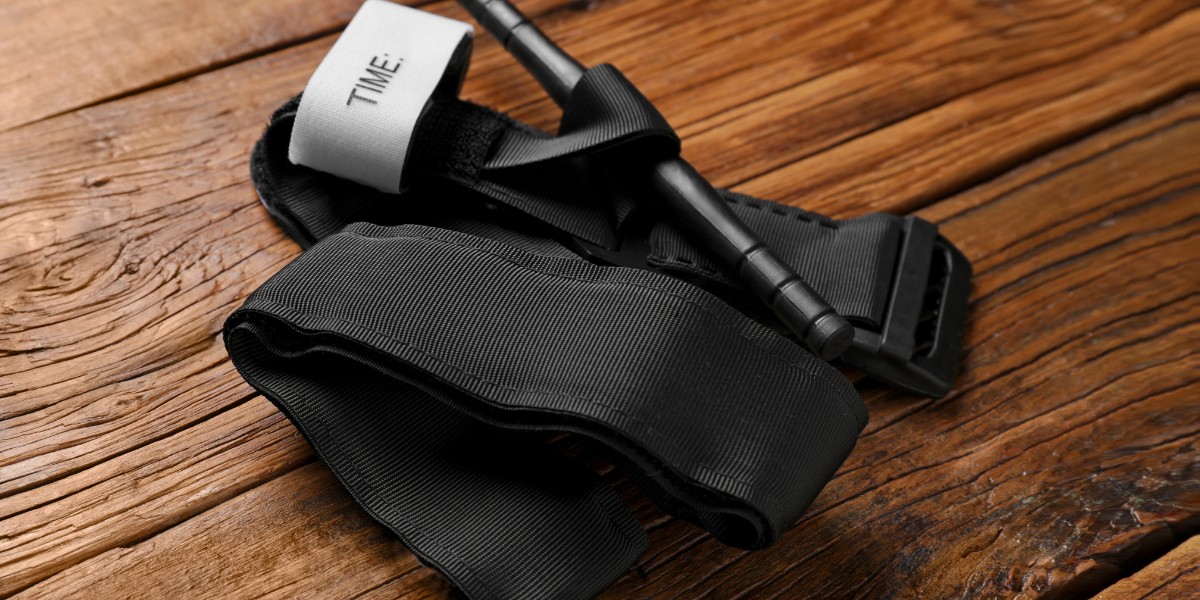
A tourniquet is a medical device used to temporarily stop blood circulation in a part of the body, usually a limb, by compressing blood vessels. It is primarily used in emergency situations to control excessive bleeding when other methods are not available or ineffective.
The use of tourniquets to stop blood flow dates back to antiquity. Early tourniquets were made from cloth, rope, or leather strips wrapped around an injured limb and tightened to compress blood vessels. However, they were often ineffective and potentially dangerous due to the difficulty of controlling the applied pressure.
The invention of the modern tourniquet, which allows more precise pressure control, is often attributed to Jean-Louis Petit, a French surgeon of the 18th century. He developed a blood vessel compression device using a rotating stick to tighten a bandage around the injured limb. This marked a significant advance in tourniquet technique and paved the way for more effective methods to control bleeding.
Over the years, tourniquet techniques and devices have continued to evolve to become safer and more reliable. Today, modern devices use advanced materials and tightening mechanisms to allow precise control of the pressure applied to blood vessels.
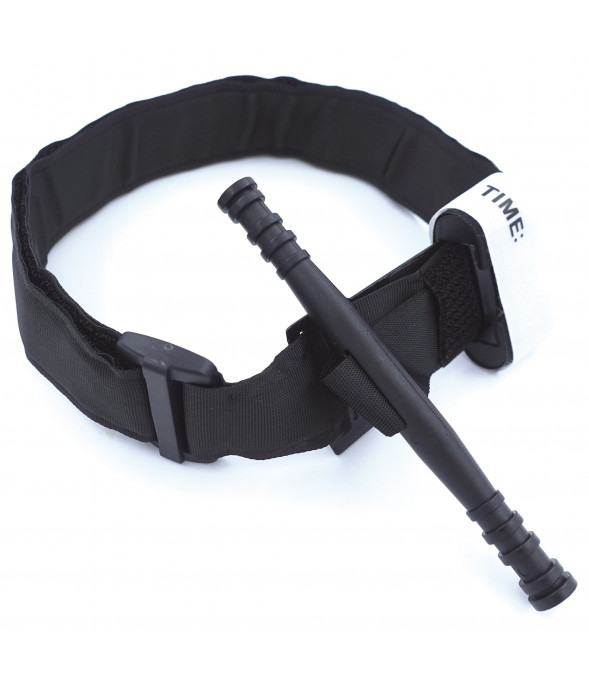
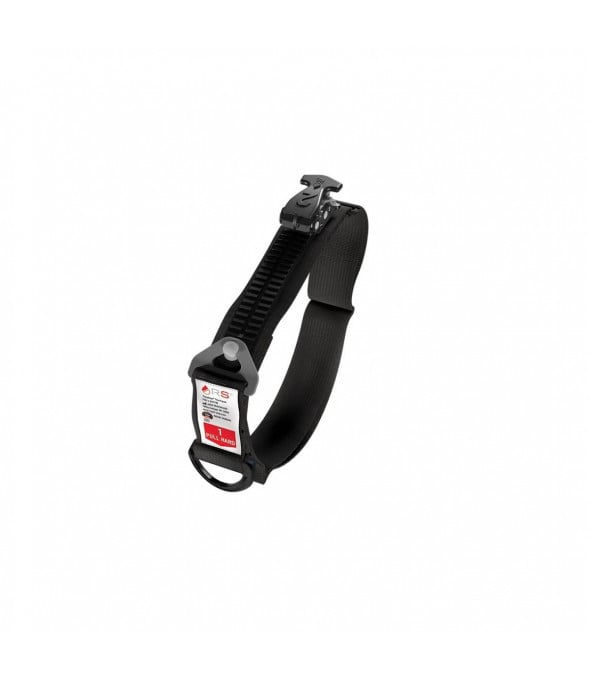
The tourniquet generally consists of a wide and resistant strap that is wrapped around the injured limb and tightened using a fastening system, usually a tightening or twisting system. The objective is to compress blood vessels, which reduces or stops blood flow to the injured area. This can be crucial to avoid excessive blood loss while awaiting more comprehensive medical intervention.
The tourniquet is generally used in emergency situations where it is imperative to quickly and effectively control excessive bleeding, particularly in the following cases:
Severe hemorrhage
Amputation or limb loss
Serious injuries
Road accidents
In case of emergency, here are the main key steps to follow to apply a tourniquet safely :
Step 1: Preparation
Find the tourniquet: Make sure you have a medical-grade tourniquet within reach. These devices are designed for specific use and offer better control of applied pressure.
Assess the situation: Make sure the use of the tourniquet is justified by assessing the severity of the bleeding. If bleeding can be effectively controlled by other means, such as direct pressure on the wound, prioritize these methods.
Step 2: Applying the tourniquet
Locate the wound area: Identify the area where bleeding is most profuse.
Place the tourniquet: Place the tourniquet at the base of the root of the injured limb, leaving a hand's width to potentially place a second tourniquet in case bleeding does not stop. Make sure not to place it directly on a joint or fracture.
Attach the tourniquet: Wrap the tourniquet around the injured limb firmly, but not too tightly to start. Make sure the device is properly wrapped and does not slip.
Step 3: Tightening the tourniquet
Tightening: Use the tourniquet's fastening system (usually a loop, lever, or twisting device) to quickly tighten the tourniquet until bleeding from the injured limb stops completely.
Visual control: Carefully monitor the wound and limb to observe if bleeding decreases. Continue to gradually tighten the tourniquet until bleeding is under control.
Step 4: Time notation
Note the time: When bleeding is under control, note the time the tourniquet was applied. This will help you avoid leaving the tourniquet in place too long, which could cause tissue damage.
Step 5: Get medical help
Call healthcare professionals: Once bleeding is controlled, immediately contact emergency medical services or direct the person to professional medical care.
Communication: Inform healthcare professionals about the use of the tourniquet, the time it was applied, and any other relevant information.
Step 6: Continuous monitoring
Monitor continuously: Stay with the injured person and continuously monitor the condition of the injured limb, pulse, and distal sensation (sensation in fingers or toes).
Step 7: Tourniquet removal
Once healthcare professionals are present, let them safely remove the tourniquet. It is essential not to leave the tourniquet in place for an extended period to avoid tissue damage.
Warning : Obviously, we recommend that you read and strictly follow the instructions for use of your tourniquet. Additionally, note that using a tourniquet should be a last resort measure in case of severe bleeding and only when other bleeding control methods are not effective.
Express Tourniquet - Patrol
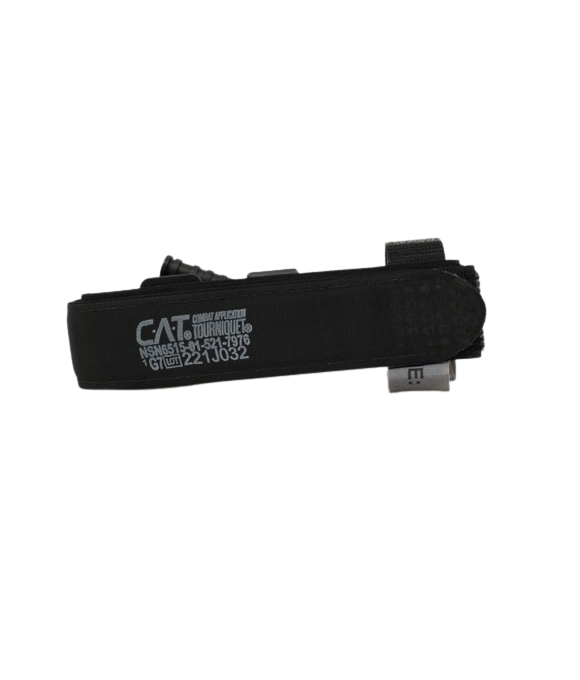
CAT Black Gen 7 Tourniquet - CirMédical
Tourniquet - Patrol
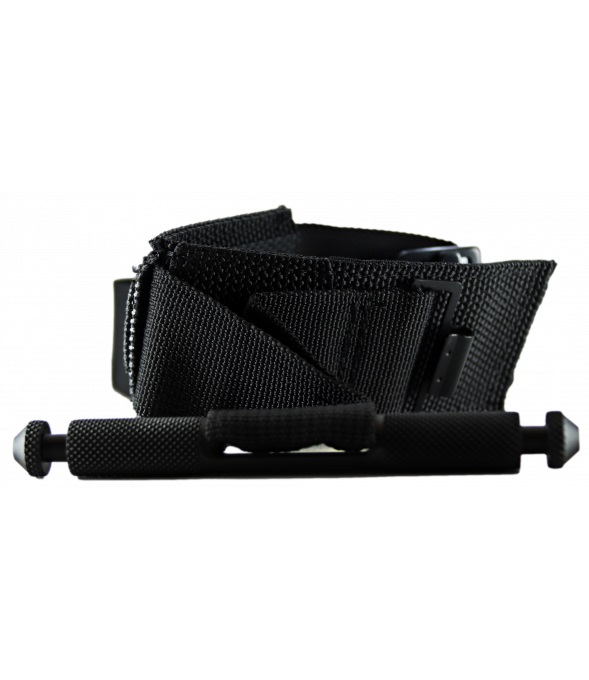
RapidStop Ratchet Tourniquet Black - Aero Healthcare
Here are the main contraindications associated with its use:
Minor injuries: cuts or scrapes that can be effectively treated by other methods, such as direct pressure on the wound.
Pre-existing conditions: circulatory disorders or vascular problems.
The use of a tourniquet must be done with caution, as it can have undesirable side effects if left in place too long.
Among these risks, we find:
Damage to tissues, muscles and nerves: If the tourniquet is tightened too much or left in place for an extended period, it can cause irreversible damage.
Necrosis: Excessive or prolonged tightening of the tourniquet can lead to necrosis (tissue death) by preventing blood flow to the injured area.
Circulatory complications : Prolonged use of a tourniquet can lead to blood clots, embolisms, or other vascular complications.
Pain and discomfort: Tightening the tourniquet can cause intense pain and discomfort for the injured person.
Limb loss: If the tourniquet is left in place too long, it can increase the risk of limb loss due to damage to tissues and blood vessels.