The best equipment for pros and enthusiasts alike





 Professions

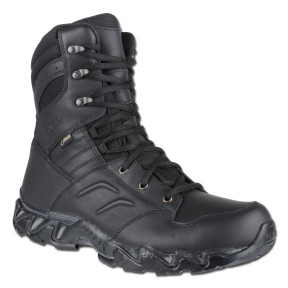
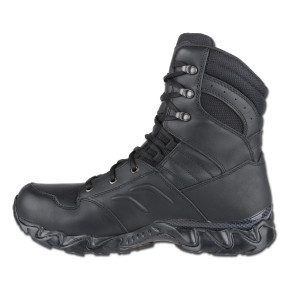
Find a wide range of products specially designed by gendarmes and for gendarmes. Are you looking for a supplement to your allocation? Don't hesitate to consult our selection of clothing, shoes, accessories, materials and equipment.
The Specialized Protection Platoons of the National Gendarmerie, better known by the acronym P.S.P.G, are counter-terrorism units specialized in the protection of nuclear facilities.
Summary:

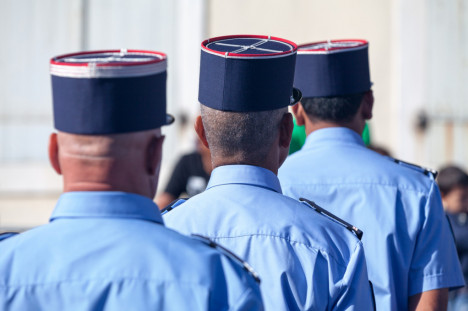
PSPG gendarmes have a classic blue uniform like that of departmental gendarmes for their regular service and an intervention uniform.
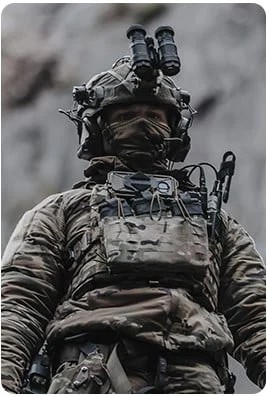
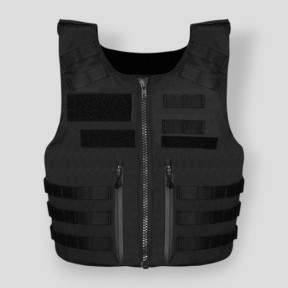
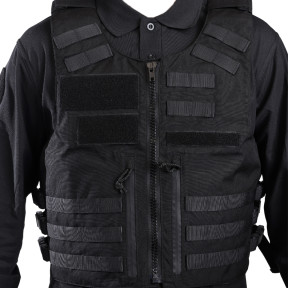
In its counter-terrorism mission, the PSPG is equipped with heavy materials and equipment: ballistic shields, helmets with bulletproof visors, heavy vests, night vision goggles, knee pads, hydraulic door openers, battering rams, climbing equipment, assault ladders, etc.
On the weapons side, the PSPGs have a large stock of ammunition as well as different types of weapons : sniper rifles, assault rifles, shotguns, etc.
Since he carries out his missions on sensitive sites, the PSPG gendarme also possesses specific protective equipment for Nuclear, Radiological, Biological and Chemical (NRBC) risks.
Looking for an alternative to VETIGEND? Find a wide selection of products from the biggest brands for gendarmes and always at the best price: clothing, shoes/boots, equipment, materials and luggage.
The PSPG is a counter-terrorism unit whose mission is to protect nuclear power generation sites, in accordance with the contract signed between EDF and the National Gendarmerie. The gendarmes of this unit ensure the protection of property and people, in other words employees and generally civilians present on site. Metropolitan France has 22 PSPGs, composed of gendarmes trained by the GIGN.
A PSPG gendarme's daily routine includes:
Surveillance of Nuclear Power Plants (CNPE) ;
Intervention during an alert launched by CNPE personnel : the PSPG commander contacts the GIGN to inform them of the ongoing situation. It is the GIGN first alert officer who gives authorization to the PSPG, after threat assessment, to intervene alone or wait for GIGN support ;
Apprehension of suspicious and/or dangerous, even armed individuals ;
Intelligence gathering and collection of sensitive information for the prevention of terrorist acts ;
Support to other gendarmerie groups such as regional commanders, gendarmerie groups or companies or even the GIGN in case of serious events (hostage taking, apprehension of dangerous individuals, protection of high-profile personalities during major events...) in the department where it is located or neighboring departments and insofar as their intervention does not impact their main mission.
To be able to carry out his missions, the PSPG gendarme trains daily both in terms of his physical fitness and his professional skills. Terrorist act simulations are carried out regularly, sometimes in collaboration with other National Gendarmerie entities such as the PSIG sabre, the Gendarmerie Air Section (SAG) or the GIGN. These joint training sessions help improve cohesion, harmonize intervention techniques and thus create automatisms to intervene more quickly in real situations.

To join a PSPG, the candidate must be a non-commissioned officer or officer of the National Gendarmerie. The Gendarmerie non-commissioned officer competition (SOG) is accessible with a high school diploma level or equivalent while the Gendarmerie officer competition (OG) is accessible with a master's degree level or equivalent. For a candidate who does not have this level of education, they can hope to pass the internal non-commissioned officer competition after having been a Volunteer Assistant Gendarme (GAV).
The selection tests to join a PSPG change from year to year. The tests span three days and include physical tests as well as situational exercises.
Among the tests, we can find:
Physical tests: running in fatigues and boots, push-ups, sit-ups, pull-ups...
Height proficiency tests ;
Shooting and weapons handling tests ;
Professional competency tests : subduing an individual with or without weapons, vehicle control, apprehension...
Proficiency tests in confined environments and/or in stressful situations : retrieving clues in a room filled with tear gas, escaping from a place by overcoming several obstacles, etc.

The PSPG gendarme can advance in rank based on their seniority and in grade by applying for promotion. To obtain more responsibilities, a non-commissioned officer can take internal competitions for rank officer (OG Rang) or semi-direct officer (OG SD). These competitions take place once a year. As an intervention specialist, a PSPG gendarme may also be attracted to a career in the GIGN. To do this, they will have to pass the tests like all other candidates, but they can be certain that their experience in the PSPG will be a great asset !