The best equipment for pros and enthusiasts alike









-20%
 Professions
It is important to choose the most appropriate professional attire for the job and work environment, in order to protect yourself and protect patients.
Summary:

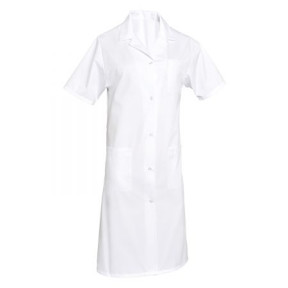
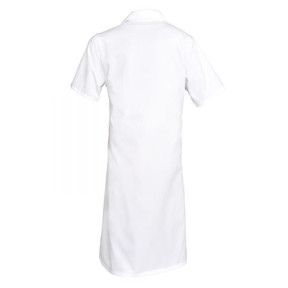
Come discover a wide selection of white coats and professional tunics designed for healthcare professionals.
The medical tunic and the medical blouse (the famous white coat) are work clothing commonly used by professionals, men or women, in the medical sector, such as doctors, nurses, female nurses, pharmacists and female pharmacists, dentists, veterinarians or nursing assistants. However, there are some differences between these two garments:
Medical blouses are generally longer than medical tunics, often covering the knees of healthcare professionals. It is usually worn by doctors and other healthcare professionals who need more coverage or protection for their work.
The professional tunic is usually shorter, covering only the upper body. It is frequently worn by nurses and nursing assistants who need less coverage or protection for their work.
The work blouse is made from heavier and more robust materials, making it more durable and more resistant to stains.
The tunic is made from lighter and more comfortable materials, making it more pleasant to wear for long periods.

Medical tunics and blouses are generally made from materials that are comfortable, breathable and easy to maintain:

It is important to choose a tunic or work blouse based on your preferences and your work environment. For example, if you work in a hot and humid environment, you may want to opt for a cotton or polycotton tunic or blouse to be more comfortable. If you work in a cold and dry environment, you will surely want to opt for a polyester or spandex tunic or blouse that will keep you warm and will not wrinkle easily.
Sleeves can be short, long or 3/4 sleeves. Short sleeves are generally worn in summer or in warmer environments to be more comfortable. Long sleeves are mostly worn in winter or in colder environments to protect from the cold. 3/4 sleeves are an intermediate length between short and long sleeves and are often worn in autumn or spring.
It is important to choose the appropriate sleeve length based on the work environment and personal comfort. For example, if you work in a hospital and need to handle hot instruments or chemicals, long sleeves may be more appropriate to protect your arms. If you work in a nursing home and need to help patients move around, short sleeves may be more practical so as not to hinder your movements.
It is also important to choose a tunic or work blouse with sleeves that allow good air circulation to avoid sweating and discomfort. If you have trouble finding a tunic or blouse with the sleeve length that suits you, you can always opt for removable sleeves that can be added or removed as needed.

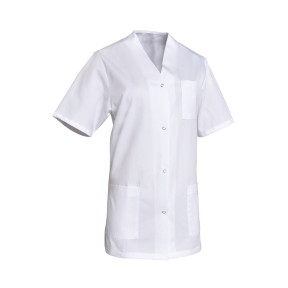
Pockets are very practical for healthcare workers and can contain phones, pens, notepads, watches, etc. We can also provide a loop to hang the clock. If large pockets are needed, blouses generally offer larger pockets than tunics.
Pockets are often placed on the chest and sides. How to open the pocket is also a point. For example, an angled opening is more practical than a straight opening. Others are zippered to prevent objects from falling or getting lost. After all, some models have no pockets.
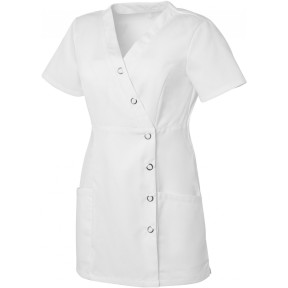
Fasteners are important when choosing a blouse. Available in classic straight closures and wrap closures (especially for women), they offer a touch of modernity. Some tunics have no fasteners and must be worn like a t-shirt. This is called a medical smock.
There are also different collars for medical tunics and blouses: round collars, tailored collars, officer collars (collars smaller than tailored collars), V-neck collars, wrap collars (modern version of V-neck collars), shirt collars (more dressy), convertible collars... The collars of medical clothing are mainly a matter of taste and appearance.
It is important to take care of your tunic or blouse in order to extend its lifespan and maintain an adequate level of hygiene. Each tunic or blouse has specific washing instructions that must be followed to preserve the quality and integrity of the work garment. Make sure to read and follow these instructions before washing your tunic or blouse.
To remove stains and odor, use a detergent that is designed to remove blood stains and other substances. You can also add white vinegar to the rinse water to help eliminate odors.
To avoid mold and odors, dry your tunic or blouse completely before storing it. If you use a dryer, use the lowest possible heat to avoid damaging the fabric.