The best equipment for pros and enthusiasts alike








-30%
 Professions
Police commissioner is a high-responsibility profession. Let's discover together all the specificities of the police commissioner profession: their missions, selection conditions, training, career advancement and salary.
Summary:
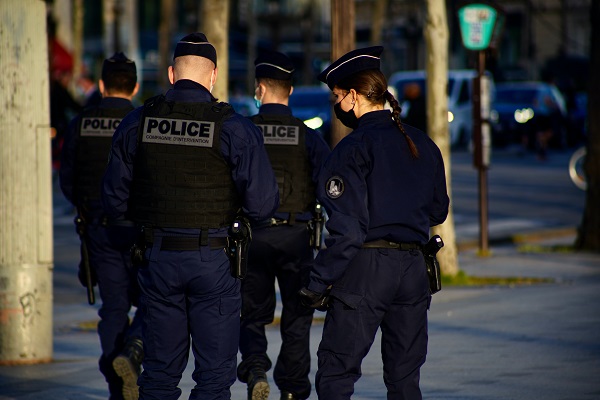
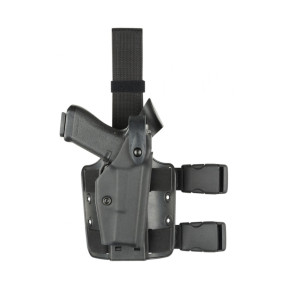
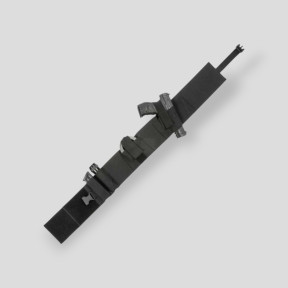
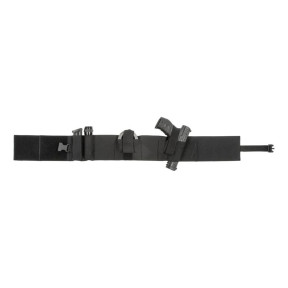
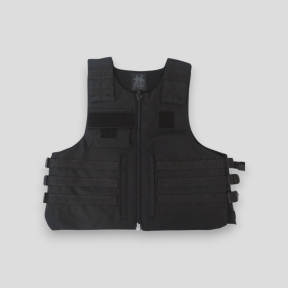
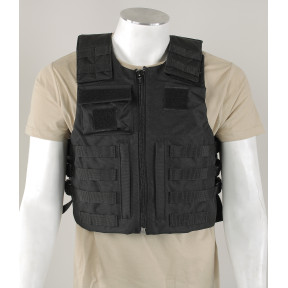
On vetsecurite.com, find thousands of products at the best prices and the biggest brands for police officers and peacekeepers such as municipal police officers or Public Road Surveillance Agents (ASVP). Our online store offers an excellent alternative or complement to the Vetipol store. Find all the clothing, equipment, accessories, tactical boots and combat boots as well as the gear for carrying out your mission safely and comfortably: armored gloves, batons, tactical flashlights, polo shirts, tactical vests, handcuffs, pepper sprays, glasses, armbands, ballistic protection, duty belts, ...etc.
The role of a police commissioner is to direct, coordinate actions and provide guidance. Under their responsibility are the male and female police officers belonging to either a police station, a judicial police service or an intelligence service.
The missions of a police commissioner can take several forms, particularly depending on their assignment. These notably include:
Command and supervise their team and direct interventions
Coordinate actions with other European police forces: anti-drug, anti-terrorist efforts, etc.
To become a National Police commissioner, there are two possibilities. The first is the external police commissioner examination which allows all candidates holding a master's degree (bac + 5) with a preference for "law" and under 35 years of age to integrate, if successful, training at the National Police Academy (ENSP) in Saint-Cyr-au-Mont-d'Or (69).
The second option is to join the National Police as a peacekeeper. After a minimum of four years of service, police officers can access the internal police commissioner examination.
It is possible to take the police commissioner examination a maximum of three times.
Once admitted to ENSP, commissioner trainees must commit to serving the State for a minimum of seven years or face having to pay a certain amount to reimburse the training. This training lasts 22 months in total. In the first year, students attend courses and complete practical internships in different police services. In the second year, students become trainee police commissioners. It is only after this year of internship and upon successfully completing it that these new police commissioners will obtain their permanent appointment.
The police commissioner profession is very varied. Indeed, depending on their assignment, they may be required to specialize. The missions are not the same depending on whether they are assigned to the criminal brigade, the Directorate of Territorial Surveillance (DST), the Sub-Directorate of Economic Affairs or even to a Republican Security Company (CRS).
After nine years of career, a police commissioner can advance to a position of divisional commissioner and then, after six years, can advance to a position of chief commissioner.
The status of a police commissioner is that of a category A state civil servant in the police-security sector. Their remuneration is therefore subject to a state index scale. The gap between salaries can be significant depending on the grade level, bonuses, index bonifications and allowances.
During their training, commissioner trainees receive approximately €1,727 gross per month and are housed free of charge. Once a trainee, the police commissioner receives approximately €1,848 gross/month. Subsequently, a beginning police commissioner earns a gross monthly salary ranging between €2,236 and €3,841. A divisional commissioner will receive between €3,235 and €5,451 gross per month while a chief commissioner can expect to earn between €4,025 and €6,203.