The best equipment for pros and enthusiasts alike









-35%
 Professions
Whether as part of a personal challenge, a road race, or simply to pass the Military Physical Condition Test (CCPM) in the Gendarmerie, discover our 5 tips for running 3 km in less than 15 minutes for men and in less than 18 minutes for women.
Summary:

Before diving headfirst into a training plan freshly purchased on the latest trendy running app, it's better to know your starting point, namely your current fitness level. To do this, there's no secret - you'll need to run. We offer you two choices: the first for the more "technical" among you and another for the "daredevils" who have nothing to fear.
Before starting, we would like to remind you that before beginning any new physical activity, it is strongly recommended to consult a general practitioner or sports medicine doctor who will be able to detect any potential contraindication to its practice.
The first test you can perform to evaluate your physical condition for running is the Cooper test or half-Cooper. This consists of covering the greatest distance in a time of 12 minutes (or 6 minutes for the half). With the distance covered, you can thus calculate your Maximum Aerobic Speed (VO2 max). For beginners, the half-Cooper test is more easily achievable, as it's easier to define and maintain your maximum pace for 6 minutes than 12 minutes. To perform this test, you can use a connected watch, run around a 400 m track, or simply use a stopwatch and markers to define a distance (1 marker every 50 or 100 meters for example). This test should be performed after at least 15 minutes of warm-up at "jogging" pace where you can talk without being out of breath, followed by a few acceleration runs.
If you run 1200 meters in 6 minutes, your VO2 max will be 12 km/h. This is the average you'll need to run 3,000 meters in exactly 15 minutes. However, you still need to be careful given that the duration is more than doubled, so the effort will necessarily be different. If you're below 1200 meters covered in 6 minutes or even if you couldn't finish, that's another story.
The second test is much simpler (in appearance). Since the 3 km distance is relatively "short," simply run this distance as fast as possible. If you can do it in less than 15 minutes, congratulations, you'll only need to maintain your fitness. If you're close to it, there's still hope. And if you didn't finish, tell yourself that nothing is impossible... You'll just need more time.
Ah, we almost forgot. For this test too, you'll need to warm up with a 15-minute jog and then gradually increase your pace to avoid the risk of hamstring tears. And no, this is not optional!
Once you know where you stand, the best advice we can give you is to establish a plan and follow it. Many training plans are available for free or in paid versions on the internet or on running apps. You can also decide to join a running club that provides a program for its members. For this distance, we recommend opting for a plan that prioritizes "speed" gains or VO2 max improvement (over 6 to 12 weeks).
An example of a training week with three sessions per week:
Session #1: 15 minutes warm-up + 8 to 10 times 1 minute of work at 70-80% of VO2 max with 1 minute of slow jogging recovery + 10 minutes of slow recovery jogging
Session #2: 400, 800 and 1000 m to best work on your VO2 max.
Session #3: 30 to 45 minute jog
For session #1, you can also work on 30-second work intervals and 30-second rest if you find that a full minute is too difficult to maintain. Perform 2 to 3 work blocks of 8 min with 3-4 min recovery between each. Don't forget that jogging sessions should be done at 60 to 70% of your VO2 max, meaning you should be able to talk while running. If you're a beginner and can't maintain 30 minutes of continuous running, start with sessions where you alternate running and walking until you can maintain 1 hour without walking.

The first mistake of a running beginner (and even for experienced runners) is the lack of progressivity. However, by wanting to increase intensity, duration, or training volume too quickly, you risk at best getting discouraged and at worst getting injured. And to progress, nothing is worse than having to stop running for several weeks or even several months. To avoid this, it's recommended to not increase training volume by more than 20% per year of practice. In other words, in the first year, you shouldn't arbitrarily add an additional training session per week. If you're starting out, stick to two to three sessions per week. Additionally, make sure to respect a rest time of at least 48 hours after a "fast" or interval session (for example session #2 above). However, slow-paced jogs can be chained with only one day of rest, or even none depending on your level.
This is the first rule to progress in running - you must be consistent. If you do too much, you'll get injured; if you don't do enough, you'll regress. It's also better to do 3 sessions of 5 km rather than a single 15 km outing per week. The more consistent you are over the years of practice, the easier it will be to resume running after a break or injury. If you have trouble motivating yourself, consider joining a club or invite friends or colleagues for your slow-paced jogs. This will also help you not run your easy sessions too fast since you'll likely be chatting during these outings.
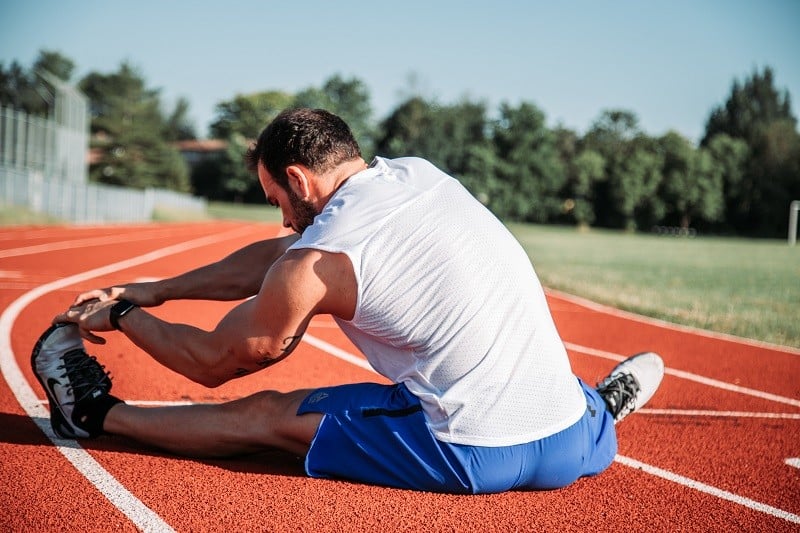
If you thought that the majority of the work was done in training, you were wrong. Indeed, recovery is at least as important as training, if not more so. Poor recovery leads to guaranteed injury or the famous "plateau" - the absence of progress. To recover well, there's no need to invest in high-end equipment like high-tech massage guns. The first recovery factor is sleep. Go to bed at a fixed time (a thought for all the gendarmes who won't be able to apply this advice) and avoid screens as much as possible before bedtime. Stretching can be done to relieve pain from any muscle soreness, but it should be done outside of running sessions and is totally prohibited just before running. You can do these stretches after the session for about fifteen minutes, but especially 1 to 1.5 hours after exercise - this is when they'll be most beneficial. A healthy and balanced diet (goodbye raclette evenings and sauerkraut parties) also promotes recovery and will help you feel fit and motivated for upcoming sessions.
Find all your favorite sports brands at the best prices in our online store: clothing, shoes, accessories as well as a women's range totally dedicated to female athletes.