 The best equipment for pros and enthusiasts alike


-
 Professions
-
-
-
-
-
-
-
-
All Tops
![All Tops]()
-
-
-
All Bottoms
![All Bottoms]()
-
-
-
All Footwear
![All Footwear]()
-
-
-
All Bags
![All Bags]()
-
-
-
All Accessories
![All Accessories]()
-
-
Whether he is a civil servant in category C in the public sector or works within a medical transport company in the private sector, the paramedic is not only responsible for ensuring patient transport. As the first responder in case of emergency, just like firefighters, he constitutes a decisive link in the first aid intervention chain. Attached to paramedical professions, the paramedic must first of all assess the urgency of a situation and provide assistance to an injured, sick or disabled individual. To do this, he must perform appropriate checks such as taking vital signs (pulse, blood pressure, respiratory rate) to immediately transmit them to a doctor from SAMU (Emergency Medical Aid Service) or SMUR (Mobile Emergency and Resuscitation Unit). It is the latter who will determine whether the patient should be admitted to the emergency room or hospitalized.
Table of Contents:

A short but selective training
Depending on the severity of the patient's condition, the paramedic or female paramedic determines whether the patient is able to move or whether it is appropriate to stretcher them. Because he is the first responder to the patient, he must know how to establish a good relationship with them by being both attentive and reassuring. Although he is neither a doctor nor a nurse, the paramedic may be required to stop bleeding, disinfect wounds, administer oxygen or even perform resuscitation procedures. His training for the State Diploma of Paramedic (DEA) must prepare him for this type of intervention. With an average duration of 6 months for a total of 630 hours, this training alternates between theoretical courses (455 hours) and practical internships (175 hours) and follows the written and oral eligibility tests which involve passing the paramedic competition. A preliminary discovery internship lasting 140 hours must also be completed beforehand.

Although the number of paramedics in France is insufficient to cover recruitment needs, the competition remains very selective since its average success rate is only 20%. He is also trained to use all the medical assistance equipment with which his vehicle is equipped. It is also his responsibility to maintain his ambulance and the equipment it contains (stretcher, defibrillator...). His role also includes some administrative tasks related to the documents to be filled out after each intervention. His work uniform is determined by the ambulance company that employs him. He must nevertheless equip himself with accessories and personal protective equipment (PPE) such as single-use FFP2 masks, or even FFP3 masks, and possibly protective gloves and safety shoes.

Physical and moral qualities
Forced to practice his profession at all hours, including weekends and holidays, the paramedic is subject to demanding time constraints that require real motivation on his part and a long-term commitment. As part of his missions, he must also show composure and know how to make the right decisions, without forgetting to maintain his physical fitness to support a sustained work pace. Patient transport involves many hours of driving and significant skills in piloting. Always under pressure, the paramedic must know by heart the different routes to reach as quickly as possible the nearby care centers. Essential in risk areas, such as during sporting events or in winter sports resorts, paramedics must remain close to strategic locations to intervene in the shortest possible time.

Throughout the journey, the paramedic remains in contact with the emergency doctors to inform them of the evolution of the patient's condition. Transport is carried out either in an emergency vehicle or in a light medical vehicle (VSL). In the first case, the patient is taken care of by a paramedic supported by a driver who is generally a paramedic assistant. The latter is then under the responsibility of the paramedic who is considered as team leader. The journey must be both fast and comfortable for the patient's well-being, who can count on the paramedic's vigilance to ensure monitoring of their health condition during transport. Once the destination is reached, the paramedic must transmit all information related to the patient's condition to the healthcare professionals who will then take over.
On vetsecurite.com, we offer a wide range of workwear products and PPE designed for professionals in many sectors of activity. Find our work clothing, safety shoes as well as an eco-responsible range at the best price.
Related products
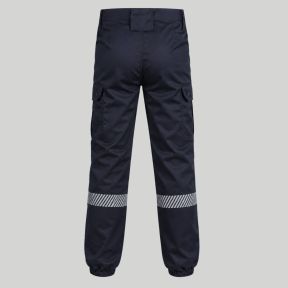
Bulk discounts
VET SECURITE Exclusive
-50%
Related articles


-
![Over 200 brands At the best price]() Over 200 brands At the best price
Over 200 brands At the best price -
![Secure payment In 3 or 4 interest-free installments]() Secure payment In 3 or 4 interest-free installments
Secure payment In 3 or 4 interest-free installments -
![Delivery across Europe As soon as possible]() Delivery across Europe As soon as possible
Delivery across Europe As soon as possible -
![Customer service Monday to Friday]() Customer service Monday to Friday
Customer service Monday to Friday


