The best equipment for pros and enthusiasts alike
 Professions
Summary:
The thermal camera, not to be confused with the infrared camera used by the military during nighttime operations, allows to detect heat waves (infrared radiation) emitted by a living body or materials.
It allows firefighters to prevent the risks of fire resumption after a fire by searching for hot spots that could create a new disaster. It is also useful during the search for victims during a fire or in the debris. The colors displayed on the device represent the temperature distribution to facilitate direct reading: each color in the image corresponds to a temperature.
It is important to choose a camera with a wide temperature range to guarantee the reliability of the device and especially the safety of firefighters. When the maximum detection temperature of the camera is exceeded, the image is saturated and it is no longer possible to see the contrasts clearly on the screen. Indeed, from 600 and 650 °C, the triggering of a flashover (instantaneous ignition phenomenon) might not be apprehended with a device with a range of 500 °C.
Enable efficient victim search
Facilitate the detection of hot spots after a fire to prevent a new fire outbreak
Enable the location of fire hazards
Enable rapid progression in a smoke-filled environment
Detect ventilation, overheated electrical circuits and dangerous elements during fires
Infrared rays emitted by a heat source do not pass through walls or any other solid. The camera does not capture through glass, the infrared ray is reflected on it. In case of thick smoke, temperature readings may be less accurate, just as when a material obstacle is present.
Using a thermal camera requires no training due to its ease of use.
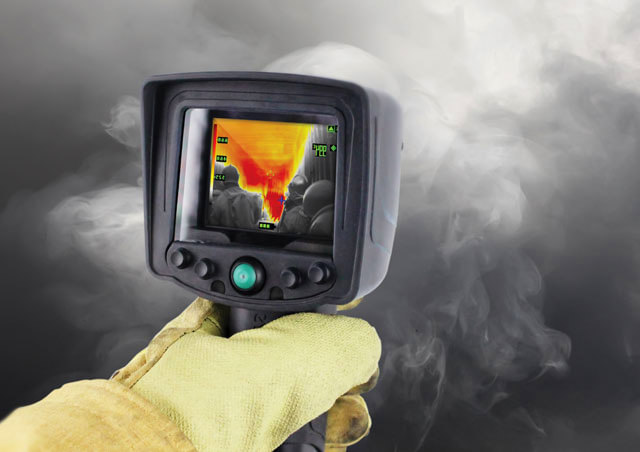
The thermal camera is mainly used during fires by firefighters, it offers advantages for moving more quickly through smoke by giving them reference points. It also allows to find hot spots in certain partitions only if they do not exceed a certain thickness. If the thermal camera is useful to anticipate risks, it does not replace human judgment. Firefighters always exercise visual and tactile control to measure the risks that may possibly remain at the fire scene and in its surroundings.
A thermal camera can also be mounted on a drone in order to obtain a low-angle view of the flames, both indoors for roofing and building structure as well as for the fire itself if it is outdoors.
Regarding victim search, the thermal camera allows for rapid identification of victims in a smoky atmosphere or in low light conditions. The field of vision is important when using the thermal camera, the vision captured by the camera is inferior to that of human vision. The scanning technique must be used, which consists of visually sweeping with the thermal camera the entire volume in which the rescuers are progressing. The most important areas are the floor for victim identification and the ceiling for risks related to smoke progression.
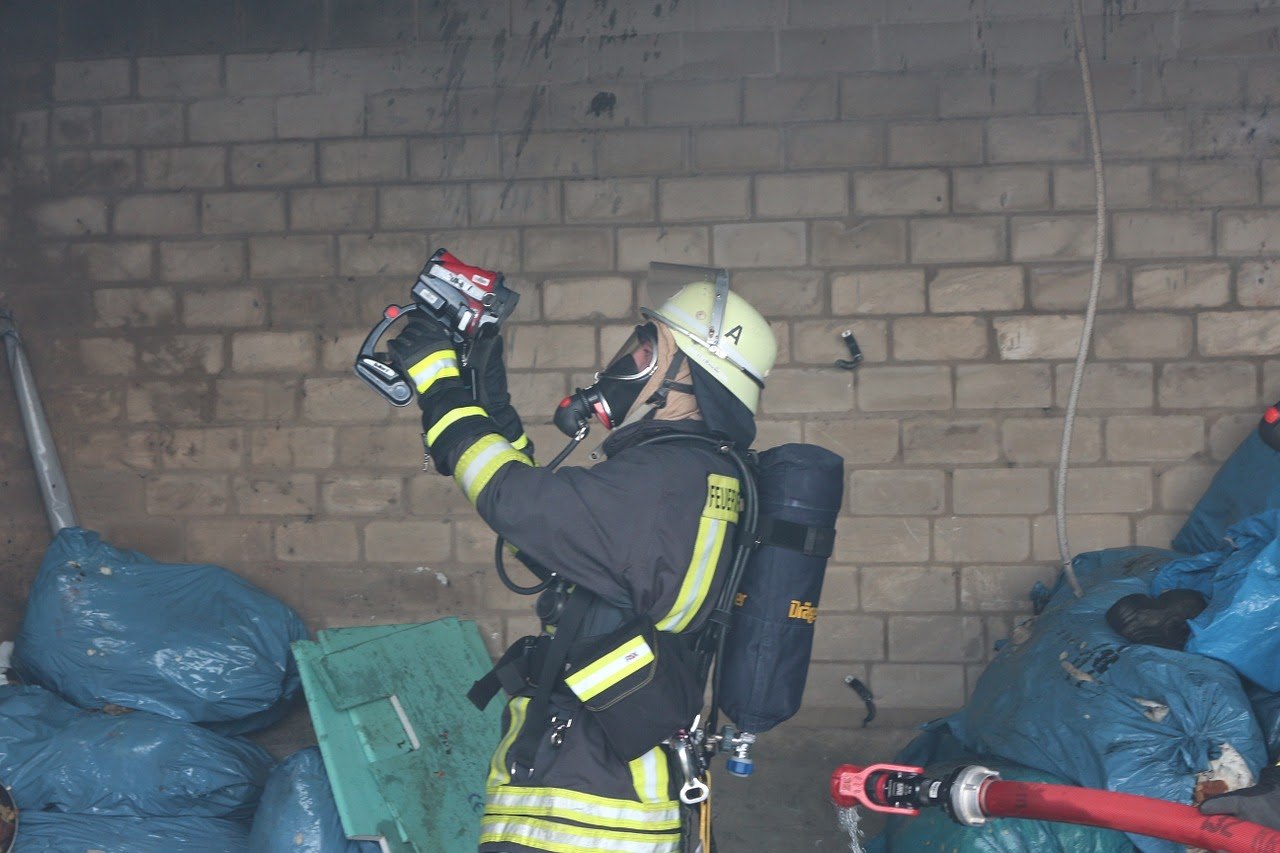
On vetsecurite.com, find thousands of items for fire safety agents as well as firefighters: clothing, shoes, equipment, materials, luggage as well as a women's range.