The best equipment for pros and enthusiasts alike





-35%
 Professions
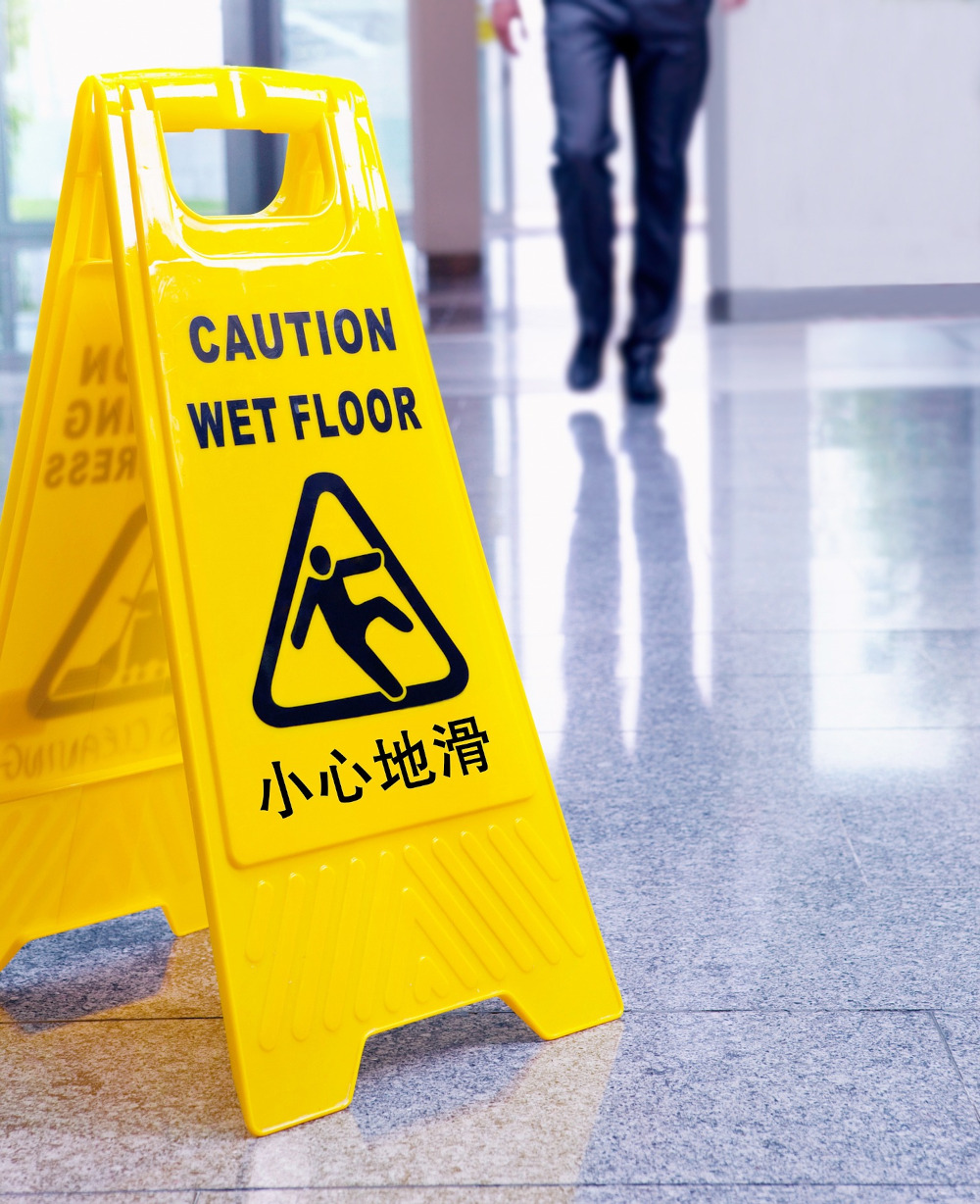
Work shoes and safety shoes are among the essential equipment for professionals in industry, medical or kitchen environments who are used to working on smooth floors, or even wet ones. In addition to the various protections they can provide to the feet, they are the determining factor that helps prevent fall risks. Depending on the work environment, it is therefore essential to wear appropriate footwear. Let's look together at the various categories of slip-resistant shoes.
Summary:
To classify the grip performance of a shoe, it is subjected to tests. They are characterized in two types: The test on ceramic floor and the test on steel floor. The execution of these tests places a shoe at a 7° angle and then applies a force of 500 N (equivalent to human step pressure). On the surface of the ceramic floor, sodium lauryl sulfate liquid is added. Similarly on the steel floor with glycerin. These liquids serve to mimic the slippery situations that may be encountered in various workplaces.
In both cases, two measurement movements are performed: one from heel to toe, the other flat forward. These procedures provide a dynamic friction coefficient. Work shoes (EN ISO 20347 standard) and safety shoes (EN ISO 20345 standard) can thus be organized by respecting the following conditions:
|
Surface |
Ceramic floor |
Steel floor |
||
|
Lubricant |
Sodium lauryl sulfate |
Glycerin |
||
|
Foot position |
Flat forward |
From heel to toe |
Flat forward |
From heel to toe |
|
Standard requirement |
≥ 0.32 |
≥ 0.38 |
≥ 0.18 |
≥ 0.13 |
The measurement of these coefficients thus allows standards EN ISO 20347 and EN ISO 20345 to indicate the necessary conditions for a shoe to be considered slip-resistant on the relevant floors. An additional standard can then be assigned to the shoe. Three types are awarded:
- SRA : Certifies that the shoe is slip-resistant on a ceramic floor covered with water and detergent (sodium lauryl sulfate).
- SRB: Certifies that the shoe is slip-resistant on a steel floor covered with glycerin.
- SRC : Certifies that the shoe meets the grip conditions of SRA and SRB standards.
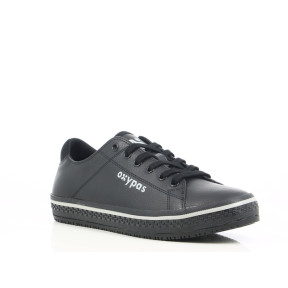
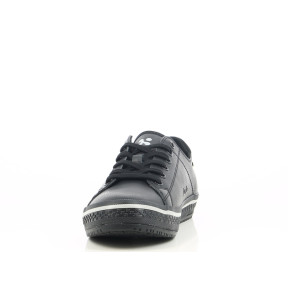
Work shoes and safety shoes can therefore be of various types and adapt to the needs of multiple work environments. The construction site will require slip-resistant safety shoes with cleated soles for increased grip on loose, rocky or muddy ground. Food production will favor shoes with adherent soles on greasy and wet floors. Medical sectors or kitchens will prefer non-toe-capped work shoes that don't slip on hospital or restaurant floors.
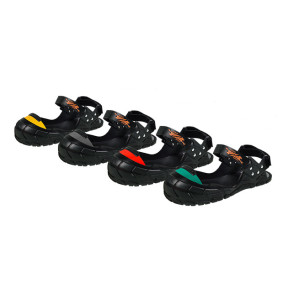
Besides shoes, it is also possible to opt for slip-resistant overshoes. They can serve visitors in a workplace for example. Overshoes are an effective way to grant regular shoes the anti-slip properties defined above.
Grip standards don't cover everything. If certain elements come to obstruct the grooves of a sole (mud, gravel, dirt or other debris), this will have the effect of reducing the slip-resistant capabilities of the shoes. It is therefore important to ensure regular inspection and cleaning of the soles to maintain these safety properties. Deformation, normal wear or deterioration are also factors that can reduce grip performance. It is then necessary to change your pair of shoes accordingly, to always be shod in a safe manner in places that require it.
Depending on your needs, your work shoes or your safety shoes can be slip-resistant according to additional standards SRA, SRB and SRC. Each type of floor has its shoe with the most suitable grip. This nomenclature that we have just seen for shoes of types EN ISO 20347 and EN ISO 20345 will allow you to choose your equipment optimally, to avoid as much as possible the risk of falls on slippery floors.